Russia in 2040: Five Possible Futures After Putin
By Matthew Parish
Tuesday 1 September 2026
Predicting Russia has always been a dangerous occupation. The country has repeatedly confounded those who believed its future obvious. Imperial Russia appeared permanent until it disappeared in 1917. The Soviet Union seemed an immovable feature of the international order until, within a few extraordinary years, it vanished. The anarchic capitalism of the 1990s appeared to herald Russia’s permanent conversion into some version of a Western market democracy. Instead it produced Vladimir Putin.
Russia specialises in historical discontinuities. This makes imagining Russia in 2040 particularly hazardous — but also unusually important. By 2040 Vladimir Putin would be 87 years old. It is possible that he will still be alive. It is substantially less likely that he will still exercise the kind of power he exercises today. The Russia of 2040 should therefore be thought of principally as a post-Putin state. What kind of state will it be?
The mistake is to assume that there is a single answer. Russia stands at the intersection of several enormous forces: demographic decline, dependence upon hydrocarbons, war, technological change, Chinese economic power, European rearmament, the erosion of Soviet infrastructure and the peculiar institutional consequences of a political system organised around one man. These forces could combine in radically different ways. What follows are five Russias.
None is a prediction. Each is a plausible destination. Some are considerably more likely than others and several could occur sequentially. Russia might pass through renewed dictatorship before liberalisation, or through economic dependency before political fragmentation. History seldom respects the neat boundaries of scenarios. Nevertheless five models help illuminate the choices that will confront Russia when the Putin era finally ends.
Russia One: Putinism without Putin
The first future is the simplest. Nothing much changes. Putin eventually dies or retires. There is a period of uncertainty. The principal security and bureaucratic factions negotiate. A successor emerges — perhaps a security figure, perhaps a technocrat dependent upon the security establishment, perhaps somebody presently too obscure for Western newspapers to regard as a candidate. He becomes President. The portraits change. The system survives. This is probably the default scenario.
Personalist authoritarian systems frequently outlive their founders when powerful groups have substantial interests in preserving the existing arrangements. In Russia those interests are formidable. Thousands of officials owe their careers to the system. Security officers possess powers and privileges they would risk losing under democratisation. Managers of state corporations control extraordinary assets. Regional governors depend upon Moscow. Defence manufacturers benefit from gigantic government expenditure. Judges, prosecutors and senior police officers have spent years enforcing rules that a genuinely independent successor government might investigate.
These people do not need to love one another. They merely need to fear change more than they fear one another. The post-Putin bargain might therefore be straightforward: nobody investigates anybody. The security services retain their privileges. The great state corporations remain intact. Governors remain appointed in practice from Moscow even if elections continue ceremonially. Opposition politics remains controlled. Television remains loyal. The President remains dominant.
There might nevertheless be important stylistic differences. Putin’s successor would have little reason to imitate every eccentricity of late Putinism. He might abandon the interminable historical lectures about medieval Rus. He might speak less frequently about nuclear weapons. Relations with Europe might become more transactional. Political prisoners could quietly be released. Some exiles might return. The regime might become less ideological because Putin’s peculiar mixture of Russian nationalism, Soviet nostalgia, imperial history and personal grievance is difficult to inherit.
It could resemble the Soviet Union after Stalin. Stalinism ended.
The Soviet system did not. For Europe this Russia would be familiar and manageable — authoritarian, suspicious, heavily militarised and occasionally aggressive, but potentially more predictable than the Russia of the Ukraine war. It would remain dangerous. But danger and permanence are different things. Putinism without Putin could survive for decades.
Russia Two: the Chinese satellite
The second Russia is outwardly sovereign but increasingly subordinate. Her capital is Moscow. Her economic centre of gravity is Beijing. This process has already begun.
Russia’s rupture with Europe following the invasion of Ukraine accelerated a transformation that geography and economic asymmetry were already encouraging. China possesses an economy many times larger than Russia’s. Russia possesses precisely the things China’s enormous industrial economy wants — energy, minerals, agricultural products, strategic depth and access to the Arctic.
The relationship is routinely described by Moscow and Beijing as a partnership. But partnerships between radically unequal powers have a habit of becoming hierarchies. By 2040 Russia could discover that it has exchanged dependence upon European energy markets for dependence upon Chinese ones. The difference would be profound.
Before 2022 Russia sold enormous quantities of energy to Europe but Europe did not determine Russia’s foreign policy. Moscow could play European countries against one another. It could sell to Germany, Italy, Poland and elsewhere. European institutions were cumbersome and divided.
China is one state. A Russia dependent upon China as her principal purchaser of hydrocarbons, supplier of manufactured goods, provider of technology and diplomatic protector would possess dramatically reduced bargaining power. Beijing would not need to conquer Siberia. She could simply buy it.
Chinese companies might dominate extraction projects across the Russian Far East. Chinese finance could become indispensable for infrastructure. Chinese manufactured goods could saturate Russian markets. Chinese technology might provide telecommunications, surveillance systems, vehicles and industrial machinery. The rouble would remain. The Russian flag would remain. The Kremlin would remain. But when major strategic decisions arose, Moscow would increasingly ask a question once unthinkable for Russian rulers: What will Beijing think?
This would be a remarkable historical reversal. For centuries Russia has regarded itself as one of the world’s great civilisational poles — neither wholly European nor Asian but a continental empire entitled to negotiate with other Great Powers as an equal. In the Chinese satellite scenario, that conceit survives rhetorically while disappearing materially. Russia becomes China’s Canada: enormous, resource-rich, sparsely populated and economically overshadowed by the gigantic power beside her. Except Canada chose her relationship with the United States. Russia may discover that she has nowhere else to go.
Russia Three: the Khrushchev thaw
The third possibility is more optimistic. Putinism begins to dismantle itself. Not through revolution. Through exhaustion. The important point about authoritarian regimes is that the people who liberalise them are frequently former servants of the dictatorship. Nikita Khrushchev participated intimately in Stalin’s system before denouncing Stalin’s crimes. Mikhail Gorbachev was not a dissident transported into the Kremlin by demonstrators. He was General Secretary of the Communist Party. Political systems sometimes reform because insiders conclude that the existing model has become dysfunctional.
By the 2030s Russia may provide fertile ground for precisely such a conclusion. The war economy will eventually encounter limits. Russia’s infrastructure requires immense investment. The country faces serious demographic pressures. Technological isolation is expensive. Educated Russians living abroad represent lost human capital. Maintaining confrontation simultaneously with Europe and the United States consumes resources that could otherwise be spent modernising Russia herself.
A post-Putin leader might therefore begin with modest reforms. Political prisoners are amnestied. Censorship becomes less severe. Foreign investment rules are relaxed.
Some sanctions are negotiated away in return for security concessions. Universities regain international links. Regional governments acquire slightly greater autonomy. Independent businesses receive greater protection from predatory security officials. None of this initially requires democracy. Indeed the reforming President might insist that he is preserving Putin’s legacy by correcting distortions that emerged during Putin’s final years.
Then something familiar happens. Once fear diminishes, people begin talking. Once people begin talking, they discover that other people share their grievances. Newspapers become more adventurous. Online publications test boundaries. Local politicians begin criticising Moscow. Businessmen finance reformist candidates. Russians abroad return with different expectations. The regime discovers that liberalisation is easier to begin than to control. By 2040 Russia might therefore resemble neither contemporary Russia nor Western Europe but something closer to the imperfect political pluralism of several post-authoritarian states.
Elections matter again. Opposition politicians sit in the Duma. Governors acquire genuine constituencies. Courts remain flawed but occasionally rule against the state. Television is no longer monolithic. The security services remain powerful but cease to determine every important political question.
Such a Russia would still be nationalist. This point is important. Western observers sometimes imagine democratisation as synonymous with geopolitical Westernisation. There is no reason why it should be. A democratic Russia would still possess historical grievances, nuclear weapons, enormous natural resources and a strong conception of itself as a Great Power. Russians would not suddenly decide that NATO expansion had always been delightful or that Moscow possessed no legitimate interests in the former Soviet space. But they might conclude that invading neighbouring countries is an extraordinarily expensive way of pursuing those interests. That distinction would transform European security.
Russia Four: the federation comes apart
The fourth scenario is the most dramatic. Russia begins to fragment. One must be careful here. Predictions of the Russian Federation’s imminent dissolution are frequently exercises in wishful thinking. Russia is not simply the Soviet Union in miniature. The constituent units of the Russian Federation do not possess the institutional sovereignty that Soviet republics possessed. Moscow exercises formidable fiscal control. The security services are centralised. Most governors lack independent coercive forces. Ethnic Russians constitute overwhelming majorities across much of the country.
Russia is therefore unlikely simply to repeat December 1991. But states do not have to repeat history in order to fracture. Consider the pressures. The Russian Federation extends across eleven time zones. Its regions possess radically different economies, ethnic compositions and relationships with Moscow. Resource-rich territories frequently surrender substantial revenues to the centre. Some national republics possess languages, histories and identities distinct from ethnic Russia. The North Caucasus has experienced repeated wars. Siberia and the Far East are separated from Moscow by immense distances.
Putin has held this structure together through money, coercion and personal authority.
What if all three weaken simultaneously? Imagine a succession crisis coinciding with economic collapse. Moscow can no longer maintain generous transfers. Governors are instructed to raise more revenue locally. Regional elites begin asking why taxes from their oilfields, mines and factories should subsidise distant priorities. The Kremlin orders compliance. Some comply. Others bargain.
Chechnya is the obvious potential exception to ordinary federal rules. But it need not be the only one. Tatarstan might demand restoration of powers surrendered during Putin’s centralisation. Bashkortostan might follow. Regions in Siberia might seek fiscal autonomy without initially seeking independence. The Far East could develop increasingly separate economic relationships with China, Japan and Korea.
The process might begin not as separatism but as federalism. That distinction can disappear surprisingly quickly. Moscow’s response would determine everything. A flexible government might negotiate a looser federation. A frightened government might send troops. Then the question becomes whether the troops obey.
If Russia experienced simultaneous economic crisis, military defeat, succession struggles and regional rebellion, fragmentation would cease to be fanciful. The result would not necessarily be twenty independent republics. A more plausible outcome might be an asymmetrical Russian confederation — Moscow retaining control over foreign policy, nuclear weapons and defence while regions acquire extensive fiscal and domestic autonomy.
Even that would represent the greatest transformation of the Russian state since 1991.
And it would raise the most frightening question of all.
Who controls the nuclear weapons? For this reason alone, Western governments should never treat Russian fragmentation casually. The collapse of an adversary can be more dangerous than its survival.
Russia Five: the return to Europe
The fifth Russia initially seems the least probable. Yet over a sufficiently long period it may be the most natural. Russia returns to Europe. Not necessarily to NATO. Not necessarily to the European Union. But to the European political and economic system.
Geography exerts a persistent influence upon history. Moscow is closer to Berlin than it is to Beijing. St Petersburg was built as Russia’s window upon Europe. Russia’s intellectual traditions, literature, Christianity, legal culture and elite education have for centuries been entangled with Europe. Even Russian anti-Westernism is profoundly European. One rarely spends so much time denouncing a civilisation in which one has no psychological investment.
The Putin era has attempted to redefine Russia as the centre of a distinct civilisation standing against a decadent West. Yet millions of Russians have travelled in Europe, studied there, bought property there, conducted business there and absorbed European culture. That memory will not disappear. Nor will economic complementarity. Europe needs energy, raw materials and markets. Russia needs capital, technology and access to wealthy consumers.
A post-Putin government confronting excessive Chinese dependence might eventually rediscover what Peter the Great understood three centuries ago: Russia requires strategic balance between East and West. The road back would be long. Ukraine would be central.
No durable European rapprochement is conceivable while Russia continues trying to destroy or subordinate the Ukrainian state. Territorial questions would have to be addressed. Security guarantees would be required. Reparations and reconstruction would become unavoidable subjects. Sanctions could be removed only gradually.
But history contains stranger reconciliations. Germany destroyed much of Europe twice within thirty years. By the 1950s West Germany was becoming central to European integration. France and Germany spent centuries fighting wars before constructing the European Union together. There is nothing metaphysically permanent about Russian-European hostility.
Imagine Russia in 2040 after a decade of post-Putin reform. The war has ended. Trade has resumed. Visa restrictions are easing. Russian students are again studying in European universities. European companies are investing cautiously in Russian infrastructure.
Russia remains outside NATO but participates in renewed conventional arms-control arrangements. Ukraine is firmly anchored within European institutions. The Baltic states remain NATO members.
Nobody pretends that the old Russian sphere of influence can be reconstructed. In exchange Russia obtains something she has wanted for centuries. Recognition as a European Great Power. This is not impossible. It merely requires Moscow eventually to understand that greatness does not consist of making one’s neighbours terrified.
Which Russia is most likely?
The uncomfortable answer is that the first two scenarios are easier to imagine than the final three. Institutions possess inertia. Russia already has an authoritarian political system and a rapidly deepening relationship with China. Neither requires a revolution in political thinking.
Hence the most straightforward trajectory is a combination of Russia One and Russia Two: authoritarian continuity at home accompanied by increasing economic and strategic dependence upon China abroad.
The Kremlin continues to speak of sovereignty. Its sovereignty gradually diminishes. That could be Russia’s path through much of the 2030s. Yet the very contradictions of this arrangement could eventually produce Russia Three or Russia Five. Russian nationalism may ultimately rebel against Chinese dependency. A country obsessed with sovereign greatness may find subordinate partnership with Beijing increasingly humiliating. Economic elites may rediscover the advantages of European markets. Younger Russians may ask why their country, with her extraordinary natural and human resources, remains poorer and less technologically sophisticated than states she regards as inferior.
At that point reform becomes patriotic. That is the ideological transformation the West should encourage. Not: Russia must become Western. Rather: Russia is too important to become China’s resource colony. The argument may prove surprisingly powerful.
The demographic shadow
Every scenario confronts one structural problem. People. Russia has experienced profound demographic difficulties for decades. Low fertility, high male mortality, emigration and the consequences of war all constrain her future. This matters geopolitically. A state with an enormous territory but a stagnant or declining population faces unusual problems. Maintaining infrastructure becomes expensive. Recruiting soldiers becomes harder. Supporting pensioners places increasing burdens upon workers. Remote settlements shrink.
The contrast with China is complicated because China itself faces severe demographic ageing. But the contrast with parts of Central and South Asia is striking. Russia may increasingly require immigration. That creates another contradiction. Russian nationalism has often contained powerful hostility towards migrants from Central Asia and the Caucasus. Yet the Russian economy depends upon them.
By 2040 the country may have to choose between demographic nationalism and economic necessity. Economic necessity usually wins eventually. The Russia of the future may therefore become more ethnically diverse even while its political mythology remains emphatically Russian. That tension could reshape domestic politics.
The Siberian question
Then there is Siberia. Maps encourage misunderstanding. Russia appears gigantic because she is gigantic. But much of her territory contains remarkably few people. To the south and east sits China. This has encouraged periodic fantasies about China eventually annexing the Russian Far East.
That is probably the wrong model. Why annex territory when economic influence achieves the same result more cheaply? China does not need Chinese flags flying over Vladivostok.
She needs reliable access to Russian energy, minerals, timber, transport corridors and Arctic routes. The more economically isolated Russia becomes from Europe, the stronger China’s position becomes.
This is another reason the Chinese satellite scenario may eventually generate its own reaction. Russian elites can tolerate dependence while pretending it is partnership.
They may become considerably less comfortable once the hierarchy becomes impossible to disguise.
The war will eventually become history
By 2040 Russia’s war against Ukraine will be remembered differently from the way it is understood today. This is inevitable. Every generation rewrites its wars. If Russia remains authoritarian, the conflict may become a foundational patriotic myth — a heroic struggle against NATO aggression in which Russia defended civilisation. If Russia liberalises, the same war may become a national tragedy: an avoidable catastrophe produced by an ageing authoritarian leadership.
If Russia fragments, it may become the moment historians identify as the beginning of imperial collapse. If Russia reconciles with Europe, the war may become analogous to Algeria in French memory — painful, divisive and ultimately understood as the end of an unsustainable imperial relationship. The facts will not change. Their political meaning will. This matters because nations are governed partly through the stories they tell about their failures. Russia’s ability to construct an honest account of the Ukraine war may determine whether she eventually escapes from it psychologically.
Ukraine in 2040
Ukraine’s future will profoundly influence Russia’s. Suppose Ukraine in 2040 is prosperous, democratic, secure and integrated into Europe. That would constitute an extraordinary ideological challenge to Russian authoritarianism. The two countries share immense historical, cultural and familial connections. Millions of Russians would be able to compare outcomes.
If Ukrainians became substantially richer and freer than Russians, the Kremlin’s argument that liberal democracy is incompatible with East Slavic civilisation would become increasingly difficult to sustain. Ukraine’s success would therefore represent something more powerful than military victory. It would be a demonstration.
Conversely, a poor, corrupt or politically unstable Ukraine would reinforce Russian narratives that the Maidan revolution produced chaos. This is why the reconstruction of Ukraine is ultimately a Russian policy as well as a Ukrainian one. Successful countries export ideas merely by existing.
What Europe should want
Europe should not want Russia destroyed. It should want Russia changed. There is a profound difference. A fragmented nuclear state stretching from the Baltic to the Pacific could produce security nightmares beyond anything Europe currently confronts.
Nor should Europe seek permanent Russian poverty. Impoverished Great Powers are not necessarily peaceful Great Powers.
The optimal outcome is boring. A moderately prosperous Russia. A Russia with functioning institutions. A Russia trading with both Europe and Asia. A Russia whose borders are secure and therefore need not constantly be expanded. A Russia in which political leaders can lose elections without losing their liberty. A Russia that regards Ukraine as a neighbouring sovereign country rather than an amputated Russian province. A Russia sufficiently strong not to collapse and sufficiently constrained not to invade. This is less emotionally satisfying than fantasies of victory parades. It is also considerably safer.
What Russians will decide
Ultimately outsiders possess limited influence over these outcomes. The most important decisions will be Russian. Does the post-Putin elite preserve the existing system? Do security institutions accept political reform? Do regional governments demand autonomy? Does the Russian middle class eventually re-emerge as an independent political force? Does the country accept permanent economic subordination to China? Can Russians construct a national identity that does not require political control over Ukrainians, Belarusians and other neighbours?
Above all, can Russia separate greatness from empire? That may be the defining question. Russia really is a Great Power. She has nuclear weapons, immense natural resources, extraordinary scientific traditions, a permanent seat on the United Nations Security Council, a formidable culture and a geographical position spanning Europe and Asia. None of these things requires possession of Kherson. The tragedy of Putinism is that it has confused greatness with domination. A post-Putin Russia may eventually discover the difference.
2040
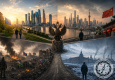
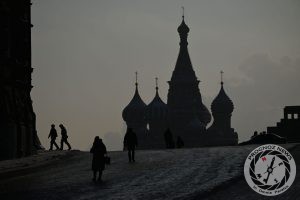
Imagine Moscow on a winter evening in 2040. The Kremlin walls remain illuminated beside the frozen river. St Basil’s Cathedral still stands. Commuters descend into the marble stations of the Metro. Children skate in Gorky Park. The towers of Moscow City glow above streets filled with vehicles whose manufacturers may be Chinese, Russian or European depending upon which future prevailed.
Putin has become history. Perhaps his portrait still hangs in government offices. Perhaps statues of him stand across Russia. Perhaps his reputation has undergone the fate of Stalin’s — officially revered, then cautiously questioned, then endlessly contested. Perhaps there is a Putin Museum explaining the authoritarian excesses of the early twenty-first century. Perhaps mentioning his failures remains a criminal offence. Nobody today can know.
But the country will remain. That is the point Western policymakers should remember whenever they speak loosely of defeating Russia. Vladimir Putin is temporary. Russia is not. The strategic objective should therefore never be the destruction of Russia. It should be the creation of circumstances in which the Russia that eventually emerges from Putinism discovers that cooperation is more profitable than conquest, sovereignty more secure than empire and Europe more useful than permanent dependency upon China.
Of the five Russias described here, authoritarian continuity is probably the easiest destination. Chinese dependency is perhaps the greatest long-term temptation. Fragmentation is the most dangerous. Liberalisation is the most uncertain. European reconciliation is the most desirable. Yet these futures are not mutually exclusive. Russia might experience four of them.
Putinism without Putin may dominate the late 2020s and early 2030s. Chinese dependency may deepen. That dependency may itself provoke nationalist dissatisfaction and economic reform. Reform may produce political liberalisation. Liberalisation may eventually permit reconciliation with Europe. History sometimes travels towards moderation by extraordinarily circuitous routes. Russia has done so before. She may do so again.
The central question about Russia in 2040 is therefore not who succeeds Vladimir Putin. That man may himself have been succeeded by then. The question is what Russians conclude from the Putin era. If they conclude that Putin failed because he was insufficiently ruthless, Russia’s neighbours face another generation of danger. If they conclude that he failed because Russia lacked sufficient Chinese support, Moscow may become a subordinate component of an Asian strategic bloc. If they conclude that Russia itself is an impossible state, centrifugal forces may become uncontrollable.
But if Russians eventually conclude that Putin’s fundamental mistake was to seek security through domination and greatness through war, then something far more interesting becomes possible. Russia might finally become what she has repeatedly approached but never quite achieved: a European Great Power comfortable enough with her own immense country that she no longer needs pieces of everybody else’s.
4 Views


Most Readings