Putin’s little pigs remark
By Matthew Parish, Associate Editor
Friday 19 December 2025
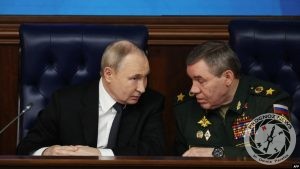
Putin’s “little pigs” line, uttered at a public military meeting in Moscow on 17 December, is doing two jobs at once: it is a crude insult in translation, and a more specific metaphor in Russian.
What he actually said, and where “little pigs” comes from
Most English-language coverage translated Putin as calling European leaders “little pigs” ahead of the Brussels summit. That rendering appears to be a translator’s attempt to capture the Russian term reported in Russian-language coverage as podsviniki or «подсвинки» (plural of «подсвинок»).
In modern Russian, podsvinok or «подсвинок» is not a cute diminutive in the storybook sense. Standard dictionary definitions describe it as a young pig that is no longer a suckling, typically an adolescent animal (often given as roughly 4 to 8–10 months). The structure of the word also signals hierarchy: «свин-» (pig) with the prefix «под-», which frequently carries a sense of subordinate, underling, second-rate, or “under-” status in Russian word formation (not always literally “under”, but often implying lesser rank).
That is why “little pigs” can mislead English readers slightly. In English it can evoke The Three Little Pigs and accidental whimsy. In Russian, the term lands closer to “underlings” with barnyard contempt, with an added insinuation of being kept, fed, and directed by someone larger.
The intended audience
The immediate audience is domestic and sympathetic audiences: language like this is calibrated to be replayed on Russian television and social media as a piece of dominance signalling. It frames Europe as:
-
subordinate to Washington, lacking strategic autonomy, obeying the “big pig” (the United States) rather than acting as sovereign leaders; and
-
hypocritical or greedy, in the sense (often used in Kremlin messaging) that Europeans want to profit from Russia’s weakness or seizure of Russian assets, rather than acting on principle.
There is a secondary, external audience too: European publics and wavering European politicians. By choosing an earthy, status-lowering term, the Kremlin is not trying to persuade Brussels. It is trying to ridicule unity itself, turn European politics into a spectacle, and encourage fatalism that Europe will ultimately fragment.
How appropriate is it, given the €90 billion agreement?
On the facts, the insult looks strategically mistimed.
European Union leaders did, in fact, agree to provide Ukraine with €90 billion in loans for 2026–27 the very next day, on 18 December, raised via EU borrowing and backed by the EU budget, after hours of negotiation. The deal also kept frozen Russian sovereign assets immobilised pending reparations, even though leaders did not reach consensus on using those assets directly to underwrite the financing right now. (That option remains open later, using the International Claims Commission of Ukraine, established earlier this week.)
So if the purpose of “little pigs” is to portray European leaders as incapable of collective action, it collides with reality: they produced a large, politically difficult, unanimity-sensitive financing package even with familiar spoilers and carve-outs.
That said, the phrase is not aimed at describing Europe accurately. It is aimed at shaping the story Russians hear about Europe. In that narrative, even a €90 billion package can be reframed as:
-
coerced (Europe “ordered” into line)
-
self-interested (Europe “feeding” Ukraine for its own ends)
-
and, crucially, brittle (the very public wrangling over frozen assets is used as evidence that Europe is divided)
In other words, the insult is rhetorically “appropriate” to Putin’s information strategy, but descriptively inappropriate to the demonstrated capacity of European leaders to reach agreement when the stakes are high.
400 Views



Most Readings


Russia’s Southern Anchor: The Geopolitics of Moscow’s Military Build-Up in Libya
92 Views