Japan’s snap election and the return of the post-war centre of gravity
By Matthew Parish, Associate Editor
Sunday 8 February 2026
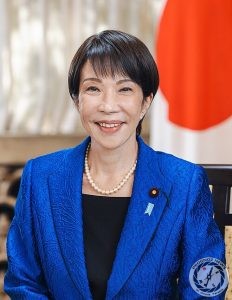
Japan’s snap election of Sunday 8 February 2026 looks set to deliver what Sanae Takaichi asked the electorate for when she dissolved the Diet only months into her premiership: a clear mandate, a disciplined parliamentary machine and political time—enough time to turn Japan’s strategic anxieties into state policy. Exit polls and early projections point to a decisive Liberal Democratic Party victory, with the LDP comfortably over the threshold for a lower-house majority and its coalition plausibly approaching or achieving the two-thirds margin that, in Japanese politics, is the difference between governing and remaking the rules of governance.
That projected outcome matters beyond Tokyo because it suggests that Japan is reverting to a familiar post-war pattern: the electorate, faced with external danger and internal uncertainty, chooses continuity in the form it knows best—LDP predominance—while granting a new leader unusual room for manoeuvre. For allies, markets and adversaries alike, the most important message is not merely that Takaichi has won an election, but that she may have won time.
The LDP’s dominance—stability, patronage and the ‘default setting’ of Japanese democracy
To understand what this election is likely to mean, one must first grasp the peculiar character of Japanese democratic continuity. The LDP has been Japan’s governing party almost continuously since 1955, interrupted only briefly by periods of non-LDP government in the 1990s and again between 2009 and 2012. This is not the caricature of a one-party state—Japan’s elections are competitive, her press is free and her civil society is robust—but it is a system in which the centre-right has functioned as the nation’s default setting.
That long predominance has had three geopolitical consequences.
First, it has made Japan unusually legible to her partners. Ministries, business federations, the security bureaucracy and the LDP’s internal factional arrangements have formed a recurring circuit of power. Foreign counterparts learn the language of that circuit and return to it, year after year.
Secondly, it has anchored Japan’s alliance with the United States as a near-constitutional constant of policy. The LDP has always contained currents of nationalism and resentment towards aspects of the post-war settlement, but, in practice, its leaders have treated the alliance as the platform from which Japan could trade, industrialise and prosper.
Thirdly, LDP predominance has shaped the tempo of change. Japanese politics can seem static for years and then move quickly when a leader gains the internal party authority and parliamentary arithmetic to convert long-prepared bureaucratic plans into legislation. A commanding election win under a leader who has campaigned explicitly on national strength and strategic autonomy is therefore not just another alternation in office—it is a trigger for acceleration.
Rearmament—what ‘substantial’ is likely to mean in practice
Japan’s forthcoming rearmament should be understood less as a sudden militarisation than as the culmination of a decade-long shift from minimalism to deterrence. The direction of travel has been visible for years: the decision to pursue higher defence spending, the embrace of ‘counterstrike’ or strike-back concepts and the deliberate strengthening of the defence industrial base. What changes under Takaichi is the political confidence with which such policies are pursued and the likelihood that legal and constitutional constraints are loosened more decisively.
There are four elements of rearmament that matter geopolitically.
-
Budgetary permanence—Japan’s defence spending trajectory is becoming a structural feature of the state rather than a discretionary response to crises. Recent reporting points to record-level defence allocations for 2026, reinforcing the sense that defence growth is being baked into fiscal planning rather than treated as an exceptional measure.
-
Industrial strategy—Japan is not merely buying weapons; she is rebuilding the capacity to design, manufacture and sustain them at scale. This matters because credible deterrence depends upon production, repair, spares and munitions, not only on glossy acquisition announcements. The Japanese Ministry of Defence has publicly framed its budgetary and organisational priorities in terms of reinforcing posture in the south-west and strengthening the defence production and technology base, including work tied to the next-generation fighter programme with Britain and Italy.
-
Long-range and integrated capabilities—the strategic logic of counterstrike requires sensors, command networks and weapons that can reach threatening forces before they reach Japan. That is a different concept of defence from the post-war model of interception at the shoreline. It is also the logic that makes Japan’s security posture increasingly relevant to Taiwan contingencies and to the wider operational geography of the first island chain.
-
Constitutional and legal reform—if the governing bloc really does approach the two-thirds threshold, constitutional revision ceases to be an abstract aspiration and becomes a live political programme. The election coverage has already highlighted constitutional reform as an immediate priority for Takaichi’s strengthened government. Even if formal revision remains difficult, incremental legal reinterpretations and enabling statutes can still shift Japan’s posture significantly.
For China, these changes will be read as an attempt to harden Japan into a front-rank military power in East Asia, aligned with the United States and increasingly interoperable with other democracies. For North Korea, they signal a Japan less willing to be held hostage by missile coercion. For Russia, they underscore that Japan will remain a serious G7 security actor rather than a purely commercial power—particularly relevant when Moscow seeks to fracture sanctions coalitions.
The American alliance—continuity, but with sharper edges
Takaichi’s projected mandate will be interpreted in Washington as reassurance and leverage at once. Reassurance because Japan is choosing an explicitly pro-alliance course at a moment when allies worry about American attention, American reliability and the internal politics of the United States herself. Leverage because a stronger Japanese government, backed by a robust parliamentary majority, will come to the alliance not as a passive client but as a partner with demands: more integrated planning, more intelligence-sharing and more explicit alignment on Taiwan deterrence.
Election-day reporting has emphasised Takaichi’s hawkish posture towards China and the domestic popularity of her blunt language on Taiwan. The geopolitical implication is that the alliance’s centre of gravity may shift slightly from ambiguity towards preparedness. That does not mean Tokyo will abandon strategic caution—Japan remains acutely aware of economic exposure to China—but it does suggest that deterrence messaging will harden, and that Japan will push for alliance mechanisms that make American commitments more operationally credible.
The risk is escalation by misperception. When leaders speak in existential terms, adversaries listen for red lines. A more forthright Japan could deter China—or could convince Beijing that time is not on its side, thereby pulling forward crisis dynamics. That is why the next phase of Japanese diplomacy will matter as much as rearmament itself: the art will lie in building strength without removing Beijing’s off-ramps.
Europe—Japan as a strategic partner, not a distant trading state
Under Takaichi, Japan’s determination to build economic and political ties with European partners is likely to intensify for reasons that are both practical and philosophical.
Practically, European defence and technology cooperation helps Japan build industrial resilience. The next-generation fighter project with Britain and Italy is the most visible example, but the deeper point is that European collaboration allows Japan to diversify supply chains, share costs and embed itself in a wider democratic defence-industrial web.
Philosophically, Japan increasingly frames her security as part of a wider contest over rules, coercion and the acceptability of force. That language aligns naturally with European concerns after Ukraine. The European Union and Japan have formalised their partnership repeatedly in recent years, including at summit level, with emphasis on security, economic resilience and the defence of a rules-based order.
The additional twist is that European confidence in American constancy has been under strain, forcing middle powers to thicken their networks. Japanese commentary has openly grappled with the implications of fraying transatlantic coordination for Japan’s strategic environment. A Takaichi government with a large mandate is likely to respond by investing politically in Europe—more leader-level diplomacy, more structured security dialogues and more coordination on sanctions, technology controls and maritime security.
For Europe, the implication is that Japan may become a more active presence in European strategic debates, including those connected to Ukraine, Russia and energy security. For Japan, closer European ties are not a substitute for the American alliance—they are insurance against its volatility.
The Indo-Pacific balance—Japan’s ‘normalisation’ and regional reactions
Japan’s rearmament and diplomatic activism will reverberate across Asia.
In South Korea, the reaction will be ambivalent: Seoul shares Japan’s threat perceptions on North Korea and China, but historical memory and domestic politics make defence cooperation politically delicate. A more nationalist Japanese tone can complicate what, strategically, ought to be a closer trilateral relationship with the United States. Analysts have warned that leadership changes can weaken the personal and political will that underpins trilateral progress.
In Southeast Asia, Japan is often welcomed as a stabilising investor and security partner, especially by states anxious about Chinese coercion. Yet a visibly accelerating Japanese military posture will also revive older fears in certain quarters, which China will be eager to amplify. The contest for narrative will therefore be intense: Japan will present herself as a democracy taking responsibility, while Beijing will present her as revanchist. International assessments already treat Japanese rearmament as a response to a ‘new era of crisis’ in regional order, which gives Tokyo an argument that is defensive rather than triumphalist.
India and Australia will likely see opportunity. Both have sought a stronger Japan as a pillar of Indo-Pacific balancing, and both will welcome a Tokyo that can contribute more capability and more political weight to shared initiatives.
The meaning of the mandate—what to watch in the next ninety days
If the projected result holds, three early indicators will tell us whether Takaichi intends to use her mandate as a governing cushion or as a revolutionary tool.
-
Constitutional sequencing—does she move immediately to set the terms of constitutional debate, or does she first consolidate through ordinary security legislation?
-
Defence-industrial mobilisation—do budget increases translate into procurement reform, production capacity and munitions stockpiles, or do they remain headline figures?
-
Alliance diplomacy—does Tokyo seek public alignment with Washington on Taiwan messaging, or does she pursue a quieter form of coordination that reduces escalation risk?
None of this is inevitable. LDP predominance can produce caution as easily as boldness. Yet this election, held in winter conditions and called at a politically aggressive moment, was designed to create momentum—and the early signs suggest that momentum has been granted.
Japan, for decades, has been a great power in economic terms and a restrained power in military terms. Under Sanae Takaichi, with a strong electoral mandate, she appears poised to become something rarer: a democratic great power willing to translate anxiety into capability, and capability into diplomatic influence—across the Pacific and into Europe.
4 Views



Most Readings



On the Recurrence of Fascistic Temptations and the Duty of Europe to Resist Them
99 Views