British sanctions on Russia’s Transneft
By Matthew Parish, Associate Editor
Wednesday 25 February 2026
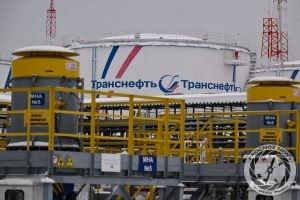
The newest British sanctions package against Russia is not chiefly a matter of adding more names to a list. It is an attempt to put grit into the machinery by which Russia turns exported hydrocarbons into hard currency, hard currency into fiscal stability and fiscal stability into endurance at the front. That ambition is clearest in the decision to designate PJSC Transneft, a company the British government describes as responsible for transporting over 80 per cent of Russian oil exports.
Sanctions are often criticised as theatre because they rarely stop a war quickly. Yet the more useful way to read them is as an exercise in compulsion: they do not remove Russia’s ability to export oil, but they aim to make the export of oil more expensive, more legally risky, more logistically awkward and more dependent on improvised channels. Over time those frictions become macroeconomic facts.
Why Transneft matters
Transneft is not a producer: it does not drill, refine or sell. It moves. That sounds mundane until one remembers that Russia’s oil sector depends upon an infrastructure state as much as upon geology. Pipelines are the cheapest and most reliable means of shifting crude to ports, refineries and foreign buyers. If Western sanctions are trying to narrow Russia’s room for manoeuvre then striking at the infrastructure that underpins export capacity has a logic distinct from sanctioning another trading house.
The UK designation makes that logic explicit. The statement of reasons attached to Transneft’s listing says that it is considered to be an “involved person” because it carries on business in a sector of “strategic significance” to the Russian state, namely the energy sector. That is to say that the target is not an individual transaction but the structural role.
The package itself is large: nearly 300 new sanctions were announced, framed by London as its biggest raft since the early months of the full-scale invasion. Reuters likewise reported a near-300-entity package and placed Transneft at its centre as a move intended to cut Russian energy revenues.
What the UK is actually doing to Transneft
It is worth being precise, because the economic effect depends upon the legal form.
Transneft’s designation, as recorded in the official sanctions notice, includes an asset freeze and trust services sanctions, alongside director disqualification and transport sanctions. Those categories matter in different ways:
-
Asset freeze: Any Transneft assets within UK jurisdiction are frozen and UK persons are generally prohibited from making funds or economic resources available to it. In direct terms, that constrains any UK-facing financing, payments, receivables and the use of London-based services.
-
Trust services sanctions and director disqualification: These measures are less visible to the public, but they are aimed at the corporate enablers of global commerce: trusteeship arrangements, nominee structures and directorship services. In practice, they narrow the set of lawful intermediaries willing to touch Transneft-related structures, even where a transaction would otherwise be routed outside Britain.
-
Transport sanctions: The sanctions notice sets out that where transport sanctions apply, vessels owned, controlled, chartered or operated by a designated person may be prohibited from entering UK ports and may face associated restrictions. Even if Britain is not a major destination for Russian oil, shipping sanctions shape the reputational and compliance perimeter within which insurers, classification societies, brokers and port service firms operate.
At the same time Britain issued a wind-down general licence for Transneft, effective 24 February 2026 and expiring on 9 April 2026, allowing persons to wind down or divest from transactions involving Transneft, subject to conditions and record-keeping. This is not softness so much as system management: modern sanctions are designed to impose lasting constraint without detonating collateral disruption in third-country markets or in existing contracts that touch the United Kingdom’s financial system.
The immediate economic effects: not a collapse, but a tax
In the first instance sanctioning a pipeline operator does not physically stop oil flowing through pipes. Transneft’s core assets and day-to-day operations are in Russia. It can charge domestic tariffs, maintain internal transport and service state priorities irrespective of London’s view.
So the short-term effect is best understood as a risk premium imposed upon the export chain. Export markets are not merely about buyers and sellers; they are about payment routes, insurance, freight, certification, financing and dispute resolution. When a key node in that chain becomes designated, every counterparty has to answer a question: if this transaction touches Transneft in any way, will it trigger British restrictions or the compliance policies of banks and insurers that themselves rely on UK markets?
That question has three immediate consequences for the Russian economy.
First, higher transaction costs. Compliance is expensive, and when compliance cannot be achieved, counterparties demand compensation for risk. Even where trade continues, it tends to do so at a discount, or with payment terms that favour the buyer.
Secondly, a narrower set of counterparties. Russia’s oil exports have already shifted towards buyers willing to accept political and legal risk, and towards logistics designed to obscure origin, ownership and pricing. Reuters noted that Russia continues to export substantial volumes largely to China, India and Turkey, often using an ageing and uninsured tanker fleet. The more that trade depends upon such channels, the more it resembles an improvised supply chain rather than a stable commercial system, and improvised systems leak value.
Thirdly, a drag on investment and maintenance. Pipelines are capital-intensive. They require equipment, specialist services and sometimes foreign technology. Even if the sanctions do not directly ban every component, designation increases the likelihood that suppliers, insurers and service providers will refuse business. The long-run economic cost is not necessarily reduced flow tomorrow, but reduced resilience and higher failure risk later.
The broader package: attacking the workaround economy
Transneft is the headline, but Britain is also trying to choke the workaround economy that has grown around Russian oil.
The British government press release says the new measures sanction 175 companies in the ‘2Rivers’ oil network and add 48 oil tankers associated with the shadow fleet. The Financial Times similarly described the sanctions as heavily focused on this network and on ‘ghost fleet’ tankers, framing it as an attempt to disrupt the commercial architecture that helps Russia sell crude despite price caps and restrictions.
This matters for macroeconomics because Russia’s wartime stability has relied on a simple equation: keep export volumes high enough, even if sold at a discount, and the state can keep spending. The British government asserts that oil revenues are at their lowest since 2020 and that international sanctions have deprived Russia of very large sums, while also stating that Russia has sought to make up revenue gaps by raising taxes. One can debate the exact magnitudes, but the direction of travel is the point: as external earnings become harder to secure cleanly, the Kremlin turns inward, shifting the burden onto domestic taxpayers, domestic borrowers and domestic inflation.
How this feeds into Russian economic behaviour
A sanctions package of this kind does not simply reduce revenue; it shapes behaviour.
If export earnings are less predictable, the state has to hold larger buffers. That can mean tighter capital controls, more coercive management of foreign exchange and more pressure on exporters to surrender hard currency. It can also mean higher domestic interest rates or administrative pressure on banks, as the financial system is asked to fund a war economy while also servicing households.
If oil trade becomes more reliant on opaque logistics, the state pays twice: once in direct discounts, and again in the inefficiencies of concealment. Shadow fleets require intermediaries, ship-to-ship transfers, paper substitutions and jurisdictional arbitrage. Every layer extracts a fee. That is money leaving the Russian productive economy in order to purchase the privilege of continuing to trade.
If key infrastructure firms such as Transneft are sanctioned, the state’s industrial policy becomes more autarkic by default. Domestic substitutes are pursued whether or not they are efficient. The result is a familiar pattern: resilience through self-sufficiency at the price of slower growth.
What sanctions will not do
It is important not to pretend that designating Transneft will, by itself, precipitate a fiscal crisis in Moscow. Russia has had years to learn sanctions survival. Oil will still move. Some buyers will still buy. Domestic propaganda will still present endurance as victory.
But there is a difference between surviving and prospering. Sanctions of this type aim to ensure that, over time, Russia’s war becomes more like a household living off dwindling savings: still able to pay today’s bills, but increasingly forced to defer maintenance, squeeze the middle class and borrow against the future.
The strategic wager
Britain’s wager is that the energy system is Russia’s bloodstream, and that blocking any single artery is less important than thickening the blood: making every movement slower, riskier and more costly. Transneft is a particularly symbolically apt target because it sits at the junction between oil in the ground and money in the treasury.
The counter-wager from Moscow is that the world’s appetite for oil, and the willingness of non-Western markets to exploit discounted barrels, will outrun Western enforcement capacity. The inclusion of shadow fleet tankers and large trading networks in the same package suggests Britain is conscious of that contest and is trying to force it onto terrain where Russia is weaker: compliance, insurance, payments, corporate services and the grey areas where trade becomes possible only if enough reputable institutions look away.
The economic effect will be measured less by whether Russian oil continues to flow and more by how much value is lost along the way. Sanctioning Transneft is a bet that the losses can be made structural.
246 Views



Most Readings




Crimea Under Pressure: Ukraine’s Long Campaign Against Russia’s Southern Bastion
96 Views