Is Russia Prepared to Capitulate to Western Demands for Peace in Ukraine?
By Matthew Parish, Associate Editor
Sunday 1 March 2026
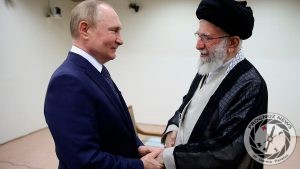
As the war in Ukraine grinds into another year, a wider strategic drama is unfolding beyond the Donbas and the Black Sea. Washington has progressively tightened pressure not only on Moscow but also on governments that have aligned themselves with her. In Latin America, the regime of President Nicolás Maduro in Caracas faces renewed diplomatic and economic coercion after Maduro was kidnapped, arrrested and flown to a New York prison . In the Middle East the Islamic Republic of Iran—supplier of drones and missiles that have struck Ukrainian cities—confronts intensified American and Israeli pressure, including open discussion in Western capitals about the personal liability of the regime’s leadership. Hence the United States assassinated the Supreme Leader of Iran, one of Moscow’s closest allies, in an intelligence-led strike in the mroning of 28 February 2026.
The implicit message is unmistakable: Russia’s external lifelines are vulnerable. The question for Kyiv and her allies is whether this strategy can induce the Kremlin to capitulate to Western demands and seek a negotiated peace in Ukraine.
To assess that possibility, one must look beyond headlines about individual leaders and consider Russia’s strategic depth, domestic political structure and war aims.
Moscow’s reliance on partners such as Iran and Venezuela has never been merely symbolic. Iranian-designed Shahed drones, manufactured at scale inside Russia, have enabled sustained long-range strikes against Ukrainian infrastructure. Venezuelan oil diplomacy, while geographically distant, has contributed to a broader anti-Western axis that blunts the impact of sanctions by creating alternative trading and financial channels. If Washington can pick off or destabilise such partners, the Kremlin’s war machine may face incremental degradation.
Yet incremental degradation is not the same as strategic collapse.
Russia retains core capacities that are independent of these alliances. She remains one of the world’s largest energy exporters, with enduring markets in Asia. She commands the world’s largest nuclear arsenal (in theory; nobody knows just how much of it works, most likely including the Russian leadership itself). Her domestic arms production, though strained, has been adapted to wartime footing. Most importantly the Russian political system has been re-engineered over two decades to insulate the presidency from elite fragmentation. To assume that external pressure on allied regimes will translate directly into capitulation in Moscow is to misunderstand the resilience of Russia’s centralised state.
There is also the matter of narrative. Since February 2022 the Kremlin has framed the invasion not as an optional expedition but as a civilisational struggle against NATO encroachment. State media, security elites and regional governors have been drawn into this narrative. In such a system, capitulation is not merely a diplomatic concession; it is an ideological implosion. A leader who has defined the conflict as existential cannot easily reverse course without risking internal destabilisation.
The United States, for her part, appears to be pursuing a dual strategy. On one track she intensifies economic and military pressure—not only against Russia but against those who facilitate Russian endurance On another, she experiments with diplomatic openings, sometimes described in Washington as offering Moscow a “golden bridge”: a pathway to de-escalation that preserves a semblance of dignity. The difficulty lies in reconciling these tracks. Excessive coercion narrows the space for compromise; excessive concession undermines Ukrainian sovereignty and Western credibility.
In Kyiv, scepticism towards any notion of Russian capitulation is well-founded. Ukrainian officials understand that even a weakened Russia remains capable of regrouping if granted time without structural deterrence. Any peace that merely freezes the lines without security guarantees risks becoming an armistice in name only. European capitals increasingly share this assessment. Germany, Poland and the Nordic states—conscious of their own exposure—have accelerated rearmament not because they anticipate imminent Russian surrender, but because they do not.
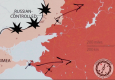
What then would genuine Russian capitulation entail? At a minimum, withdrawal from occupied territories seized since 2022, acceptance of Ukraine’s sovereign right to choose her alliances and credible reparations mechanisms. None of these outcomes align with the Kremlin’s publicly stated objectives. Indeed, recent battlefield conduct suggests that Moscow still seeks incremental territorial gains to strengthen her negotiating position rather than preparing domestic opinion for retreat.
It is conceivable that cumulative pressure—economic attrition, isolation of allies, battlefield stalemate and elite fatigue—could eventually alter the calculus in Moscow. Russian history contains precedents of abrupt strategic reversals when costs became intolerable. But such reversals typically followed systemic shocks, not gradual diplomatic encirclement.
The more realistic scenario in the near term is not capitulation but recalibration. Moscow may seek a ceasefire that consolidates current positions, hoping to trade time for relief from sanctions and reconstitution of forces. Whether Western governments are prepared to accept such a compromise is another matter entirely.
The broader American campaign against Russia’s partners—whether in Caracas or Tehran—may tighten the strategic vise. It may raise the cost of continued aggression. It may even erode the aura of inevitability that the Kremlin projects. But it does not, in itself, compel surrender. Russia’s war effort rests primarily on internal mobilisation and a political structure designed to absorb hardship.
For Ukraine and her allies, therefore, the central task remains unchanged. Pressure must be sustained, military support must be sufficient to deny Russia decisive advantage and diplomacy must be anchored in enforceable security arrangements. Peace, if it comes, will not arrive because Moscow has been theatrically isolated, nor because individual allied leaders have been targeted. It will come only when the balance of power—on the battlefield and within Russia’s own elite calculations—persuades the Kremlin that continued war endangers the regime more than compromise does.
At present, there is little evidence that threshold has been reached.
329 Views



Most Readings