Leon Panetta: a former CIA director’s views on the war with Iran
By Matthew Parish, Associate Editor
Monday 23 March 2026
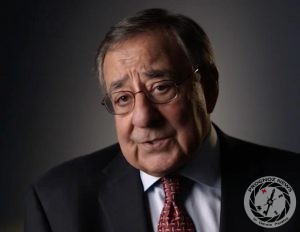
The voice of experience in matters of war is often a quiet one, but when it speaks plainly it can carry the weight of history. Leon Panetta, who has spent decades within the innermost circles of American intelligence and defence policy, has issued precisely such a warning in response to Donald Trump’s decision to embark upon war with Iran. His criticisms are not those of a partisan opponent, but rather those of a statesman alarmed by the re-emergence of familiar strategic errors—errors that have, in the past, led the United States into protracted and destabilising conflicts.
Panetta’s central contention is stark in its simplicity: the present crisis is not an accident of history but the foreseeable consequence of deliberate choices made at the highest level. He has argued that “nobody else is responsible” for the current predicament but the President himself, a remark that reflects both frustration and a sense of institutional memory. The war, initiated with the expectation of a decisive blow, has instead unfolded into a widening confrontation whose consequences were, in Panetta’s estimation, entirely predictable.
At the heart of his critique lies a failure of strategic anticipation. For decades American defence planners have understood that Iran’s most potent leverage in any conflict lies not in conventional battlefield strength but in her capacity to disrupt global energy flows, particularly through the Strait of Hormuz. Panetta has emphasised that this vulnerability was neither obscure nor speculative. It was a central pillar of Western strategic thinking about Iran, repeatedly articulated in policy circles. Yet as events have demonstrated, the decision to initiate hostilities appears to have proceeded without adequate preparation for precisely this contingency.
The consequences have been immediate and far-reaching. Iran’s disruption of maritime transit has triggered volatility in global energy markets, amplifying economic pressures far beyond the Middle East. What was conceived, according to critics, as a short and controlled military operation has instead generated systemic instability. Panetta’s criticism therefore is not merely tactical but structural: it is a condemnation of a decision-making process that failed to integrate known risks into operational planning.
This critique extends to the political assumptions underlying the war. The initial expectation—shared by elements of the administration—that a rapid strike might weaken or even destabilise the Iranian regime has proven misplaced. Instead, Panetta observes, the conflict has consolidated hardline elements within Iran’s leadership, producing a more entrenched and ideologically rigid regime. This phenomenon is hardly unprecedented. External military pressure has often served to unify domestic factions within targeted states, particularly those with strong nationalist narratives. In this respect Panetta’s warning echoes earlier American experiences in Iraq and Afghanistan, where initial military successes gave way to prolonged political stalemate.
Beyond strategy, Panetta’s remarks carry a deeper institutional critique. He has suggested that the President’s approach reflects a form of political thinking ill-suited to the complexities of international conflict—what he characterised as a tendency towards “naivety” or even “magical thinking”, in which repetition of desired outcomes substitutes for realistic planning. Such language is unusually direct for a former senior official, and it underscores the extent of his concern. In Panetta’s view war demands a disciplined alignment between objectives, means and anticipated consequences. To deviate from this principle is to risk strategic incoherence.
The broader context reinforces the significance of his intervention. The war with Iran has already drawn criticism from multiple quarters within the United States, including military veterans, members of Congress and even officials within the administration itself. Panetta’s voice however carries particular authority because it bridges partisan divides. Having served under both Democratic and Republican administrations, he embodies a tradition of pragmatic national security thinking that places institutional continuity above political expediency.
There is also in his criticism an implicit warning about the erosion of alliances. Panetta has pointed to a lack of coordination with traditional partners, suggesting that unilateral or poorly communicated actions risk isolating the United States at a moment when collective security remains essential. In an interconnected global system, military action cannot be divorced from diplomatic consequence. The legitimacy of intervention, as much as its effectiveness, depends upon the perception of shared purpose amongst allies.
What then is the practical implication of Panetta’s critique? It is not merely that the war was ill-conceived, but that it now presents a narrowing set of options. The United States faces a dilemma between escalation—potentially involving further military commitments to secure strategic objectives such as reopening maritime routes—and disengagement, which risks appearing as a strategic retreat. Neither course offers an easy resolution. This is precisely the situation Panetta describes: a conflict entered without a clear end state, now resistant to straightforward conclusion.
His intervention should be understood as both diagnosis and caution. It is a diagnosis of how the present crisis came into being—through the neglect of known risks, the overestimation of military leverage and the underestimation of adversarial resilience. It is also a caution against compounding these errors through further misjudgements. War, once begun, has a tendency to generate its own logic, drawing states deeper into commitments they did not initially intend to make.
For European observers, and particularly for those in Ukraine accustomed to the realities of prolonged conflict, Panetta’s critique resonates with familiar themes. The misalignment of political expectation and military reality is not unique to any one country. It is a recurring feature of modern warfare, where technological superiority does not guarantee strategic clarity and where initial success can obscure deeper structural challenges.
Ultimately the significance of Panetta’s remarks lies in their insistence upon responsibility. In an era when political narratives often diffuse accountability, his argument restores it to its proper place. Decisions to wage war are amongst the gravest that any leader can take. They demand not only courage but also humility—the recognition that even the most powerful states operate within constraints imposed by geography, economics, and human behaviour.
To ignore those constraints is not merely an error of judgement. It is, as Panetta suggests, an abdication of the disciplined thinking upon which effective statecraft depends.
252 Views



Most Readings