Artificial intelligence and the growth of the regulatory society
By Matthew Parish, Associate Editor
Friday 3 April 2026
There is a persistent tendency, in moments of technological transformation, to imagine that something fundamentally unprecedented has arrived — that the old rules no longer apply, that the structures of governance must either collapse or be reborn in entirely novel forms. Artificial intelligence, in its current phase of rapid development and deployment, has attracted precisely this kind of rhetoric. It is described as a revolutionary force, a disruptive intelligence, an entity that will reshape not merely economies but the very nature of human decision-making.
Yet such language risks obscuring a more prosaic, and perhaps more significant, reality. Artificial intelligence is not the end of regulation. It is its accelerant.
The history of modern governance is, in large part, a history of increasing regulatory density. From the early administrative states of nineteenth-century Europe to the intricate supranational frameworks of the twenty-first century, governments have steadily expanded their capacity to observe, categorise and control human activity. Each technological advancement has not diminished this impulse but enabled it. The telegraph allowed centralised command over distant territories; the computer enabled bureaucracies to store and process vast quantities of data; the internet permitted real-time surveillance and coordination across jurisdictions.
Artificial intelligence fits squarely within this trajectory. Its defining feature is not autonomy but analytical capacity — the ability to process patterns, generate predictions and draft outputs at a scale and speed beyond unaided human cognition. In legal and regulatory contexts, this capacity has immediate and far-reaching consequences.
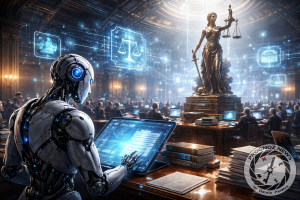
The drafting of legislation, historically constrained by human labour and institutional bandwidth, is becoming increasingly mechanised. Artificial intelligence systems are already capable of producing complex legal texts, synthesising existing statutes, case law and policy objectives into coherent — if sometimes imperfect — drafts. This does not eliminate the role of the legislator, but it alters its nature. Lawmakers are no longer required to compose every clause from first principles; instead they supervise, refine and approve texts generated through computational processes.
The consequence is not simplification. It is proliferation.
Where once the drafting of detailed regulatory frameworks required months or years of human effort, artificial intelligence permits the rapid generation of highly specific, context-sensitive rules. Entire sectors of economic and social life can be subjected to finely tuned regulatory regimes, each calibrated to particular risks, behaviours or outcomes. The friction that once limited the expansion of law — the sheer difficulty of writing, reviewing and implementing complex provisions — begins to dissolve.
One sees the early outlines of this transformation in fields such as financial compliance, environmental regulation and digital governance. In financial markets, algorithmic systems already monitor transactions for patterns indicative of fraud or money laundering, generating reports that feed directly into regulatory enforcement. In environmental policy, data-driven models enable the creation of dynamic standards that adjust in response to real-time measurements of pollution or resource use. In the governance of online platforms, automated systems enforce content rules at a scale that no human workforce could match.
Artificial intelligence extends these tendencies into the legislative sphere itself. It does not merely enforce rules; it helps to write them.
This development carries with it a subtle but profound shift in the nature of law. Traditionally law has been characterised by a degree of generality — broad principles articulated in language that allows for interpretation and discretion. This generality was, in part, a necessity. Human legislators could not anticipate every contingency, nor could they draft rules of infinite specificity.
Artificial intelligence erodes this necessity. With sufficient data and computational power, it becomes possible to generate rules that are increasingly granular — tailored to particular circumstances, actors or behaviours. The result is a move away from general norms towards highly particularised regulation.
Such specificity may enhance efficiency and compliance, but it also risks diminishing the space for human freedom and judgement. When rules are detailed to the point of near-exhaustiveness, the role of discretion — whether exercised by judges, regulators or citizens — is correspondingly reduced. Law becomes less a framework for reasoning and more a system of instructions.
There is moreover a feedback loop at work. As artificial intelligence enables more detailed regulation, the data generated by this regulation feeds back into the systems that produce it. Compliance data, enforcement outcomes and behavioural responses all become inputs for further rule-making. The regulatory system becomes self-reinforcing, expanding in scope and complexity with each iteration.
This is the essence of the regulatory society — not merely a society governed by rules, but one in which the production of rules becomes an ongoing, technologically mediated process. Artificial intelligence does not create this society; it intensifies it.
Critics may argue that such developments risk overregulation, stifling innovation and individual freedom under a dense web of legal constraints. There is merit in this concern. The capacity to regulate more does not imply the wisdom to regulate well. Indeed the ease with which rules can be generated may lead to a proliferation of poorly considered or contradictory provisions, overwhelming both those subject to them and those tasked with enforcing them.
Yet it would be a mistake to imagine that artificial intelligence introduces these risks anew. The tension between regulatory ambition and practical governance is as old as the administrative state itself. What artificial intelligence changes is the scale and speed at which this tension operates.
There is also a geopolitical dimension to consider. States that most effectively integrate artificial intelligence into their regulatory apparatus may gain significant advantages in economic management, security and social control. The capacity to design and implement complex regulatory regimes rapidly could become a source of competitive strength, particularly in sectors characterised by rapid technological change.
At the same time disparities in such capabilities may exacerbate global inequalities. Less technologically advanced states may find themselves unable to match the regulatory sophistication of their counterparts, potentially rendering them vulnerable to regulatory arbitrage or external influence. The international legal order, already strained by competing norms and interests, may become further fragmented as states pursue divergent approaches to AI-enabled governance.
For Ukraine, engaged in a struggle for sovereignty and institutional resilience, these questions are not abstract. She faces the dual challenge of rebuilding her administrative structures whilst integrating advanced technologies into them. Artificial intelligence offers tools for enhancing transparency, combating corruption and improving public services. Yet she must also guard against the uncritical adoption of systems that could entrench complexity without delivering commensurate benefits.
The temptation, in periods of reconstruction, is to embrace efficiency at all costs — to favour systems that promise rapid results and comprehensive oversight. Artificial intelligence can deliver both. But without careful institutional design it may also produce a regulatory environment so intricate that it becomes opaque, even to those who operate within it.
The growth of the regulatory society therefore is not merely a technological phenomenon but a political choice. Artificial intelligence expands the range of what is possible; it does not dictate what is desirable.
The most significant question is not whether artificial intelligence will lead to more regulation — it almost certainly will — but how societies choose to manage that expansion. Will law become an ever more detailed set of instructions, optimised for efficiency and control? Or will there remain space for general principles, human judgement and the inevitable ambiguity that accompanies complex social life?
Artificial intelligence, for all its sophistication, does not answer these questions. It merely makes them more urgent.
208 Views



Most Readings