The US strikes on Iran and the War Powers Resolution
By Matthew Parish, Associate Editor
Friday 17 April 2026
The war is no longer hypothetical. On 28 February 2026 the United States commenced sustained military operations against Iran — and with that decision, the latent constitutional machinery governing American war powers began to move from theory into practice. At the centre of that machinery lies the War Powers Resolution, a legal instrument at once precise in its language and ambiguous in its operation.
To understand its present significance — and its limits — one must examine not only how it operates, but what it is.
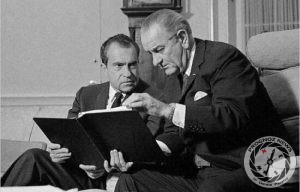
The War Powers Resolution is often referred to as the “War Powers Act”, yet this terminology obscures its legal character. It is not, in form, an ordinary statute enacted through the conventional legislative process. Rather it is a joint resolution of United States Congress — passed by both Houses and then enacted into law over the veto of Richard Nixon in 1973.
In formal legal terms however this distinction is less significant than it appears. A joint resolution, once enacted, carries the full force of statute. The importance of the terminology lies instead in its constitutional signalling. By styling the instrument as a “resolution”, Congress emphasised that it was not merely legislating in an ordinary field of policy, but asserting its constitutional prerogatives in relation to war — a domain in which legislative and executive authority intersect and compete.
This dual character explains the persistent ambiguity surrounding the Resolution. It is law — codified in Title 50 of the United States Code — yet it is also a continuing constitutional argument, one that each administration interprets anew.
The origins of the Resolution lie in the institutional crisis of the Vietnam War. Throughout the 1960s and early 1970s, successive administrations committed American forces to an increasingly extensive conflict without a formal declaration of war. Congress, though not wholly excluded, found itself relegated to a reactive role — funding a war it had never unequivocally authorised. The War Powers Resolution was an attempt to prevent the recurrence of such a situation — an “extended, unauthorised war” conducted through executive initiative alone.
Its solution was temporal. The President might act swiftly, but not indefinitely.
Under the Resolution, once United States forces are introduced into hostilities the President must notify Congress within forty-eight hours. Thereafter a sixty-day period begins, within which Congress must either authorise the use of force or the President must terminate it.
This sixty-day period is often described as a “clock”, but it is more precisely a conditional authorisation — a limited tolerance for unilateral executive action.
There exists however a narrow and frequently misunderstood mechanism for extending this period to ninety days. The statute permits a single extension of up to thirty additional days, but only if the President formally certifies to Congress that “unavoidable military necessity” requires the continued use of armed forces for the purpose of ensuring their safe and orderly withdrawal.
This language is critical. The extension is not a licence to continue hostilities in pursuit of strategic objectives. It is rather a logistical grace period — a recognition that disengagement from a theatre of operations may itself require time, and that the safety of deployed forces may depend upon controlled withdrawal rather than abrupt cessation.
In other words the ninety-day period is not an alternative deadline. It is an exception narrowly tied to exit.
In the context of the present Iran conflict, contemporary political reporting indicates that the sixty-day deadline — expiring around 1 May 2026 — is being treated as the operative legal threshold. The possibility of a thirty-day extension has been acknowledged, but only in the limited sense contemplated by the statute — a measure tied to withdrawal rather than escalation.
There is as yet no indication that the administration has formally invoked this certification. Nor would such a certification comfortably align with the current operational posture, which appears oriented towards continued pressure rather than disengagement.
The distinction matters. If the extension is not invoked — or if it is invoked without credible linkage to withdrawal — the legal expectation remains that hostilities must cease at the sixty-day mark absent congressional authorisation.
Yet here the War Powers framework reveals its most characteristic feature: its dependence upon political enforcement.
In recent days both Houses of Congress have considered — and narrowly rejected — resolutions that would have required the termination of hostilities in the absence of authorisation. These rejected measures would if enacted themselves be “war powers resolutions” in a different sense: legislative instruments, authorised under the 1973 framework, designed to compel executive compliance.
This introduces a second layer of terminology. The War Powers Resolution of 1973 is the overarching legal framework. A “war powers resolution” by contrast is a specific legislative measure — typically a concurrent or joint resolution — introduced under that framework to direct or limit particular military actions. The former is the rulebook; the latter are moves within the game.
The failure of these contemporary resolutions is therefore highly significant. It does not constitute authorisation of the war — Congress has not passed an Authorisation for Use of Military Force — but it does signal an unwillingness to enforce the statutory limit through affirmative legislative action.
This creates a constitutional grey zone.
Formally, the law requires termination of hostilities after sixty days absent authorisation. Practically, enforcement depends upon Congress’s willingness to act — through binding legislation, control of appropriations or, in extremis, impeachment. Where Congress hesitates, the executive gains room to interpret, to argue and, if necessary, to proceed.
For the administration of Donald Trump, this ambiguity provides strategic flexibility. It may contend that the threshold of “hostilities” has not been met in the statutory sense, or that existing authorisations suffice, or that constitutional authority permits continued operations. Each argument has precedent; none resolves the underlying tension.
For Iran, this uncertainty is itself a strategic variable.
Tehran’s approach to the conflict appears calibrated not only to military realities but to the internal temporal structure of American decision-making. The sixty-day deadline — and the contested possibility of extension — introduces a predictable moment of political vulnerability. Iranian strategy has accordingly emphasised controlled escalation, avoiding actions that might unify American opinion while sustaining enough pressure to demonstrate resilience.
Time, in this framework, becomes an instrument of policy.
If Congress fails to provide explicit authorisation — and current voting patterns suggest that such failure remains a real possibility — the United States will confront a dilemma at the statutory deadline. To withdraw is to concede strategic initiative; to continue is to risk operating in open tension with the law.
The thirty-day extension offers no easy escape. Properly construed, it is a mechanism of disengagement, not prolongation. Its invocation would signal not determination to continue the war, but preparation to end it — a signal that Iran, and the wider region, would interpret accordingly.
Thus the War Powers Resolution, conceived in the aftermath of Vietnam as a safeguard against indefinite, undeclared war, now exerts its influence in a very different conflict. It does not dictate outcomes. It does not compel compliance with mechanical certainty. But it imposes structure upon uncertainty — a deadline upon discretion.
And as that deadline approaches — sixty days, not ninety — it is not only the legality of the war that is at issue, but the capacity of American institutions to resolve the question that the Resolution was designed to force: whether the nation, through its legislature, is willing to own the war that its executive has begun.
193 Views



Most Readings