Is Ukraine suffering from climate change?
By Matthew Parish, Associate Editor
Saturday 25 April 2026
Winters are colder, summers are hotter. The question of whether Ukraine is suffering from climate change is on its face almost too simple — for it invites a binary answer to a phenomenon that is gradual, uneven and often obscured by the far more immediate violences of war. Yet beneath the thunder of artillery and the bureaucratic speed of reconstruction lies a quieter transformation of the land itself, one that has begun to reshape Ukraine’s agriculture, its water systems, and even its strategic vulnerabilities.
To ask whether Ukraine suffers from climate change is therefore not merely to ask whether temperatures are rising — it is to ask whether the country’s historical equilibrium, forged over centuries between soil, season and society, is being unsettled in ways that matter.
A Changing Climate in the Breadbasket of Europe
Ukraine has long been known as the breadbasket of Europe — a sobriquet earned through the fertility of her black earth, the chernozem, amongst the richest agricultural soils in the world. Yet the stability of this agricultural abundance depends upon climatic predictability. That predictability is now eroding.
Meteorological data collected over recent decades indicates that average temperatures in Ukraine have risen more rapidly than the global average. Summers have grown hotter and longer, winters shorter and less reliable. Rainfall patterns have shifted — not necessarily diminishing in aggregate, but becoming more erratic. The result is a paradox familiar to climate scientists: both drought and flooding have become more frequent.
In southern and eastern regions — particularly the steppe zones — prolonged droughts have begun to degrade soil moisture, reducing yields of staple crops such as wheat, maize, and sunflower. Irrigation, once supplementary, becomes essential. Yet irrigation depends upon water — and water itself is becoming less predictable.
Water, War, and Vulnerability
The destruction of the Kakhovka Dam in 2023 marked a turning point not only in the military conflict but in Ukraine’s environmental trajectory. The sudden release of vast quantities of water devastated downstream ecosystems, whilst the loss of the reservoir crippled irrigation systems across the south.
But even absent such acts of war, Ukraine’s water systems were already under strain. River flows, including those of the Dnipro River, show increasing variability. War compounds this — by destroying infrastructure, polluting waterways, and limiting the state’s capacity to manage environmental resources.
Here climate change and armed conflict intertwine. One exacerbates the other. Drought weakens agriculture and the economy; war impedes adaptation. Flooding damages infrastructure; conflict delays repair. The country is caught not merely in a war of armies, but in a convergence of crises.
The Subtle Geography of Heat
Heat itself is perhaps the most insidious manifestation of climate change. It does not always destroy visibly — but it accumulates effects over time. In cities such as Kyiv, Kharkiv and Odesa, summer heatwaves have intensified, placing strain on electricity systems and public health. Elderly populations, already vulnerable due to wartime displacement, face increased mortality risks during extreme heat events.
In rural areas the effects are less visible but no less profound. Higher temperatures accelerate evaporation, reducing soil moisture even when rainfall appears sufficient. Crops mature more quickly, sometimes before they have fully developed. Pest populations expand northwards, surviving winters that once kept them in check.
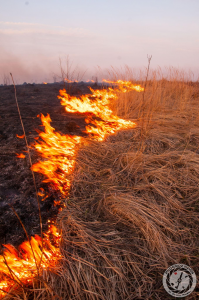
Forests too are changing. Increased dryness raises the risk of wildfires — once relatively rare in Ukraine, now more frequent, particularly in the north and east. The ecological balance shifts, often irreversibly.
Coastal and Strategic Implications
Ukraine’s southern coastline along the Black Sea presents another dimension of climate vulnerability. Rising sea levels and increased storm intensity contribute to coastal erosion, threatening infrastructure, ports, and settlements.
In peacetime, such challenges might be met with engineering — sea defences, managed retreat, long-term planning. In wartime, these become secondary priorities. Yet they carry strategic significance. Ports such as Odesa are not merely economic assets — they are lifelines for grain exports upon which global food security depends.
Thus climate change extends beyond environmental concern into the realm of geopolitics. Ukraine’s capacity to feed parts of the world — already disrupted by war — becomes further constrained by climatic instability.
Is Ukraine Suffering?
The question remains: is Ukraine suffering from climate change?
If suffering is defined as measurable harm — then yes. Agricultural yields are increasingly volatile. Water systems are strained. Heatwaves intensify. Ecosystems degrade.
But the concept of suffering carries also a human dimension — an experience. Here the answer is more complex. For many Ukrainians the immediacy of war overshadows environmental change. A failed harvest matters — but so does a missile strike. A heatwave is uncomfortable — but occupation is existential.
Yet this hierarchy of suffering may be misleading. Climate change is not an alternative crisis; it is a compounding one. It operates slowly, often invisibly, but its effects accumulate and endure long after the war ends.
A Country Between Two Transformations
Ukraine today stands at the intersection of two transformations — one violent and immediate, the other gradual and inexorable. The war will end; the climate will not cease its change. Indeed reconstruction itself will take place within a new environmental reality.
The challenge therefore is not merely to rebuild Ukraine as she was — but to rebuild her as she must become. Agricultural practices will need adaptation — drought-resistant crops, improved irrigation efficiency. Urban planning must account for heat. Water management systems require resilience not only to human attack but to climatic variability.
Ukraine’s suffering from climate change is not only a condition but a warning. It reveals the fragility of systems once assumed stable, and the necessity of foresight even amidst crisis.
To ask whether Ukraine is suffering from climate change is ultimately to recognise that she is — but also that her response to that suffering will shape her future as profoundly as any military outcome.
213 Views



Most Readings