The Balkans’ controversial new pipeline through Bosnia and Herzegovina
By Matthew Parish, Associate Editor
Saturday 25 April 2026
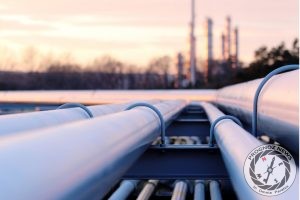
The Southern Interconnection pipeline, now emerging from the bureaucratic fog of Bosnia and Herzegovina’s fragmented governance, is no ordinary infrastructure project. It is a line of steel and gas that traces not merely a geographic route across the western Balkans, but a fault line between competing systems of power — between Brussels and Washington, between formal legal order and personalised political influence, and between the European Union’s regulatory orthodoxy and a more transactional American approach to strategic investment.
At its simplest, the project is a natural gas pipeline intended to connect Bosnia and Herzegovina to the Adriatic coast of Croatia, specifically to the liquefied natural gas terminal on the island of Krk. This would allow Bosnia — which currently imports virtually all her gas from the Russian Federation via Serbia and Hungary — to diversify her supply and reduce Moscow’s leverage. The pipeline is designed with a capacity of approximately 3 billion cubic metres per annum and is expected to cost in the region of €1.5 billion.
Geographically, the route is deceptively straightforward. It runs from the Croatian transmission network inland across the Federation of Bosnia and Herzegovina, linking industrial centres that have historically lacked reliable gas infrastructure. Yet geography in the Balkans is never merely physical. The pipeline traverses a state divided between entities, ethnic constituencies and competing administrative authorities. Each kilometre therefore passes through overlapping jurisdictions, each with veto power, each susceptible to external influence.
It is precisely within this institutional fragility that the present controversy has arisen. The Bosnian parliament has amended legislation to facilitate the award of the project to a little-known American consortium, AAFS Infrastructure and Energy, without a competitive tender. The company — incorporated only in late 2025 and lacking a demonstrable track record — is fronted by figures closely associated with Donald Trump, including legal and political allies.
This absence of a transparent procurement process has triggered alarm within European institutions. The European Union has already warned that such arrangements risk violating Bosnia and Herzegovina’s obligations under the acquis communautaire — particularly those relating to public procurement, competition law and energy market liberalisation. More starkly Brussels has indicated that proceeding with the project under these conditions could jeopardise Bosnia’s long-stated ambition to join the European Union.
The reasons for European concern are not merely procedural. They are strategic.
There is the question of regulatory sovereignty. The European Union’s energy policy rests upon the Third Energy Package, which requires the unbundling of supply and transmission, transparent access to infrastructure, and non-discriminatory procurement. These principles were sufficiently important that they contributed to the collapse of the South Stream pipeline in 2014, when Russia refused to comply. The Southern Interconnection risks creating a precedent in which a candidate country circumvents these rules under external political pressure.
There is the matter of political influence. The involvement of figures closely linked to the sitting President of the United States introduces a dimension that is both novel and troubling. It is one thing for American capital to invest in European energy infrastructure; it is quite another for such investment to be perceived as an extension of presidential patronage. The European Union has long sought to insulate its internal market from precisely this sort of politicisation. To acquiesce now would be to concede that geopolitical influence can override legal norms.
There is the broader context of transatlantic tension. Relations between the European Union and the United States have already been strained by disagreements over trade, defence spending and the conduct of the war in Ukraine. The Southern Interconnection represents the first instance in which Brussels has directly challenged a commercial venture associated with the American President’s inner circle. Hence it is less a pipeline than a test case for the limits of European autonomy.
Yet the project cannot be dismissed as entirely malign. There is a genuine strategic logic to diversifying Bosnia’s energy supply away from Russia. The United States has consistently supported such diversification across the western Balkans, viewing it as a means of reducing Russian influence and integrating the region more closely with Western markets. From this perspective the pipeline aligns withlong-standing European objectives, even if the method of its implementation does not.
This duality — strategic alignment coupled with procedural divergence — explains the peculiar intensity of the present dispute.
What then can the European Union do?
Its most immediate lever is the accession process. Bosnia and Herzegovina’s path to membership remains at an early stage, and Brussels retains considerable influence through conditionality. By linking progress on accession chapters to compliance with procurement and energy legislation, the European Union can exert pressure without resorting to overt confrontation.
A second instrument lies in financial assistance. The European Union provides substantial funding to Bosnia through pre-accession instruments and development programmes. The threat of withholding or redirecting these funds — already hinted at in diplomatic communications — could prove decisive, particularly given Bosnia’s fiscal constraints.
The European Union can also invoke the Energy Community Treaty, to which Bosnia is a signatory. This framework extends elements of the EU’s energy acquis to neighbouring states and provides mechanisms for dispute resolution. By challenging the project within this legal architecture Brussels can transform a political disagreement into a juridical one, thereby reinforcing its normative authority.
Finally there is the possibility of delay through regulatory scrutiny. Environmental assessments, competition reviews and cross-border approvals offer multiple points at which the project can be slowed. The history of European energy infrastructure is replete with such delays, often sufficient to render projects economically unviable.
Yet each of these measures carries risks. Excessive pressure may push Bosnia further into alternative spheres of influence, including those less aligned with European values. Moreover open confrontation with the United States — particularly over a project framed as enhancing energy security — may prove diplomatically costly.
The Southern Interconnection pipeline therefore encapsulates a broader dilemma. The European Union seeks to project a rules-based order beyond its borders, yet it operates in a world increasingly shaped by personalised power and transactional diplomacy. The United States under its present leadership appears willing to leverage both.
In the hills and valleys between Croatia and central Bosnia, the pipeline has yet to be built. But already it has begun to redraw the map — not of energy flows, but of political relationships. Whether it ultimately carries gas or merely controversy will depend less upon engineering than upon the capacity of Europe and America to reconcile their competing visions of order in the western Balkans.
212 Views



Most Readings