Yemen’s 2026 ceasefire

By Matthew Parish, Associate Editor
Saturday 2 May 2026
The ceasefire in Yemen is one of those rare political phenomena that exists simultaneously as fact and fiction — real enough to restrain large-scale offensives, yet fragile enough that it dissolves under even modest geopolitical pressure. To understand its present condition in 2026 is to appreciate a paradox: Yemen is no longer a war of manoeuvre, yet nor is it at peace. It has become instead a theatre of suspended violence, shaped less by internal reconciliation than by the shifting calculations of regional and global powers.
The formal United Nations–brokered ceasefire of 2022 expired after six months, yet its spirit has endured in an informal equilibrium. Major frontlines have remained broadly static since then, with neither the internationally recognised government nor the Houthi movement able or willing to launch decisive offensives. This condition has often been described as a “de facto ceasefire”, but such language obscures the deeper truth: the absence of large-scale combat has not meant the absence of war.
Instead violence has been displaced — geographically, technologically, and politically.
One sees this most clearly in the Red Sea. The 2025 agreement between the United States and the Houthis — brokered by Oman — halted direct American and British airstrikes and secured a partial cessation of attacks on U.S. shipping. Yet crucially, the Houthis explicitly excluded Israel and Israeli-linked interests from this arrangement. The result has been a fragmented ceasefire architecture: peace with one adversary, confrontation with another.
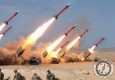
This fragmentation has deepened in 2026. Houthi missile strikes against Israel resumed in March of this year, framed explicitly as part of a wider alignment with Iran in the evolving regional conflict. Yemen — once a peripheral civil war — has thereby been drawn into the gravitational field of a broader Middle Eastern confrontation, linking her directly to the strategic rivalry between Iran, Israel and, indirectly, the United States.
The consequences for the ceasefire are profound. It is no longer merely a Yemeni instrument of de-escalation; it is a variable within a regional war system. And the situation on the ground increasingly reflects the twin states of North and South Yemen that existed until formal unification in 1990.
Saudi Arabia’s role illustrates this transformation with particular clarity. Having borne the costs of direct military intervention since 2015, Riyadh has increasingly sought stability over victory. Her strategy in 2025–2026 has been to consolidate influence in non-Houthi areas through financial support and political engineering, including the effective dismantling of the UAE-backed Southern Transitional Council after a brief but intense southern campaign. Yet even as Saudi Arabia attempts to stabilise her sphere of influence, the fragile ceasefire with the Houthis remains vulnerable — not least because it is entangled with Iran’s regional ambitions.
Here the geopolitical geometry becomes unmistakable. The Houthis have framed the ceasefire as a strategic victory not merely for themselves but for Iran, signalling their role within a wider “axis of resistance”. Yemen is no longer simply a proxy war; it is a node within a network of conflicts stretching from Gaza to the Red Sea.
The implications for global trade are equally significant. Even during periods of relative calm, Red Sea shipping has not recovered to pre-crisis levels, with commercial vessels continuing to avoid the route due to persistent insecurity. Thus the ceasefire has failed fully to restore one of the world’s most vital maritime corridors — a reminder that economic confidence, once lost, is not easily regained.
Yet perhaps the most tragic dimension of Yemen’s ceasefire lies not in geopolitics but in humanitarian reality. Landmines continue to kill and maim civilians despite the absence of major offensives, a grim testament to the enduring lethality of past violence. Aid delivery remains constrained, political fragmentation persists, and millions remain dependent on external assistance. The ceasefire has frozen the conflict, but it has not resolved its ethno-religious causes — nor alleviated its human cost.
What, then, are the broader ramifications?
First, Yemen demonstrates the emergence of what might be termed “modular ceasefires” — agreements that apply selectively across actors and domains. Peace is no longer comprehensive; it is negotiated piecemeal, often excluding key dimensions of conflict. This is a pattern increasingly visible in other theatres, including Ukraine, where partial ceasefires are sometimes contemplated for specific infrastructures or operational zones.
Secondly, Yemen reveals how local conflicts are subsumed into regional systems. The ceasefire’s durability now depends less on Yemeni actors than on the strategic restraint of Iran, Saudi Arabia and Israel. Should tensions escalate between these powers, the Yemeni front could quickly reignite — not because of domestic dynamics, but because of external alignments.
Thirdly, the Yemeni case illustrates the limits of military stalemate as a path to peace. The absence of decisive victory has produced stability of a kind, but it is a brittle stability — one sustained by exhaustion rather than agreement. Without a political settlement, the ceasefire remains perpetually provisional.
Finally, there is a lesson of perception. To outside observers, Yemen may appear a “frozen conflict”, a war that has quietly subsided. In reality, it is better understood as a conflict that has changed form — from territorial warfare to strategic signalling, from internal struggle to regional proxy theatre.
Yemen’s ceasefire is therefore not an end to war. It is a reconfiguration of it.
And that perhaps is its most important geopolitical ramification of all.
227 Views



Most Readings