Ilya Remeslo: Kremlin lawyer turned Putin critic
By Matthew Parish, Associate Editor
Tuesday 12 May 2026
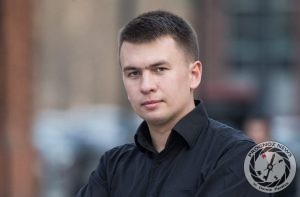
The story of Russian lawyer and propagandist Ilya Remeslo is remarkable not merely because of the speed of his apparent political conversion, but because of what it may reveal about the condition of the Russian state itself. For years Remeslo was known as one of the Kremlin’s most loyal legal attack dogs. He participated in campaigns against opposition activists, including the late Russian dissident Alexei Navalny, and cultivated a reputation as an aggressive defender of President Vladimir Putin and the wartime Russian political order. Yet in March 2026 he publicly denounced Putin as “a war criminal and a thief”, called for his resignation and was rapidly confined to a psychiatric institution in Saint Petersburg.
What followed was perhaps even more surprising. Rather than disappearing permanently into the Russian penal or psychiatric system, Remeslo was released after approximately one month and resumed criticising the Kremlin openly. The unusual nature of this sequence of events has generated intense speculation amongst Russian observers, opposition figures and Western analysts alike. In contemporary Russia, outspoken critics of the regime are generally imprisoned, exiled or silenced decisively. Remeslo’s survival and release suggest that forces within the Russian elite may themselves be divided about how to respond.
Remeslo’s background makes his case particularly revealing. He was not an outsider to the system. On the contrary, he emerged from within the machinery of Kremlin political management itself. He reportedly worked for years alongside structures connected to the presidential administration, helping orchestrate legal and informational attacks upon opposition movements. His role in proceedings against Navalny became especially notorious. Remeslo himself later admitted that he had participated in litigation campaigns targeting Navalny’s Anti-Corruption Foundation, which ultimately contributed to the legal architecture used to imprison the opposition leader.
That history makes his subsequent denunciation of Putin all the more destabilising to the Russian political system. Russian opposition activists criticising the Kremlin is unsurprising. A former insider doing so publicly is far more dangerous. It undermines the image of unanimity and ideological discipline that Putin’s administration has carefully cultivated throughout the war against Ukraine.
According to interviews given after his release, Remeslo described a growing atmosphere of exhaustion, fear and internal conflict within Russia’s governing structures. He spoke of deteriorating economic conditions, growing restrictions upon internet access, intensifying state repression and widespread dissatisfaction amongst officials themselves. Particularly striking were his allegations of rivalry between the Federal Security Service, or FSB, and technocratic factions within the Kremlin administration associated with Sergei Kiriyenko, one of Putin’s principal political managers.
Whether Remeslo’s claims are fully accurate is difficult to determine. Kremlin politics has always been opaque, dominated by rumour, intrigue and carefully controlled leaks. Yet the broader phenomenon he describes is entirely plausible. Wartime authoritarian systems often appear externally monolithic while internally fragmenting. The Soviet Union itself maintained an image of permanence until shortly before its collapse. Beneath the surface, however, bureaucratic rivalries, economic stagnation and ideological exhaustion had already hollowed out the state.
Russia today shows signs of similar strain. The war against Ukraine, originally conceived by many in Moscow as a rapid operation to subordinate Kyiv and reassert Russian regional dominance, has become a prolonged conflict of attrition. The economic burden is increasingly visible despite the Kremlin’s efforts to conceal it. Labour shortages, inflation, rising military expenditure, transport disruption and sanctions pressure have combined to weaken civilian living standards. Regions distant from Moscow have borne especially severe burdens, both economically and demographically.
Meanwhile the Russian elite itself has become increasingly securitised. Since the mutiny of Yevgeny Prigozhin in 2023, paranoia within the Kremlin appears to have intensified markedly. Reports indicate ever-tightening security protocols surrounding Putin, including restrictions on communications, movement and physical proximity. Such measures reflect not confidence but fear. Personalist authoritarian systems frequently become trapped within cycles of suspicion, as rulers fear betrayal by precisely the elites upon whom their survival depends.
The psychiatric confinement of Remeslo also evokes one of the darkest traditions of Soviet governance: punitive psychiatry. During the Soviet period dissenters were often declared mentally ill and confined to psychiatric hospitals rather than prosecuted through ordinary criminal courts. The purpose was both punitive and ideological. Opposition to the state could thereby be portrayed not as political disagreement but as psychological pathology.
The symbolism of Remeslo’s detention therefore mattered enormously. Here was a former loyalist suddenly transformed into a dissenter and treated in a manner deeply reminiscent of late Soviet methods. The message was unmistakable: criticism of the leader itself constitutes irrationality. Yet the very fact that this tactic was used against a former insider also suggests institutional uncertainty. A criminal prosecution would have created a highly visible political trial. Psychiatric detention allowed ambiguity, deniability and flexibility.
There is also an important psychological dimension to the Remeslo affair. Many authoritarian systems rely heavily upon what political scientists call preference falsification: individuals conceal their true beliefs because they assume everyone else supports the regime. Once prominent insiders begin speaking openly, however, others may realise dissatisfaction is more widespread than they imagined. The system can then deteriorate rapidly, not necessarily because opposition suddenly emerges, but because fear diminishes.
Remeslo himself explicitly invoked parallels with the late Soviet Union, arguing that officials increasingly work within a system they privately despise. Such sentiments should not be dismissed lightly. Russian political history demonstrates repeatedly that elite fragmentation, rather than popular revolution, is the greatest threat to centralised authority. The collapse of the Romanov Empire in 1917, the fall of the Soviet Union in 1991 and even the internal instability surrounding the Prigozhin mutiny all illustrate the vulnerability of highly centralised states once elite consensus begins to fracture.
At present there is little evidence that Putin’s government faces imminent collapse. The Russian state retains enormous coercive capacity, extensive propaganda infrastructure and substantial control over economic resources. Many elites remain materially dependent upon the survival of the existing system. Moreover the Kremlin continues to benefit from nationalist sentiment generated by wartime mobilisation.
Nevertheless the Remeslo affair illustrates that the appearance of unity may conceal significant instability beneath the surface. In authoritarian systems, elite cohesion is often sustained less by genuine loyalty than by calculations of personal survival. As economic conditions worsen and the costs of war continue to rise, those calculations may gradually change.
Perhaps the most revealing aspect of the entire episode is not that a propagandist turned against Putin. Political opportunists exist in every regime. Rather it is that the Russian system appeared uncertain how to respond. The state confined him, then released him. Pro-war bloggers denounced him, yet some observers speculated he retained protection from elements within the establishment itself. Such ambiguity is rarely a sign of strength.
The Putin system has always depended upon projecting inevitability — the assumption that there is no alternative, no meaningful dissent within the elite and no viable future beyond the existing order. Cases like Remeslo’s chip away at that image. Whether he proves to be an isolated eccentric, a manipulated factional instrument or the precursor to broader elite dissent remains unclear. Yet his story exposes an uncomfortable truth for the Kremlin: even amongst those who once defended the regime most zealously, faith in the system may no longer be secure.
231 Views



Most Readings