Musk v Altman and the vision of artificial intelligence
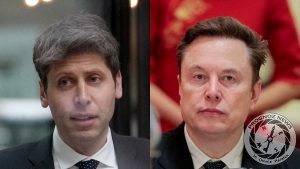
By Matthew Parish, Associate Editor
Wednesday 20 May 2026
The verdict in Musk v Altman will be remembered less as a simple legal defeat for Elon Musk and more as a defining moment in the constitutional history of artificial intelligence. The federal jury in Oakland, California, sitting in an advisory capacity before Judge Yvonne Gonzalez Rogers, concluded unanimously that Musk’s claims against Sam Altman, Greg Brockman and OpenAI were barred by the statute of limitations. Judge Gonzalez Rogers immediately accepted the jury’s reasoning and dismissed the claims.
At one level the decision was technical. The court did not ultimately declare that OpenAI’s transition from a charitable research laboratory into a partially commercialised artificial intelligence empire was morally justified or philosophically coherent. Instead the court found that Musk had waited too long to sue, because evidence showed that he knew years earlier that OpenAI intended to pursue a for-profit structure and extensive commercial partnerships.
Yet the deeper significance of the case lies precisely in that distinction. The lawsuit revealed that modern artificial intelligence is no longer governed principally by ideals, manifestos or even technical brilliance. It is governed by institutional timing, capital structures, fiduciary obligations and corporate law. In effect the jury and judge declared that the future of artificial intelligence will not be settled by moral rhetoric but by legal architecture.
The trial itself exposed extraordinary contradictions amongst the world’s leading artificial intelligence pioneers. Musk presented himself as the betrayed guardian of OpenAI’s founding humanitarian mission. He argued that OpenAI had originally been conceived as a nonprofit institution dedicated to developing artificial general intelligence for the benefit of humanity rather than for shareholder enrichment. According to Musk, Altman and Brockman transformed that vision into a vehicle for private accumulation and strategic alliance with Microsoft.
But the defence succeeded in portraying Musk not as a betrayed idealist but as a disappointed rival. OpenAI’s lawyers argued that Musk had himself supported discussions about commercialisation years earlier, had explored control over OpenAI and only became hostile after losing influence within the organisation and subsequently founding his own competing artificial intelligence enterprise, xAI.
That argument appears to have resonated powerfully with both jury and judge. The astonishing speed of deliberations — reportedly under two hours — suggested not merely legal clarity but emotional exhaustion. By the end of the proceedings, the court had been exposed to years of internal memoranda, personal rivalries, accusations of dishonesty, ego clashes and competing narratives about the salvation of humanity.
What emerged was not a portrait of philosopher-engineers cautiously guiding civilisation towards safe artificial intelligence. Instead the trial revealed a corporate struggle between extraordinarily wealthy and ambitious men competing for dominance over what may become the most economically transformative technology in modern history.
This matters because OpenAI occupies a peculiar constitutional position in global society. Unlike an ordinary corporation, its products increasingly shape education, journalism, law, finance, warfare and public administration. Artificial intelligence systems are becoming quasi-infrastructural. They influence the production of knowledge itself. In previous centuries, comparable institutions might have included central banks, telegraph monopolies, railway systems or national broadcasting corporations. Their governance inevitably became political.
The Musk v Altman litigation therefore resembled a constitutional dispute disguised as commercial litigation. At its heart was a question of legitimacy: who owns the future of intelligence?
The court’s answer was subtle but profound. Ownership belongs not to founders’ mythology but to enforceable governance structures. Whatever OpenAI’s original rhetoric may have been, the court effectively accepted that institutional evolution, disclosed over time and tolerated by participants, acquires legal legitimacy.
This is an enormously consequential precedent for the artificial intelligence industry. Many frontier AI companies began with quasi-utopian missions. They spoke about safety, alignment, openness and benefit to humanity. Yet as the computational requirements of frontier models exploded, idealism collided with the brutal realities of capital expenditure. Training advanced models requires colossal quantities of semiconductors, electricity, data centres and specialised engineering talent. Those necessities favour enormous concentrations of private capital.
Consequently nearly every major artificial intelligence laboratory has drifted toward hybrid structures balancing idealistic mission statements against investor demands. OpenAI merely became the most visible example.
The jury’s and judge’s decisions implicitly acknowledged that such transitions are not aberrations but structural inevitabilities within advanced technological capitalism. If an artificial intelligence laboratory wishes to remain globally competitive, it must secure funding at scales previously associated only with sovereign states or multinational industrial conglomerates.
The ruling also demonstrates the growing weakness of founder mythology in the technology sector. For two decades Silicon Valley cultivated the image of visionary founders as quasi-prophetic figures uniquely qualified to direct civilisation’s future. The trial punctured that mythology. Musk, Altman and Brockman appeared not as transcendent visionaries but as human beings constrained by ordinary institutional realities — litigation deadlines, evidentiary standards, shareholder incentives and judicial scepticism.
Judge Gonzalez Rogers herself emerged as one of the trial’s most important figures. Throughout proceedings she reportedly displayed impatience toward theatrics and repeatedly redirected the case toward concrete legal questions. Her approach reflected an increasingly important judicial phenomenon in the United States: courts are becoming reluctant arbiters of technological governance. American judges are now asked to resolve disputes involving social media monopolies, cryptocurrency, algorithmic systems and artificial intelligence architectures whose implications extend far beyond traditional corporate law.
Yet courts remain imperfect institutions for such tasks. The Musk v Altman proceedings often resembled an attempt to translate existential philosophical concerns into the procedural vocabulary of fiduciary duties and statutes of limitation. Questions about humanity’s future were squeezed into evidentiary disputes about meetings held in 2017 and emails exchanged in 2019.
That mismatch may explain why the case ultimately felt unsatisfactory even to observers sympathetic to OpenAI’s victory. The lawsuit raised genuinely important questions that the legal system never truly answered. Should organisations developing potentially civilisation-altering technologies be permitted to evolve into conventional profit-seeking entities? Can fiduciary obligations to investors coexist with obligations to humanity? Should artificial intelligence laboratories resemble corporations, universities, utilities or public trusts?
The court did not answer these questions because, procedurally, it did not need to answer them.
Nevertheless the practical consequences are immense. OpenAI now proceeds toward an anticipated public offering under vastly improved conditions. Analysts immediately interpreted the ruling as eliminating a major legal obstacle to OpenAI’s corporate future. The dismissal therefore strengthens the consolidation of frontier artificial intelligence within large-scale capital markets.
That outcome may accelerate a broader transformation already underway. Artificial intelligence development increasingly resembles twentieth-century aerospace or nuclear industries — sectors requiring such immense resources that only states and giant corporations can realistically compete. The romantic era of small independent laboratories may already be ending.
Ironically Musk himself helped create this world. His career repeatedly demonstrated that technological supremacy in fields such as electric vehicles, rocketry and artificial intelligence depends upon gigantic industrial scaling rather than mere conceptual innovation. In suing OpenAI for abandoning nonprofit purity, Musk confronted the same economic logic that made his own enterprises successful.
There is also an important geopolitical dimension. The trial occurred during intensifying strategic competition over artificial intelligence amongst the United States, China and other major powers. Under such conditions, governments may prioritise rapid technological advancement over philosophical consistency. OpenAI’s commercialisation becomes easier to justify when artificial intelligence is viewed not merely as a consumer technology but as a strategic national capability comparable to aerospace, cryptography or nuclear research.
Hence the lawsuit may ultimately be remembered as the moment when artificial intelligence ceased pretending to stand outside conventional power politics. The courtroom stripped away the humanitarian branding and revealed AI development as a contest involving money, infrastructure, legal leverage and geopolitical advantage.
Yet there remains a final irony.
Musk lost the case legally, but he may still have succeeded intellectually. The proceedings forced unprecedented public scrutiny upon OpenAI’s governance, internal culture and commercial evolution. Witness testimony and disclosed documents revealed anxieties about honesty, concentration of power and institutional mission drift. Even though the court dismissed his claims, Musk succeeded in compelling society to confront uncomfortable questions about who controls artificial intelligence and in whose interests it operates.
The jury may have ruled that Musk sued too late. History may eventually decide that he identified the right problem all along.
156 Views



Most Readings