Friction between Moscow and Beijing: no deal on the Power of Siberia 2 pipeline
By Matthew Parish, Associate Editor
Thursday 21 May 2026
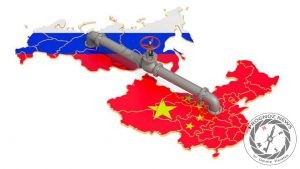
The long-anticipated failure of President Vladimir Putin and President Xi Jinping to conclude an agreement on the Power of Siberia 2 gas pipeline during Mr Putin’s latest visit to Beijing is more than a commercial disappointment. It is a geopolitical moment of considerable significance. For years Russian officials have spoken of the proposed pipeline as though its completion were inevitable, a vast infrastructural artery that would redirect Siberian natural gas away from Europe and towards China, binding Moscow and Beijing together in an enduring Eurasian partnership. Yet despite repeated summits, elaborate diplomatic symbolism and mutual declarations of friendship “without limits”, the project remains stalled.
The reasons are not difficult to discern. China and Russia may share a common hostility towards western predominance, but their strategic interests are not identical. The failure to finalise Power of Siberia 2 reveals the asymmetry in their relationship, the growing weakness of Russia’s negotiating position and the cold economic realism underlying Chinese statecraft.
The original Power of Siberia pipeline, inaugurated in 2019, transports natural gas from eastern Siberia into northeastern China. It was negotiated at a time when Russia still possessed a substantial European gas market and when Moscow’s leverage over Europe through energy dependence remained formidable. Power of Siberia 2 was conceived under entirely different circumstances. The second pipeline would redirect gas from the Yamal fields in western Siberia — the same fields previously serving Europe — through Mongolia into northern China. Its strategic purpose was obvious: to compensate for the catastrophic collapse of Russia’s gas exports to Europe following the full-scale invasion of Ukraine in 2022.
Before the war, Europe was the principal customer for Russian pipeline gas. Decades of infrastructure, commercial integration and political accommodation had enabled the Kremlin to derive enormous revenues from European energy dependency. But the war destroyed this arrangement with astonishing speed. European governments accelerated diversification efforts, liquefied natural gas imports increased dramatically, renewable energy investments expanded and Russian pipelines became politically toxic. The sabotage of Nord Stream, irrespective of its authorship, symbolised the irrevocable breakdown of the old energy relationship between Moscow and Europe.
In this context, Power of Siberia 2 ceased to be merely a commercial project. It became a strategic necessity for Russia.
Yet what is strategically necessary for Moscow is not necessarily advantageous for Beijing.
China approaches energy policy with characteristic patience and caution. She prefers diversified suppliers and dislikes dependence upon any single external actor. Beijing already imports substantial quantities of gas from Central Asia, Australia, Qatar and increasingly through liquefied natural gas shipments from multiple jurisdictions. While Russian gas is attractive because of its potential discounts and geographic proximity, China has little urgency to commit herself to a project costing tens of billions of dollars unless the commercial terms are overwhelmingly favourable.
This is where the negotiations appear to have faltered.
Reports emerging from diplomatic and commercial circles suggest that Beijing demanded pricing arrangements close to heavily subsidised domestic Russian gas prices. Such terms would have been deeply disadvantageous to Gazprom, already suffering from enormous revenue losses after the collapse of European exports. Russia reportedly also wished China to commit to very large guaranteed purchase volumes. Beijing appears unwilling to do so.
The consequence is a negotiation in which one side urgently requires an agreement while the other can comfortably wait.
This imbalance reflects a broader transformation in Sino-Russian relations. For years western analysts debated whether the partnership between Moscow and Beijing represented an equal strategic alignment or a relationship increasingly dominated by China. The answer is becoming progressively clearer. Russia’s isolation from western capital markets, technology and energy customers has rendered her economically dependent upon China to a degree unprecedented since the early Soviet period.
But dependency does not necessarily produce solidarity. China’s leadership respects strength above all else. The Kremlin’s inability to secure a pipeline agreement despite repeated high-level diplomacy demonstrates how Beijing now perceives Moscow: useful, strategically convenient, but weakened.
The symbolism of the failed negotiations is therefore profound. Mr Putin travelled to Beijing seeking evidence that Russia retains major international partners and alternative economic horizons despite western sanctions and military attrition in Ukraine. Instead the absence of a final agreement underscored the limits of Russia’s leverage even with her closest geopolitical associate.
This does not mean the project is permanently dead. Large energy infrastructure negotiations frequently take years. Chinese policymakers may ultimately decide that securing long-term access to Siberian gas at highly favourable prices serves their strategic interests. The pipeline could still be constructed eventually. But the terms will almost certainly favour China overwhelmingly.
Indeed one may interpret the negotiations as a microcosm of the future Eurasian order that is emerging from the Ukraine war. Russia increasingly resembles a junior resource-exporting partner supplying discounted raw materials to a technologically and economically dominant China. Moscow may publicly insist upon sovereign equality, civilisational partnership and multipolar cooperation, but the underlying economic realities are more hierarchical.
There is historical irony here. Russian strategists long imagined a “pivot to Asia” as an assertion of geopolitical independence from Europe. In practice the pivot risks replacing one form of dependency with another. Under the European energy relationship Russia possessed substantial bargaining power because European economies had structured themselves around Russian supplies. China, by contrast, is careful never to become similarly vulnerable. Beijing has observed Europe’s predicament and learned from it.
The failed Power of Siberia 2 negotiations also expose a contradiction in contemporary authoritarian geopolitics. Western observers often assume that autocratic states naturally cooperate more effectively because they share hostility towards liberal democratic norms. Yet authoritarian systems are frequently intensely transactional and deeply distrustful of one another. Shared opposition to the United States does not erase competition for influence, pricing disputes or divergent strategic priorities.
China’s behaviour illustrates this perfectly. Beijing has consistently avoided openly violating western sanctions against Russia on a scale that would endanger her access to western export markets. Chinese banks remain cautious. Chinese corporations are selective. Chinese policymakers continue balancing support for Moscow against the far greater importance of stable economic relations with Europe and the United States.
This balancing act is especially visible in energy policy. China wants cheap Russian resources, but she does not want to become economically entangled in Russia’s geopolitical conflicts. Hence delay becomes a negotiating instrument. Time favours Beijing because Russia’s alternatives continue narrowing.
For Europe, the stalled pipeline negotiations carry mixed implications. They demonstrate that Russia cannot easily replace the European market, thereby weakening one of the Kremlin’s principal economic lifelines. However they underline the emergence of a more fragmented global energy system in which sanctions and geopolitical blocs increasingly shape infrastructure decisions.
For Ukraine, the symbolism is perhaps most important of all. One of the Kremlin’s central strategic assumptions before the invasion was that Russia’s energy indispensability would divide western governments and shield Moscow from sustained isolation. That calculation proved disastrously mistaken. The inability now to redirect those same gas flows eastward on acceptable terms compounds the strategic error.
There is also a psychological dimension to this episode. Russian political culture has long been shaped by the conviction that Russia is one of the world’s indispensable great powers, deserving equal status with the United States and China. Yet the Power of Siberia 2 negotiations suggest a harsher reality: contemporary Russia increasingly lacks the economic diversification, technological dynamism and financial strength necessary to negotiate from a position of equality with Beijing.
China understands this perfectly well.
The future of the pipeline will therefore depend less upon Russian strategic ambition than upon Chinese calculations of convenience. Beijing can afford patience. Moscow cannot.
That asymmetry may ultimately prove one of the most enduring geopolitical consequences of the war in Ukraine.
151 Views



Most Readings