Einstein on society and intelligence
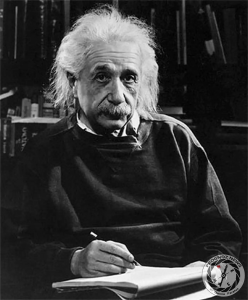
By Matthew Parish, Associate Editor
Tuesday 9 June 2026
Albert Einstein is reputed to have observed that one of the great difficulties faced by intelligent people is that less intelligent people often regard them as strange. Whether he expressed the sentiment in precisely those words is less important than the enduring truth concealed within it. Throughout history, societies have often treated their most original minds with suspicion, irritation or ridicule long before they were prepared to admire them. The phenomenon is neither accidental nor confined to science. It appears in politics, literature, military affairs, economics and even ordinary social life. Intelligence frequently manifests itself not merely as the ability to solve problems, but as the tendency to perceive the world differently from the majority. It is this divergence of perception that often generates discomfort.
Human societies are fundamentally conformist structures. Civilisation depends upon a broad level of agreement about norms, language, habits and expectations. Communities cannot function if every assumption is questioned every hour of every day. Consequently social groups develop instincts that reward predictability and punish excessive deviation. These instincts evolved long before modern education systems or scientific rationality. In prehistoric societies, the person who behaved too differently from the tribe might genuinely have endangered collective survival. Suspicion of unconventionality therefore became deeply rooted in human psychology.
The highly intelligent individual often disrupts this equilibrium without intending to do so. Such people frequently ask questions others do not ask, perceive contradictions others ignore or become fascinated by subjects others find tedious or incomprehensible. Their conversational habits may appear eccentric because their minds move rapidly between layers of abstraction. They may seem impatient with rituals that appear meaningless to them. They may disregard social hierarchies if they believe competence matters more than status. All these tendencies can be interpreted by others not as signs of intelligence, but as signs of oddity.
Einstein himself embodied this paradox. During his youth, Germany valued discipline, order and obedience within education. Einstein’s intellectual habits did not fit comfortably within such structures. He questioned assumptions rather than memorising them. He disliked rigid authority. He appeared absent-minded because his mind was occupied with conceptual worlds invisible to others. To many contemporaries, particularly in his earlier years, he must have appeared not like a genius but like a peculiar and impractical man.
Yet the same pattern repeats itself endlessly. The history of scientific discovery is filled with individuals regarded initially as strange, unstable or dangerous. Nicolaus Copernicus proposed that the Earth revolved around the Sun at a time when such a notion seemed absurd and spiritually threatening. Galileo Galilei was persecuted for observations that contradicted established doctrine. Alan Turing, whose intellectual work helped create modern computing, was socially marginalised and criminalised despite his wartime contributions. Nikola Tesla was often portrayed as bizarre because his imagination extended beyond the conceptual boundaries of his age.
The dynamic extends well beyond science. In wartime Ukraine, for example, innovation in drone warfare emerged not solely from established military hierarchies but often from unconventional engineers, hobbyists, programmers and volunteers. Many of the individuals responsible for revolutionary battlefield technologies appeared eccentric to traditional military institutions. Yet war has a brutal way of rewarding effectiveness over conformity. Under existential pressure, societies sometimes become more willing to tolerate intellectual oddity because survival depends upon innovation.
This tension between conformity and originality is becoming increasingly visible in the era of artificial intelligence. Modern social media ecosystems reward emotional simplicity, rapid judgment and group identification. Complex or nuanced thinkers often struggle within such environments because intelligence rarely communicates itself in slogans. The highly intelligent person frequently hesitates, qualifies statements and perceives ambiguity. Online culture, by contrast, rewards certainty and tribal loyalty. Consequently, thoughtful individuals may appear detached, awkward or elitist merely because they refuse to compress reality into simplistic formulas.
Indeed intelligence can genuinely produce social difficulties. Smart people are not always pleasant people. Exceptional analytical ability does not automatically confer empathy, patience or emotional sensitivity. Some intelligent individuals become arrogant because they recognise errors around them constantly. Others withdraw socially because ordinary conversation feels repetitive or exhausting. Some become obsessed with abstract problems while neglecting practical realities. These traits can reinforce perceptions of weirdness and widen the gap between intellectual and social acceptance.
There is also a darker political dimension to this phenomenon. Authoritarian systems frequently cultivate suspicion towards intellectuals because independent thought threatens centralised authority. Totalitarian regimes throughout history have often portrayed intellectuals as alienated, cosmopolitan or detached from “ordinary people”. Anti-intellectualism functions politically because it transforms expertise into a source of mistrust rather than respect. Once a society begins to associate intelligence with disloyalty or eccentricity, it becomes easier for demagogues to dismiss evidence, science and critical reasoning altogether.
The Soviet Union demonstrated this contradiction vividly. She prized scientific achievement and mathematical excellence. But intellectual independence could become politically dangerous. The state admired intelligence only when subordinated to ideological conformity. Truly independent thinkers often became objects of surveillance or persecution. Similar tensions continue to exist in many contemporary societies where political movements increasingly define intellectual complexity as moral weakness or social alienation.
Yet Einstein’s observation should not be interpreted merely as a complaint by intellectual elites against ordinary people. The issue is more reciprocal and more human than that. Intelligence itself can generate isolation because highly intelligent individuals sometimes fail to communicate effectively with others. The ability to understand something deeply does not necessarily include the ability to explain it kindly or clearly. Einstein succeeded not merely because he was brilliant, but because he eventually became capable of expressing profound scientific ideas in ways ordinary people could emotionally grasp. His dishevelled appearance and absent-minded reputation even softened public suspicion by making him appear human rather than intimidating.
The deepest irony is that societies usually celebrate genius only retrospectively. Once the unconventional thinker succeeds, the very traits once considered strange become romanticised. We remember Einstein’s untidy hair affectionately because history validated him. Had his theories failed, the same appearance might have been interpreted merely as evidence of instability. Success transforms eccentricity into charm. Failure leaves it classified as weirdness.
This reveals something uncomfortable about human nature. People often judge intelligence not by its intrinsic qualities but by whether it produces socially validated outcomes. Visionaries are admired after victory and mocked before it. There is little middle ground. As a result, genuinely original thinkers frequently endure long periods of loneliness, misunderstanding or ridicule before society recognises their contributions.
The contemporary world may intensify this dilemma rather than diminish it. Artificial intelligence, algorithmic media and hyper-connected communication systems increasingly encourage homogeneity of thought. Recommendation algorithms favour predictability and emotional reinforcement. Individuals who think differently may therefore appear even stranger because modern digital systems amplify consensus and suppress intellectual divergence. In such an environment, preserving space for eccentricity becomes increasingly important. Innovation rarely emerges from perfect conformity.
Perhaps the greatest lesson contained within Einstein’s observation is not that intelligent people are victims, but that civilisation depends upon tolerating people who seem unusual. Every major advance in human history has emerged from minds willing to depart from convention. Such departures are rarely comfortable for societies in the moment they occur. Yet without them, civilisation stagnates.
Ukraine herself presently offers a powerful illustration of this truth. Faced with invasion, she has repeatedly relied upon unconventional thinkers, improvised technologies and adaptive strategies that would once have appeared eccentric to traditional military planners. Under conditions of existential danger, creativity ceases to be optional. What once looked weird becomes necessary.
The challenge for democratic societies, therefore, is not merely to educate intelligent people but to cultivate cultural tolerance for intellectual difference. A civilisation unable to endure unconventional minds gradually loses the capacity for renewal. Einstein understood this not only as a physicist but as a refugee from ideological conformity. He had witnessed societies in which independent thinking became dangerous.
Ultimately, the strange person sitting quietly at the edge of the room may not be detached from reality at all. He may simply perceive realities others have not yet learned to see.
155 Views



Most Readings