Why Is Kash Patel Planning a Visit to Russia?
By Matthew Parish, Associate Editor
Tuesday 21 July 2026
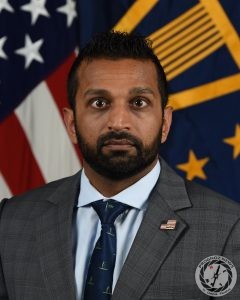
The announcement that FBI Director Kash Patel is reportedly planning a visit to Russia has inevitably generated intense speculation. At the time of writing, little has been disclosed publicly about the purpose, agenda or participants of the proposed visit, leaving analysts to infer its significance from the broader geopolitical context rather than from any official explanation.
A journey of this kind would be remarkable under any circumstances. Relations between Washington and Moscow remain burdened by the war in Ukraine, extensive sanctions, mutual espionage accusations and a profound lack of trust. Contacts between senior officials have become increasingly rare and are often conducted through carefully managed diplomatic or intelligence channels rather than public diplomacy.
One possibility is that the visit reflects the practical necessities of intelligence cooperation. Even adversaries sometimes find it necessary to communicate directly. Throughout the Cold War, intelligence services maintained discreet contacts on issues ranging from counter-terrorism to prisoner exchanges, missing persons, nuclear security and the management of crises that might otherwise spiral out of control. Such dialogue is not a sign of friendship. Rather it is often an acknowledgement that communication itself is an instrument of national security.
Another explanation may involve negotiations over detained citizens. The United States and Russia have repeatedly conducted complex prisoner exchanges despite otherwise hostile relations. Senior officials from intelligence and law enforcement agencies frequently play important roles in arranging such agreements. If humanitarian concerns or the release of imprisoned Americans were involved, direct discussions might be judged worthwhile despite the political controversy they would inevitably provoke.
Cybersecurity represents another area where limited engagement may remain necessary. Russian state-linked cyber operations have consistently ranked among the most significant security concerns identified by American intelligence agencies, while Moscow regularly accuses Western governments of conducting comparable activities against Russian interests. Even where cooperation is impossible, establishing channels to reduce misunderstandings during major cyber incidents can serve both sides’ interests.
The timing is also politically significant. The Trump administration has consistently favoured direct engagement with geopolitical rivals where previous administrations often preferred diplomatic isolation. Supporters argue that dialogue, however uncomfortable, creates opportunities for practical outcomes. Critics respond that high-profile meetings risk conferring legitimacy upon authoritarian governments while yielding few tangible concessions. Both perspectives contain elements of truth, making any such visit politically contentious before it even begins.
For Patel personally, the journey is likely to attract additional scrutiny because of controversies that have accompanied his public career. During his nomination and confirmation process as FBI Director, questions were raised regarding previous commercial relationships and work connected with individuals alleged to have ties to pro-Kremlin narratives. Patel rejected suggestions that these relationships compromised his independence, and ethics reviews permitted him to assume office. Nevertheless those earlier controversies ensure that any official engagement with Russia will receive especially close examination.
It is equally important not to over-interpret the available information. At present there is no public evidence explaining the precise objectives of the reported visit beyond its existence. Speculation ranges from intelligence dialogue to diplomatic signalling, but none has been confirmed. Responsible analysis therefore requires distinguishing between what is known and what remains conjecture.
Ultimately the significance of any visit will depend not upon the photographs that accompany it but upon the outcomes that follow. If discussions contribute to reducing strategic risks, securing humanitarian objectives or establishing clearer channels of communication between two nuclear powers, history may judge the effort worthwhile. If however the visit produces little beyond symbolism while reinforcing existing mistrust, it will merely become another episode in the long and difficult relationship between Washington and Moscow.
Diplomacy between adversaries has always been uncomfortable. Indeed it is precisely when relations are at their worst that communication becomes both most politically difficult and, potentially, most strategically valuable. Whether Kash Patel’s reported journey proves to be an example of pragmatic statecraft or an unsuccessful diplomatic gesture will only become apparent once its purpose and consequences are eventually revealed.
60 Views



Most Readings