The Greatest Things in Life Are Simple
By Matthew Parish, Associate Editor
Monday 20 April 2026
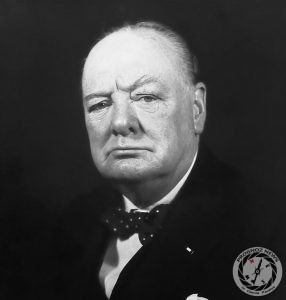
It is often said that all the greatest things in life are simple — a sentiment frequently attributed to Winston Churchill, who understood better than most the difference between what is complex and what is merely complicated. The distinction matters. Complexity may be the natural condition of the world, but complication is usually the mark of human interference — bureaucracy layered upon instinct, abstraction layered upon truth, fear layered upon clarity.
To say that the greatest things are simple is not to suggest that they are easy, nor that they lack depth. Quite the contrary — the simplest truths are often those that resist elaboration precisely because they are fundamental. Love, loyalty, courage, honour, sacrifice: these are not reducible to formulae, nor are they improved by intellectual ornament. They exist in a kind of moral plainness — immediately recognisable, universally understood, and yet endlessly difficult to practise.
In wartime Ukraine this proposition reveals itself with particular force. A soldier in a trench does not fight for an abstract theory of geopolitical alignment; he fights for his comrades, his family, his homeland. These motivations are not complex. They do not require philosophical exposition. They are elemental — and because they are elemental, they are powerful. It is precisely their simplicity that gives them endurance. A complicated justification for war would collapse under pressure; a simple one — defence of one’s home — can sustain a nation through years of attrition.
Yet modern societies often distrust simplicity. There is a tendency, especially in advanced bureaucratic states, to equate complexity with sophistication. Policies become dense, language becomes opaque, and decision-making retreats behind technical jargon. In such environments, simple ideas can appear naive, even dangerous. But this suspicion may itself be a form of intellectual insecurity — a reluctance to accept that the most important questions have answers that are, at their core, disarmingly straightforward.
Consider justice. Entire legal systems are constructed to approximate it, and yet the principle itself is simple: that people should be treated fairly, that wrongdoing should be addressed, and that the innocent should be protected. The complexity arises not from the idea, but from the difficulty of applying it consistently in an imperfect world. The same is true of truth, of freedom, of dignity. Their definitions are simple; their realisation is not.
Churchill’s insight — if we take it seriously — carries a warning as well as a comfort. It suggests that when life becomes excessively complicated, something may have gone wrong. Complexity may be unavoidable, but complication is often a symptom of evasion. Leaders who cannot articulate their aims in simple terms may not fully understand them. Institutions that cannot explain their purpose plainly may have lost sight of it. And individuals who bury their values beneath layers of rationalisation may be attempting to escape the demands those values impose.
There is also a moral discipline in simplicity. To live simply, in the sense Churchill implies, is to strip away what is unnecessary — to recognise what matters and to attend to it without distraction. This does not mean rejecting intellectual life or technological advancement; it means ensuring that these serve, rather than obscure, fundamental human goods. The danger of modernity is not that it is too advanced, but that it risks forgetting why advancement matters at all.
The greatest things in life may indeed be simple — not because they are trivial, but because they are foundational. They lie beneath the surface of all complexity, like the bedrock beneath a shifting landscape. One may build elaborate structures upon them — cultures, institutions, strategies, technologies — but if the foundation is ignored or misunderstood, those structures will eventually falter.
Churchill, who navigated one of the most complex crises in modern history, understood this instinctively. His speeches, remembered for their rhetorical power, were in fact grounded in simple ideas — resistance, perseverance, belief in eventual victory. It was not their sophistication that moved people, but their clarity. In moments of existential uncertainty, simplicity is not a weakness; it is a form of strength.
And so the question is not whether the greatest things are simple — they are — but whether we have the discipline, in an age of relentless complication, to recognise them, to preserve them, and to live by them.
167 Views


Most Readings


Crimea Under Pressure: Ukraine’s Long Campaign Against Russia’s Southern Bastion
97 Views