Chornobyl’s fortieth anniversary
By Matthew Parish, Associate Editor
Monday 27 April 2026
On 26 April 1986, in the early hours of a spring morning that ought to have passed unremarked, Reactor No. 4 at the Chernobyl Nuclear Power Plant exploded—an industrial catastrophe that would come to define the twilight years of the Soviet Union and cast a long, irradiated shadow across Europe. Forty years on from the Chernobyl disaster it remains not merely a memory of technological failure, but a prism through which questions of governance, truth, and human resilience continue to refract.
The explosion itself was the culmination of a flawed safety test conducted under conditions of procedural negligence and design inadequacy. Yet to reduce Chornobyl to a sequence of technical misjudgements is to misunderstand her enduring significance. The disaster was not simply a failure of a reactor; it was a failure of a system—of secrecy, of bureaucratic inertia and of a political culture that privileged appearances over reality. In the immediate aftermath the Soviet authorities hesitated, obfuscated, and delayed—actions that allowed radioactive contamination to spread silently across borders, reaching as far as Scandinavia before the truth could no longer be concealed.
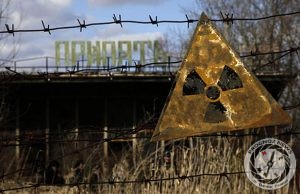
The nearby city of Pripyat—once a model Soviet settlement, young and orderly—was evacuated only after a fatal delay. Its inhabitants left with the expectation of return within days. They never came back. Today, Pripyat stands as a haunting monument to interrupted lives, its apartment blocks reclaimed by forest, its schools frozen in time, its ferris wheel rusting under open skies. It is not a ruin of antiquity but a ruin of modernity, a reminder that even the most confident technological societies are not immune to sudden and irreversible collapse.
The human cost of Chornobyl defies simple quantification. Immediate casualties among plant workers and first responders were followed by a longer, more insidious toll—thyroid cancers, leukaemias, and a persistent anxiety that spread alongside the radioactive plume. The so-called “liquidators”—hundreds of thousands of soldiers, engineers, and civilians tasked with containing the disaster—performed acts of extraordinary courage, often with limited understanding of the risks they faced. Many paid with their health; some with their lives. Their sacrifice, belatedly recognised, forms one of the central moral narratives of the disaster.
For Ukraine Chornobyl is both a wound and a point of identity. At the time of the explosion Ukraine was not sovereign; she was a republic within the Soviet Union, subject to decisions taken far beyond her borders. The disaster thus became intertwined with the growing sense that Ukraine’s fate could not safely be entrusted to distant authorities. Chornobyl hence contributed, indirectly yet profoundly, to the currents that would lead to independence in 1991. It exposed the fragility of a system that claimed infallibility, and in doing so accelerated its unravelling.
Forty years later the Exclusion Zone has acquired an ambiguous character. It is at once a site of scientific study, a place of pilgrimage and, increasingly, a destination for a form of dark tourism. Wildlife has returned in the absence of human habitation, leading some to describe the area as an accidental nature reserve. Yet such descriptions risk romanticising a landscape that remains contaminated and in many respects dangerous. The apparent flourishing of nature does not negate the underlying reality of radioactive persistence; instead it underscores the adaptability of life in the face of human absence.
The legacy of Chornobyl also reverberates through contemporary debates about nuclear energy. Advocates emphasise the role of nuclear power in reducing carbon emissions, particularly in an age of climate anxiety. Critics point to Chornobyl as evidence of the potentially catastrophic consequences of failure. Both positions in their own ways draw upon its memory. Yet the technological context has evolved considerably since 1986. Reactor designs have improved; safety protocols have been strengthened; international oversight has become more robust. To invoke Chornobyl as a simple argument for or against nuclear energy is therefore to simplify a complex and evolving field.
More troubling perhaps is the persistence of the underlying human factors that contributed to the disaster. Secrecy, institutional complacency and the temptation to obscure inconvenient truths are not relics of the Soviet past; they are enduring features of political and corporate life across the world. The true lesson of Chornobyl lies not only in engineering but in governance. Transparency, accountability and a willingness to confront uncomfortable realities are as essential to safety as any technological safeguard.
The war presently unfolding in Ukraine lends Chornobyl an additional, contemporary resonance. In 2022, the Exclusion Zone briefly fell under foreign military occupation, raising fears of renewed radiological risk. The sight of armed forces manoeuvring through contaminated terrain served as a stark reminder that the legacies of past disasters can intersect with present conflicts in unpredictable ways. Chornobyl it seems is not confined to history; it remains entangled in the geopolitical tensions of the present.
Commemoration therefore must extend beyond ritual remembrance. To mark the fortieth anniversary of the disaster is to engage with its continuing implications—to recognise the lives disrupted and lost, to honour the courage of those who responded, and to reflect upon the conditions that made such a catastrophe possible. It is also to acknowledge the resilience of those who have lived in its shadow, rebuilding lives in the aftermath of displacement and uncertainty.
Chornobyl endures because it speaks to fundamental questions about the relationship between humanity and her own creations. Technology promises mastery over nature, yet it also introduces new vulnerabilities. Systems designed for efficiency can become instruments of catastrophe when transparency fails. And societies that prioritise control over truth may find themselves unable to respond effectively when confronted with crisis.
Forty years on the reactor lies encased within a vast sarcophagus, itself enclosed by a newer, more secure structure—a physical attempt to contain the past. Yet the significance of Chornobyl cannot be so easily confined. It remains a warning, a lesson, and a testament—an enduring reminder that the cost of ignoring reality, whether in science or in governance, can be measured not only in lives lost but in landscapes forever altered.
166 Views



Most Readings