On the importance of saying no
By Matthew Parish, Associate Editor
Monday 27 April 2026
The capacity to say no is one of the most underrated faculties in human affairs. In a world increasingly defined by acceleration, obligation and incessant communication, refusal has acquired a paradoxical moral weight. It is often misinterpreted as obstruction, selfishness or even weakness. Yet when examined through the lives and ideas of certain well-known individuals, the act of saying no emerges not as a negation but as a form of discipline — even at times a moral necessity.
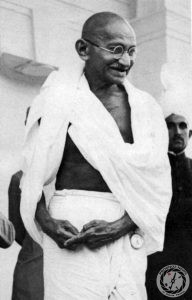
Amongst the most frequently cited advocates of principled refusal is Mahatma Gandhi. His doctrine of non-cooperation with unjust authority rested entirely upon the power of saying no. When he urged millions of Indians to withdraw their labour, their taxes and their allegiance from the British colonial system, he was not proposing violence or even active resistance in the conventional sense. He was proposing abstention — a collective refusal to participate. Gandhi understood that systems of power rely not merely upon force, but upon compliance. To say no in this context was to reclaim agency without resorting to destruction. It was a negative act with profoundly constructive consequences.
A similar intellectual thread may be found in the work of Hannah Arendt, whose reflections on totalitarianism emphasised the dangers of thoughtless conformity. Arendt’s analysis of the so-called ‘banality of evil’ — her observation that great crimes may be committed by ordinary individuals who simply fail to question orders — implies a corollary: that moral responsibility often begins with refusal. To say no is to interrupt the machinery of automatic obedience. It requires the exercise of judgement, and therefore restores the individual as a moral actor rather than a passive instrument.
In a more contemporary and less overtly political register, figures such as Steve Jobs have articulated the strategic importance of saying no. Jobs was known for his insistence that innovation depended not on the proliferation of ideas, but on their ruthless curation. He famously remarked that focus is about saying no to the hundred other good ideas that inevitably arise. Here, refusal is not an ethical stance but an operational one — a recognition that resources, including time and attention, are finite. To accept everything is to dilute purpose; to refuse selectively is to define it.
The same principle has been explored in the domain of personal productivity by authors such as Greg McKeown, whose work advocates what he terms ‘essentialism’ — the disciplined pursuit of less. McKeown argues that many individuals find themselves overwhelmed not because they lack opportunity, but because they lack the ability to decline it. Each unexamined yes becomes a commitment, and the accumulation of such commitments leads to fragmentation. The art of saying no therefore is not merely about avoidance; it is about preservation — of clarity, of energy and of direction.
Yet refusal is not always comfortable. Social conventions tend to reward agreement. To say yes is to align oneself with others, to maintain harmony, to avoid conflict. To say no is to risk disapproval, to create distance, to assert boundaries that may not be welcomed. It is perhaps for this reason that many people acquiesce even when their instincts counsel otherwise. The psychological cost of refusal appears immediate and tangible, whereas the cost of compliance is deferred and diffuse.
Here the insights of Carl Jung are instructive. Jung emphasised the importance of individuation — the process by which a person becomes distinct from the collective. This process necessarily involves differentiation, and differentiation requires the ability to reject certain expectations imposed by society or by one’s immediate environment. Without the capacity to say no the individual risks dissolution into the group, losing the very identity that makes moral and intellectual autonomy possible.
The relevance of these reflections is particularly acute in times of crisis. In wartime Ukraine for instance, the ability to refuse — to reject occupation, to decline collaboration, to resist disinformation — has taken on existential significance. Saying no in such a context is not a matter of personal preference but of national survival. It is a reaffirmation of sovereignty, both political and psychological. The same act that in everyday life might be considered impolite or inconvenient becomes, under such conditions, an act of courage.
There is also a subtler dimension to refusal, one that concerns the internal life. To say no is not only to others, but to oneself — to impulses, distractions and temptations that undermine longer-term objectives. This form of self-denial has been recognised across philosophical and religious traditions as essential to the cultivation of character. It is in effect the internal counterpart to Gandhi’s external non-cooperation: a withdrawal of consent from one’s own less considered inclinations.
It would be an error however to romanticise refusal as an unqualified good. The indiscriminate rejection of opportunities or obligations may lead to isolation, stagnation or missed possibilities. The challenge lies not in saying no per se, but in discerning when it is appropriate. This requires judgment, and judgment is formed through experience, reflection and at times error. The figures cited above did not simply refuse; they refused with purpose, guided by principles that gave coherence to their decisions.
The importance of saying no resides in its capacity to shape both individual lives and collective destinies. It is a small word with disproportionate power. It delineates boundaries, preserves resources and affirms values. Whether in the political strategies of Gandhi, the philosophical reflections of Arendt, the business decisions of Jobs or the psychological insights of Jung, the same lesson recurs: that refusal, properly understood, is not a withdrawal from the world, but a means of engaging with it more deliberately.
To say no is not to close a door. It is to choose which doors remain open — and in doing so, to define the path one is willing to follow.
523 Views


Most Readings