Ukraine’s Lima system of electronic warfare
By Matthew Parish, Associate Editor
Thursday 30 April 2026
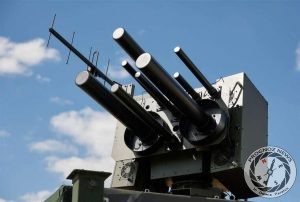
In the evolving contest between offence and defence in modern warfare, the electromagnetic spectrum has become as decisive as land, sea or air. Nowhere is this more evident than in Ukraine, where necessity has compelled rapid innovation in electronic warfare, and where systems such as the so-called “Lima” architecture have emerged as emblematic of a broader strategic shift. Lima is not merely a piece of equipment — it is better understood as a distributed concept of operations, a layered electronic shield designed to disrupt, deceive and ultimately neutralise airborne threats across a wide spectrum of velocities and guidance systems. Against an adversary such as Russia, whose doctrine relies heavily upon massed missile strikes and increasingly sophisticated unmanned aerial vehicles, Lima represents an attempt to contest the very logic of airborne attack.
To understand Lima one must first situate it within the broader Ukrainian approach to electronic warfare. Ukraine has, since 2022, moved away from reliance on static, high-value air defence systems alone — systems which, though capable, are finite in number and vulnerable to saturation. Instead she has developed a hybridised defence, in which kinetic interception is complemented by pervasive electronic interference. Lima sits at the centre of this evolution. It is not a singular platform but rather a networked system integrating sensors, jammers, decoys and command algorithms, often mounted on mobile platforms and dispersed across the battlespace. Its purpose is not simply to destroy incoming threats, but to render them ineffective — to confuse their guidance, sever their communications and distort their perception of the battlefield.
The challenge posed by Russian airborne ordnance is formidable. At one end of the spectrum lie slow-moving drones — Iranian-designed Shahed loitering munitions, for example — whose reliance upon satellite navigation and relatively simple guidance systems makes them susceptible to jamming and spoofing. At the other extreme are high-speed ballistic and hypersonic missiles, which compress reaction times to mere seconds and often rely upon inertial guidance systems that are in theory resistant to electronic interference. Between these poles exists a wide array of cruise missiles, glide bombs and hybrid systems, each presenting distinct vulnerabilities and requiring tailored countermeasures.
Lima’s strength lies in its capacity to address this diversity through layered effects rather than a single solution. Against drones, the system exploits their dependence on external signals. By emitting powerful jamming fields Lima can deny GPS or GLONASS navigation, causing drones to drift off course or crash. More sophisticated iterations employ spoofing techniques, feeding false positional data to the drone so that it believes it is on course even as it is diverted. This has the advantage of not merely neutralising the threat but potentially capturing it intact, yielding intelligence about its construction and programming.
Against cruise missiles Lima operates in a more complex fashion. Cruise missiles often employ terrain-following radar, inertial navigation and satellite updates in combination. Electronic warfare alone cannot guarantee their defeat, but it can degrade their accuracy. By interfering with satellite signals and introducing noise into radar returns, Lima can force a missile to deviate from its intended trajectory, increasing the probability that it will miss its target or enter the engagement envelope of kinetic air defences. Lima therefore acts as a force multiplier, enhancing the effectiveness of traditional interception systems.
The question of hypersonic missiles is more contentious. These weapons — travelling at speeds exceeding Mach 5 and often capable of manoeuvring during flight — are widely regarded as resistant to electronic warfare. Their reliance on inertial guidance systems means that, once launched, they are less dependent on external signals. Yet even here Lima may exert influence, albeit indirectly. Hypersonic systems often require precise targeting data at launch and may incorporate terminal guidance phases that rely upon radar or infrared sensors. By disrupting the sensor environment — saturating it with electromagnetic noise or deploying decoys — Lima can complicate the missile’s final approach, reducing its accuracy even if it cannot fully divert its path.
The integration of Lima with broader Ukrainian intelligence and surveillance networks introduces an additional dimension. Electronic warfare is not only defensive; it is also informational. By detecting the emissions associated with incoming ordnance, Lima contributes to early warning systems, enabling both civilian alerts and military responses. In some cases the system may even allow for the identification of launch platforms, feeding targeting data back into Ukraine’s own strike capabilities. Thus Lima participates in a cycle of detection, disruption and retaliation that extends beyond the immediate act of defence.
One of the most striking features of Lima is its adaptability. Unlike large, static air defence batteries, which require significant logistical support and are vulnerable to pre-emptive strikes, Lima’s components can be rapidly deployed, relocated and concealed. This mobility reflects a broader Ukrainian emphasis on survivability through dispersion. It also complicates Russian targeting, as the electromagnetic signature of Lima is transient and difficult to pin down. In a war increasingly characterised by the contest between sensors and shooters, such elusiveness is a strategic asset.
Nevertheless Lima is not without limitations. Electronic warfare is inherently probabilistic; it does not guarantee success in every instance. Environmental factors, such as terrain and atmospheric conditions, can affect the propagation of electromagnetic signals. Russian countermeasures, including frequency hopping, encryption and hardened guidance systems reduce the effectiveness of jamming. Also the sheer volume of Russian ordnance — the capacity to launch dozens of drones or missiles in a single wave — poses a challenge of saturation that no system can entirely overcome. Lima mitigates this problem by reducing the effectiveness of each incoming weapon, but it cannot eliminate the threat altogether.
There is also a strategic dimension to consider. The success of systems like Lima may encourage an escalation in the sophistication of offensive technologies. Russia may invest further in autonomous guidance systems less reliant on external signals, or in electronic warfare of her own designed to suppress Ukrainian defences. This dynamic reflects a broader pattern in military history, in which advances in defence provoke corresponding innovations in offence. Lima therefore should be seen not as a final solution but as a stage in an ongoing technological contest.
Yet within these constraints Lima represents a significant achievement. It embodies a shift from reactive defence to proactive disruption, from the interception of threats to their pre-emption within the electromagnetic domain. In doing so, it reflects a deeper transformation in the nature of warfare — one in which the invisible spectrum of signals and interference becomes as decisive as the physical destruction of targets. For Ukraine, facing an adversary with greater resources and a formidable arsenal, such innovation is not merely advantageous; it is essential.
The significance of Lima lies not only in its technical capabilities but in what it reveals about Ukraine’s strategic posture. She has recognised that survival in modern war depends upon the integration of disparate systems into a coherent whole — sensors, shooters, and electronic warfare assets operating in concert. Lima is a manifestation of this integration, a distributed shield that blurs the boundary between defence and deception. In a conflict where the skies are crowded with threats, it offers a means of reclaiming a measure of control — not by eliminating danger entirely, but by rendering it uncertain, unreliable and in many cases ineffective.
251 Views



Most Readings