Russia’s wartime nationalisations
By Matthew Parish
Thursday 7 May 2026
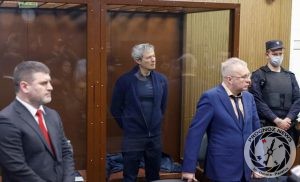
The decision of a Russian court to seize the controlling stake of the agricultural conglomerate Rusagro from its founder, the billionaire Vadim Moshkovich, marks another stage in the quiet but profound transformation of the Russian wartime economy. Moshkovich, once one of Russia’s wealthiest agricultural magnates, now finds himself in pre-trial detention on corruption, bribery and fraud allegations while the Russian state absorbs the assets he spent decades assembling. The seizure reportedly encompasses approximately 68% of Rusagro’s shares, worth nearly US$900 million, alongside extensive bank accounts and associated corporate holdings.
The Kremlin presents these measures as anti-corruption enforcement. Yet few serious observers of contemporary Russia believe that this explanation alone suffices. The seizure of Rusagro fits into a far broader pattern of wartime state consolidation that has accelerated dramatically since Russia’s full-scale invasion of Ukraine in February 2022. What is taking place is not classical Soviet-style nationalisation, in which the state openly abolishes private ownership altogether. Rather it is a selective, politically targeted reassertion of state supremacy over strategic sectors and vulnerable oligarchic wealth.
The Russian state is not abolishing capitalism. She is subordinating it.
This distinction matters enormously. Under Vladimir Putin’s long system of governance, property rights have always been conditional. Wealth in Russia exists not through independent legal guarantees but through political accommodation with the Kremlin. The oligarchic compact established during Putin’s first presidency was relatively straightforward: businessmen could retain vast fortunes accumulated during the chaotic privatisations of the 1990’s provided they abstained from political interference and remained ultimately loyal to the state. The destruction of Mikhail Khodorkovsky and Yukos in the early 2000’s established this principle in unmistakable terms.
However the war in Ukraine has altered the equilibrium fundamentally.
Wars place extraordinary pressures upon states. They require money, industrial capacity, political discipline and ideological conformity. Russia’s invasion of Ukraine has evolved into a grinding industrial conflict requiring enormous quantities of ammunition, vehicles, drones, fuel, food products and subsidised labour. Even though the Russian economy has demonstrated surprising resilience against Western sanctions, the pressures beneath the surface have intensified year by year.
Inflation has risen stubbornly. Interest rates have climbed to punishing levels. Labour shortages have become severe because of mobilisation, emigration and military recruitment. Regional budgets are increasingly strained. Industrial conversion towards military production has distorted normal market allocation. Under such conditions the Kremlin has gradually shifted from merely supervising private capital towards directly appropriating strategically useful assets.
According to estimates cited in recent reporting, the Russian state has seized more than US$50 billion in private and foreign-owned assets since the invasion began. This constitutes the largest redistribution of property in Russia since the privatisations of the 1990’s.
The methods employed are varied. Some cases involve foreign corporations that departed Russia after the invasion and whose local subsidiaries were placed under “temporary management”. Others involve claims that privatisations conducted decades ago were legally defective. Increasingly however prosecutors utilise corruption, foreign ownership restrictions or alleged national security concerns to confiscate assets from Russian businessmen themselves.
The strategic sectors affected are revealing. Agriculture, mining, logistics, chemicals, heavy industry and energy infrastructure have all attracted state intervention. These are sectors directly connected either to wartime resilience or to export earnings. Rusagro itself is not merely another agricultural firm. It is one of Russia’s largest producers of sugar, pork, edible oils and fat products. Food security during wartime carries immense political significance. The Kremlin cannot risk instability in sectors central to domestic consumption.
One should also understand the political sociology of the Russian elite. Many oligarchs accumulated their wealth during a period when the Russian state was weak and fragmented. Putin spent twenty-five years rebuilding central state authority over these autonomous financial empires. The war has provided an ideal pretext to complete this process.
The result increasingly resembles a hybrid between late-imperial corporatism and Soviet command structures. Private ownership formally persists, but only within boundaries tolerated by the security state. In practice major businessmen increasingly operate as managers of state-supervised patrimonies rather than truly independent owners.
This has several important economic consequences.
First, capital flight intensifies, even where physical flight becomes impossible. Russian businessmen understand perfectly well that ownership rights are insecure. Wealthy Russians now devote increasing efforts towards preserving offshore assets, establishing foreign residencies where possible or moving liquid wealth into less visible forms. The irony is considerable: the Kremlin’s campaign against “foreign influence” simultaneously encourages the concealment of wealth abroad.
Long-term investment deteriorates. Modern economies depend upon predictability. Investors must believe that profits earned today will not arbitrarily disappear tomorrow. Once businessmen perceive that political favour rather than commercial performance determines survival, rational investment horizons shorten dramatically. Under such conditions businessmen concentrate upon extracting immediate returns rather than building sustainable enterprises.
Corruption itself becomes structurally entrenched. Anti-corruption campaigns in authoritarian systems often function paradoxically as instruments of selective enforcement. When laws are vague and universally violable, prosecutors may target almost anyone. Consequently businessmen seek political protection rather than legal compliance. The more arbitrary the system becomes, the more loyalty networks replace transparent economic governance.
Russia’s wartime economy has thus entered a dangerous cycle. The state requires increasing control to sustain military mobilisation. Yet each additional intervention weakens the productive dynamism necessary to maintain long-term growth.
For now high energy revenues, extensive wartime spending and macroeconomic management have prevented outright collapse. Russian arms factories remain active. Military recruitment continues. Consumer life in Moscow often appears superficially normal. But beneath the surface the structural quality of the economy is deteriorating.
The Soviet Union demonstrated that authoritarian states can sustain military-industrial mobilisation for surprisingly long periods. Yet she also demonstrated the immense inefficiencies created when political fear replaces economic rationality. Enterprises become less innovative. Statistics become less reliable. Decision-making becomes increasingly distorted by ideological considerations and bureaucratic self-preservation.
The seizure of Rusagro illustrates another subtler danger as well: elite insecurity. Putin’s system historically relied upon balancing competing oligarchic factions while preserving overall stability. If major businessmen begin believing that no amount of loyalty guarantees protection, elite cohesion may gradually weaken. Fear can sustain obedience for considerable periods, but it rarely generates confidence.
One should avoid exaggeration. Russia is not imminently collapsing economically. She retains enormous natural resources, a substantial industrial base and extensive trading relationships with China, India and much of the Global South. Yet wartime authoritarian economies often decay internally long before visible crisis emerges externally.
The seizure of Vadim Moshkovich’s empire matters less because of one billionaire’s personal misfortune than because of what it reveals about the changing nature of the Russian state. The Kremlin increasingly behaves not as a regulator standing above economic actors, but as the ultimate claimant upon all significant property within the Russian Federation.
Under such a system businessmen may remain rich, but only conditionally. Ownership exists by permission rather than by right. The war in Ukraine has accelerated Russia’s evolution from oligarchic authoritarianism into something harsher and more centralised: a militarised state capitalism in which private wealth survives only insofar as she serves the priorities of war.
182 Views


Most Readings