Russia’s ban on the export of refined petroleum products
By Matthew Parish, Associate Editor
Thursday 28 May 2026
For much of the war in Ukraine, the Russian Federation has attempted to persuade her population that the conflict remained distant, abstract and manageable. The Kremlin’s propaganda machine has worked tirelessly to cultivate the impression that military operations in Ukraine were occurring somewhere beyond the horizon of ordinary Russian life, insulated from the domestic economy and from the daily routines of civilians. Yet wars of attrition have a way of dissolving illusions. By the spring of 2026, the consequences of Ukraine’s increasingly sophisticated long-range drone campaign against Russian oil infrastructure have begun to intrude into the everyday experiences of Russian citizens in ways that are proving difficult for Moscow to conceal.
Reports that Russia is preparing a broad ban on the export of certain refined petroleum products are perhaps the clearest indication yet that the Kremlin’s energy system is under substantial strain. What initially appeared to some western observers as symbolic Ukrainian strikes upon refineries and export terminals has evolved into a coordinated campaign against one of the principal foundations of the Russian wartime economy. Ukraine has understood from the beginning that Russia’s capacity to sustain prolonged military operations depends not merely upon manpower or artillery shells, but upon hydrocarbon revenues. Oil and refined petroleum products remain the financial bloodstream of the Russian state.
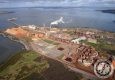
Over recent months Ukrainian drones have struck a succession of major refinery complexes and export facilities across the Russian Federation, including installations at Ryazan, Nizhny Novgorod, Moscow, Yaroslavl, Kirishi, Perm and Tuapse. Reuters has reported that several central Russian refineries either halted operations entirely or drastically reduced output after repeated attacks, affecting installations responsible for roughly one quarter of Russian refining capacity and substantial portions of gasoline and diesel production.
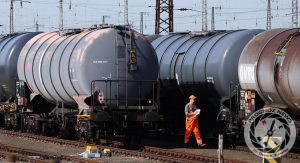
The scale of these disruptions is no longer easy for Moscow to disguise. Russia’s refinery throughput has reportedly fallen to levels not seen since the financial crisis of 2008–2009. Export restrictions that initially focused upon gasoline are now apparently being expanded to diesel and aviation fuel. Such measures are not undertaken voluntarily by an oil-exporting state whose public finances depend heavily upon hydrocarbon exports. They are emergency interventions intended to prevent domestic shortages and spiralling prices.
The Kremlin finds itself trapped in an increasingly uncomfortable contradiction. Russia requires export revenues from refined petroleum products in order to finance the war, stabilise the rouble and sustain public spending. Yet at the same time the destruction of refining infrastructure is forcing the government to retain fuel supplies domestically to prevent politically dangerous shortages. Every tonne of diesel diverted away from export markets towards the domestic economy represents lost foreign currency earnings. Every refinery fire imposes expensive repair costs that are magnified by western sanctions restricting access to specialised equipment and replacement parts.
The significance of these attacks lies not merely in the immediate physical damage inflicted. Oil refineries are exceptionally complex industrial systems. Many of their most important components are highly specialised, custom-engineered and difficult to replace rapidly even in peacetime. Under sanctions conditions, repair timelines can stretch into many months. Reuters reported that approximately 700,000 barrels per day of Russian refining capacity had already been forced offline between January and May 2026. Some analyses suggest that the wider disruption to export infrastructure may be substantially greater.
Ukraine’s strategy has therefore evolved into something approaching economic warfare by remote control. Unable fully to match Russia in conventional industrial capacity, Kyiv has instead sought to exploit asymmetry. Relatively inexpensive drones are being used to damage facilities worth billions of dollars and to disrupt export chains upon which the Russian state depends. President Volodymyr Zelensky has openly described these strikes as bringing the war “back home” to Russia.
The economic consequences for Russia are becoming increasingly visible. The Russian budget remains deeply dependent upon oil and gas taxation. Even after sanctions, hydrocarbon revenues continue to comprise a substantial share of federal income. The cumulative effect of refinery shutdowns, damaged export terminals and export restrictions therefore reaches far beyond the energy sector itself. Reduced export earnings place pressure upon the rouble, complicate inflation control and increase the long-term costs of financing military expenditure.
Meanwhile the domestic consequences are beginning to erode the Kremlin’s political insulation. Fuel shortages and rising gasoline prices have immediate psychological significance in Russia because they touch everyday life directly. Authoritarian systems often survive broad economic decline more easily than they survive visible disruptions to ordinary routines. Russians may tolerate abstract wartime sacrifices for extended periods, but shortages at filling stations, sudden price rises and deteriorating environmental conditions are more difficult to ignore.
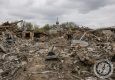
In several regions affected by refinery attacks, civilians have experienced not only economic disruption but also environmental catastrophe. In Tuapse and Perm, enormous fires generated toxic smoke, pollution and reports of so-called “black rain”. Schools were reportedly closed temporarily in some areas, residents were advised to remain indoors and local authorities struggled to contain public anxiety. These events carry symbolic importance because they undermine the Kremlin’s long-maintained narrative that the war remains geographically contained and under control.
Nevertheless it would be premature to conclude that such hardships are likely immediately to threaten the survival of the Russian government. The Kremlin possesses extensive instruments of repression, censorship and propaganda. Public opinion polling within authoritarian states is notoriously unreliable. Moreover Russia’s political culture has historically exhibited a high tolerance for economic hardship during periods presented as existential national struggle.
Yet popularity within authoritarian systems does not function in the same way as within democratic societies. The Kremlin does not require enthusiastic public support so much as passive resignation. What threatens authoritarian stability is not necessarily ideological opposition but cumulative exhaustion, cynicism and loss of confidence in state competence. Repeated refinery fires hundreds of kilometres from Ukraine, visible shortages, environmental disasters and emergency export bans gradually weaken the perception that the authorities remain fully in command of events.
Perhaps most importantly, Ukraine’s refinery campaign is forcing Russia into expensive defensive adaptations. Air defence systems that might otherwise protect military assets near the front are increasingly redeployed to defend industrial facilities deep inside Russia. Refineries require costly physical protection measures. Export logistics become more complicated and less efficient. Insurance costs rise. Repair resources become stretched. Even where individual strikes do not destroy facilities permanently, they generate a persistent atmosphere of insecurity and economic friction.
The psychological dimension of this campaign may ultimately prove as important as the economic damage itself. For decades the Russian state cultivated an image of industrial permanence and territorial invulnerability. Ukrainian drones exploding over Moscow-region facilities or igniting refineries near the Baltic Sea undermine that mythology. They demonstrate that modern warfare no longer respects geographical depth in the way Soviet strategic doctrine once assumed.
Russia’s prospective export bans therefore reveal more than temporary market management. They are evidence that Ukraine’s long-range strikes are achieving a level of strategic effect that extends far beyond isolated explosions. By targeting refining capacity, Kyiv is attacking one of the core mechanisms through which Russia finances and psychologically sustains the war.
Whether these pressures will ultimately alter Kremlin policy remains uncertain. Authoritarian governments can absorb remarkable levels of hardship before strategic decisions change. Yet the trend is unmistakable. The war is no longer occurring solely on Ukrainian territory. It is increasingly entering the Russian economy, Russian infrastructure and Russian civilian consciousness. That may prove one of the most consequential strategic developments of the conflict so far.
151 Views



Most Readings