The EU’s proposed twenty-first sanctions package against Russia
By Matthew Parish, Associate Editor
Tuesday 9 June 2026
The European Union’s proposed twenty-first package of sanctions against Russia, unveiled in early June 2026, represents another stage in a sanctions campaign that has become one of the most extensive economic coercion efforts in modern history. More than four years after Russia’s full-scale invasion of Ukraine, Brussels faces a difficult challenge: maintaining pressure upon the Russian state while adapting to the increasingly sophisticated methods Moscow has developed to circumvent earlier restrictions. The proposed package reflects this evolution. Rather than relying primarily upon broad trade prohibitions, it focuses upon the financial, logistical and technological mechanisms through which Russia has sustained her war effort despite unprecedented international isolation.
The centrepiece of the proposal is a substantial expansion of sanctions against the Russian banking sector. According to the European Commission and the EU’s High Representative for Foreign Affairs, approximately ninety additional banks would be subjected to asset freezes, transaction prohibitions and other restrictive measures. If adopted, more than half of Russia’s internationally connected banking institutions would fall under direct EU sanctions. The rationale is straightforward. Earlier sanctions disconnected Russia’s largest banks from international payment systems, but Russian businesses subsequently shifted transactions to smaller institutions that attracted less scrutiny. By widening the net dramatically, Brussels hopes to make sanctions evasion more difficult and expensive.
The proposed measures also recognise the growing importance of digital finance in sanctions circumvention. Eleven cryptocurrency platforms are expected to be targeted, while the Commission seeks powers to impose complete restrictions upon crypto-asset services operating in third countries that facilitate Russian sanctions evasion. Such measures acknowledge that cryptocurrency networks have become an increasingly important avenue through which Russian entities conduct transactions beyond the reach of traditional banking restrictions.
A second major pillar of the package concerns Russian oil exports. Since 2022, energy revenues have remained the Kremlin’s principal source of hard currency. Earlier sanctions introduced a price cap mechanism designed to reduce Russian income without causing a global energy shock. However the international oil market has changed significantly, particularly following instability in the Middle East and disruptions to maritime trade routes. Under the current formula, the Russian oil price cap would rise substantially in July 2026. European policymakers fear that such an increase would provide Moscow with a financial windfall precisely when the Russian state requires enormous resources to sustain military operations. The proposed package therefore seeks to freeze the cap at its existing level rather than allowing it to rise automatically.
The significance of this proposal should not be underestimated. A frozen cap means that Russia would be prevented from fully benefiting from higher global energy prices. While Moscow has become adept at redirecting exports towards Asian markets, shipping and insurance services connected to European jurisdictions remain important. The EU’s objective is therefore not necessarily to halt Russian exports entirely but to reduce the revenue generated by each barrel sold.
Closely related is the continuing campaign against Russia’s so-called “shadow fleet” of tankers. Since the introduction of energy sanctions, Russia has assembled a vast collection of ageing vessels operating through opaque ownership structures, frequently under flags of convenience and outside established insurance markets. These vessels transport Russian oil while avoiding many of the compliance requirements imposed upon mainstream shipping companies. The new package would add approximately thirty additional vessels to the sanctions list while broadening the criteria used to designate ships involved in refuelling or servicing sanctioned vessels. This reflects a growing understanding in Brussels that sanctions enforcement increasingly depends upon disrupting the logistics chain rather than merely prohibiting the underlying trade.
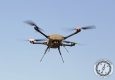
The package also extends restrictions upon sectors directly linked to Russia’s military-industrial complex. New export and import controls are expected to affect high-performance metal alloys used in aerospace and defence manufacturing. Additional measures would target drone production and associated supply chains. Such restrictions are intended to exploit one of Russia’s principal vulnerabilities: her continuing dependence upon imported technologies, specialised machinery and advanced industrial inputs. While Russia has expanded domestic production considerably since 2022, many sophisticated components remain difficult to replace entirely.
Another noteworthy feature is the extension of sanctions to entities located outside Russia. Several non-Russian banks, oil traders and refiners are reportedly included within the proposals. This reflects a broader trend in sanctions policy. Increasingly, the effectiveness of sanctions depends not upon restrictions directed at Russia herself but upon restrictions imposed upon intermediaries in third countries. The European Union has become progressively more willing to penalise institutions that facilitate Russian trade or financial transactions, even when they are located beyond Russian territory.
Whether these measures will achieve their intended effect remains an open question. Russia’s economy has undoubtedly suffered from sanctions. Economic growth has slowed markedly, investment costs remain elevated, and the financial system faces increasing strains. Nevertheless Russia has repeatedly demonstrated an ability to adapt. New trade routes have emerged, alternative payment systems have developed and commercial relationships with non-Western partners have deepened. Sanctions have constrained Russia’s options, but they have not prevented her from continuing the war.
Sanctions are never purely economic instruments. They also possess political and psychological dimensions. The twenty-first package sends a signal that European unity behind Ukraine remains intact despite the length of the conflict and the economic costs borne by member states. The package is directed as much at political audiences as at financial markets. It communicates to Moscow that the European Union does not regard sanctions as a temporary measure but as a long-term instrument of strategic pressure.
Yet sanctions also face diminishing returns. The most obvious vulnerabilities in the Russian economy were targeted years ago. Each successive package therefore becomes more technically complex and incrementally effective. The twenty-first package reflects this reality. It does not introduce a dramatic new embargo comparable to those imposed in 2022. Instead it seeks to tighten loopholes, expand enforcement and reduce opportunities for circumvention. The cumulative effect may still be significant, particularly if combined with continued military support for Ukraine, but it is unlikely to transform the strategic situation on its own.
The ultimate importance of the twenty-first sanctions package lies not in any single measure but in the broader trajectory it represents. The European Union has moved from imposing emergency restrictions in response to invasion towards constructing a comprehensive system of economic containment. Banking networks, shipping fleets, energy revenues, cryptocurrency platforms and industrial supply chains are all increasingly treated as interconnected elements of a single sanctions architecture. The proposed package deepens that architecture further. Whether it succeeds in compelling Russia to alter her behaviour remains uncertain. What is clear is that Brussels intends to continue refining and expanding its economic pressure campaign for as long as the war in Ukraine endures.
4 Views


Most Readings