Why Ukraine Is One of Europe’s Best Places to Live
By Matthew Parish, Associate Editor
Monday 6 July 2026
To many outside observers, it may seem paradoxical to describe Ukraine as one of Europe’s finest places to live while it continues to endure the largest interstate war on the continent since the end of the Second World War. Images of missile strikes, damaged infrastructure and military mobilisation dominate international headlines. Yet those who have spent significant time in Ukraine frequently arrive at a very different conclusion. They discover a country of remarkable resilience, exceptional hospitality, vibrant cities and extraordinary natural beauty. They encounter a society that, despite immense adversity, has retained a profound optimism about its future.
It is often only by living in Ukraine, rather than merely reading about it, that one comes to appreciate how much the country offers.
Ukraine possesses one of Europe’s richest combinations of geography. From the forests of Polissia to the fertile black-earth plains that have fed much of the continent for centuries, from the rolling hills of Podillia to the peaks of the Carpathian Mountains, the country presents landscapes of astonishing variety. Its rivers, particularly the mighty Dnipro, have shaped both commerce and civilisation for over a millennium. National parks remain comparatively uncrowded, while rural villages continue to preserve traditions that have disappeared from much of Western Europe.
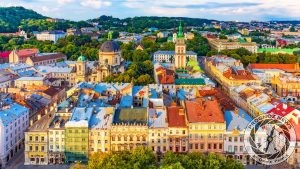
Its cities each possess distinctive personalities. Lviv combines Central European architecture with a thriving café culture and an intellectual tradition stretching back centuries. Kyiv balances grand historical monuments with one of Eastern Europe’s most dynamic technology sectors. Odesa has long cultivated its own unique humour, cosmopolitan outlook and maritime identity. Smaller cities such as Vinnytsia, Ivano-Frankivsk and Chernivtsi offer quality of life that would compare favourably with many far wealthier European municipalities.
One of Ukraine’s greatest strengths is her people. Visitors consistently remark upon the warmth extended once initial introductions have been made. Ukrainians may appear reserved by Anglo-American standards, but genuine friendships tend to be deep, loyal and enduring. Hospitality is not merely a social convention but an expectation. Guests are welcomed generously, meals are shared enthusiastically and neighbours frequently help one another without expectation of reward.
The country’s cultural life is equally rich. Ukrainian literature, music, theatre and visual arts have undergone a remarkable renaissance since independence. The renewed prominence of the Ukrainian language has strengthened rather than diminished cultural diversity, fostering renewed interest in regional traditions while encouraging contemporary artistic innovation. Museums, galleries, concert halls and literary festivals continue to flourish even under wartime conditions—a striking testament to the conviction that culture itself forms part of national resilience.
Ukraine also offers an enviable quality of daily life. In many cities, excellent restaurants, theatres and cafés remain accessible to ordinary citizens rather than becoming luxuries reserved for the affluent. Fresh produce is abundant, locally grown and affordable. Markets continue traditions that have disappeared elsewhere, connecting consumers directly with farmers. Public transport networks remain comprehensive, while walkable city centres encourage vibrant street life.
The country’s educational tradition deserves particular recognition. Ukraine has produced internationally respected scientists, engineers, mathematicians and physicians for generations. Technical education remains highly regarded, helping to explain the country’s globally recognised software engineering and information technology sectors. Ukrainian entrepreneurs have established innovative companies across cybersecurity, artificial intelligence, agricultural technology and defence technology despite extraordinarily challenging circumstances.
Perhaps nowhere is Ukraine’s resilience more visible than in its civic life. The country possesses a remarkably active civil society. Volunteers organise humanitarian assistance, support military units, assist displaced families and rebuild damaged communities with an energy that often surprises foreign observers. The willingness of ordinary citizens to assume responsibility for the common good reflects a mature understanding that democracy depends not only upon institutions but upon participation.
Ukraine’s democratic evolution has been neither straightforward nor complete. Corruption remains a challenge, institutional reforms continue and political disagreements are often vigorous. Yet there has also been unmistakable progress. Public expectations of accountability have risen dramatically over the past two decades. Successive governments have increasingly found themselves answerable to an engaged electorate unwilling to tolerate complacency or abuse of power indefinitely.
The experience of defending national independence has further strengthened civic identity. Ukrainians today possess an unusually clear appreciation of the value of political liberty, national sovereignty and democratic institutions. Freedoms that may sometimes be taken for granted elsewhere are understood in Ukraine as achievements requiring continual defence. That awareness has fostered a striking degree of national solidarity while preserving lively political debate.
Economic life, although inevitably disrupted by war, retains considerable long-term promise. Ukraine possesses some of Europe’s most fertile agricultural land, extensive mineral resources, sophisticated engineering capabilities and an increasingly innovative technology sector. Reconstruction promises not merely to restore what has been damaged but to modernise infrastructure on an unprecedented scale. The integration of Ukraine ever more closely with European markets offers opportunities that extend well beyond post-war recovery.
Foreign residents frequently discover another attraction that statistics rarely capture: a pervasive sense that life in Ukraine retains authenticity. Personal relationships often matter more than social status. Communities retain strong identities. Traditions remain living practices rather than museum exhibits. Festivals are celebrated enthusiastically, family bonds remain strong and local customs continue to shape everyday life.
None of this should minimise the hardships imposed by Russia’s invasion. Families have been separated. Communities have suffered grievous losses. Millions have experienced displacement, while soldiers and civilians alike continue to bear immense burdens. These realities deserve neither romanticisation nor understatement.
Yet perhaps the greatest measure of Ukraine’s attractiveness lies precisely in the determination of so many of its citizens to remain, to return or to rebuild. Even amidst war, businesses continue opening, universities continue teaching, musicians continue performing, children continue attending school and communities continue investing in their future. Such confidence cannot be manufactured by government policy alone. It emerges from a shared belief that the country itself is worth preserving.
When peace eventually returns, Europe may discover that Ukraine has become not merely a recipient of assistance but one of the continent’s most compelling destinations in which to build a life. It will offer affordable cities, abundant natural beauty, a sophisticated cultural inheritance, an innovative economy and, above all, a society whose recent history has reaffirmed the enduring importance of courage, solidarity and freedom.
For those fortunate enough to know Ukraine beyond the headlines, that future already feels entirely plausible.
6 Views



Most Readings