Why Did President Zelenskyy Dismiss His Defence Minister After Only Six Months?
By Matthew Parish, Associate Editor
Thursday 16 July 2026
The official explanation is deceptively straightforward. The dismissal forms part of a broader restructuring of the Ukrainian government, extending well beyond the Ministry of Defence. The replacement of the prime minister and a number of senior ministers has been presented by the presidential administration as an attempt to refresh the executive branch as Ukraine enters another demanding phase of the war, with renewed Russian attacks expected against civilian infrastructure during the coming winter.
Yet official explanations rarely tell the entire story, particularly during wartime.
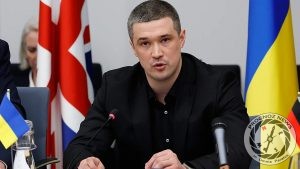
Fedorov entered the Ministry of Defence with an unusually strong reputation. Having built his career around digital transformation, he brought a technocratic mindset to a ministry that had often struggled with cumbersome bureaucracy. His emphasis upon accelerating drone procurement, improving logistics, streamlining decision-making and introducing modern digital systems won considerable praise among Ukraine’s technology sector, many military officers and a significant part of civil society. Supporters credited him with pushing reforms that appeared to deliver tangible results on the battlefield while also strengthening transparency within defence procurement.
Precisely because these reforms affected entrenched interests, they inevitably created resistance.
Ukraine’s armed forces remain a vast institution whose traditions were formed over decades. Although the Russian invasion has accelerated reform at an extraordinary pace, no military bureaucracy can be transformed overnight. Every attempt to redistribute authority, alter procurement systems or reduce opportunities for patronage creates winners and losers. Those whose influence is diminished naturally resist change.
Reports emerging from Kyiv suggest that tensions developed between Fedorov’s reform programme and elements of the traditional military establishment, including disagreements over the balance between technological innovation and conventional command structures. Whether these disagreements alone explain his dismissal remains uncertain, but they appear to have formed part of the political background.
There is also the broader question of presidential leadership during prolonged war.
As conflicts continue year after year, heads of government often seek to ensure that no individual minister accumulates an independent political profile capable of rivaling the presidency itself. Wartime administrations place an especially high premium upon unified chains of command and disciplined political messaging. Ministers who become exceptionally popular, however competent they may be, sometimes find themselves vulnerable if their public standing begins to eclipse collective governmental authority.
This does not necessarily imply personal rivalry. Rather it reflects an instinct common to governments operating under extreme pressure: the desire to maintain centralised control over every major institution involved in the war effort.
Another possible explanation lies in the complex relationship between civilian leadership and military command.
Modern democratic states require careful balancing between political oversight and operational military autonomy. Defence ministers must supervise procurement, budgets and strategic priorities while commanders seek maximum freedom to conduct operations. When disagreements emerge between these spheres, presidents frequently find themselves acting as arbiters. Replacing the civilian minister can sometimes appear easier than attempting to reconcile competing institutional cultures.
Equally important is the reality that Ukraine’s international partners increasingly judge Kyiv not only by battlefield success but also by standards of governance.
Western governments have invested immense financial and military resources in Ukraine’s defence. They expect professionalism, accountability and efficient management. Frequent ministerial reshuffles inevitably raise questions among foreign capitals regarding institutional stability, even if military cooperation itself continues uninterrupted. Critics therefore worry that repeated changes risk creating uncertainty precisely when Ukraine seeks sustained long-term support from Europe and North America.
None of this means that the dismissal necessarily represents a strategic mistake.
Presidents possess information unavailable to outside observers. Intelligence assessments, confidential disagreements among senior officials and future plans for restructuring government rarely become public immediately. Decisions that appear puzzling today may later reveal an internal logic invisible at the time they were made.
Conversely, it is equally possible that political considerations have outweighed administrative continuity. Democracies at war remain political systems, not purely military machines. Coalition management, personal trust and institutional loyalty continue to shape appointments alongside considerations of competence.
What is perhaps most striking is not that Ukraine has reshuffled her government but that she continues to do so under the extraordinary pressures of full-scale invasion. Democratic politics has not disappeared. Ministers continue to serve at the confidence of elected leaders rather than becoming permanent wartime administrators. That distinguishes Ukraine fundamentally from the authoritarian system against which she fights.
Ultimately President Zelensky’s decision illustrates one of the enduring paradoxes of democratic warfare. Success depends simultaneously upon continuity and adaptability. Leaders must preserve institutional stability while remaining willing to replace those whom they believe no longer fit evolving strategic circumstances. Whether the dismissal of Mykhailo Fedorov proves to have strengthened Ukraine’s war effort or unnecessarily interrupted a successful programme of reform will become apparent only with time.
For now, the episode serves as a reminder that, even amidst existential conflict, politics has not ceased in Kyiv. It has merely become another front upon which the future of the Ukrainian state continues to be contested.
7 Views



Most Readings