How Long Can Russia Afford the War?
By Matthew Parish
Wednesday 2 September 2026
The meeting between Scott Bessent and Anton Siluanov in Asheville on 31 August 2026 may eventually be remembered for a remarkably simple proposition. When Russia’s Finance Minister apparently began discussing potential areas of American-Russian economic cooperation, the United States Treasury Secretary cut him short. There would be no economic relief, according to accounts of the meeting, until the war in Ukraine ended.
It was an interesting choice of words. Bessent was not threatening Russia with battlefield defeat. He was offering no elaborate theory about international law, Ukrainian sovereignty or the post-war security architecture of Europe. He was talking to the Russian official responsible for balancing the country’s books. The message was essentially financial.
There is money on the other side of peace. There is pain on the other side of continued war. The important question is whether the threat is credible. After four and a half years of sanctions, predictions of imminent Russian economic collapse have become something of a cottage industry in the West. Most have been wrong. Russia did not collapse in 2022. She did not collapse in 2023, 2024 or 2025. The Kremlin has proved remarkably adept at improvising around sanctions, redirecting trade towards Asia, compelling domestic institutions to finance government priorities and transferring the costs of war onto Russian consumers and businesses.
Yet avoiding collapse is not the same thing as remaining economically healthy. By late summer 2026 the distinction has become increasingly important. Russia is not bankrupt. She is not about to run out of money. It is not likely suddenly to become incapable of paying its soldiers. But the economic machine supporting Vladimir Putin’s war is becoming progressively more expensive, more distorted and more fragile. And this is precisely why Bessent’s intervention may matter.
The Russian economic miracle that wasn’t
Western observers made a fundamental mistake during the first years of the war. They expected sanctions to work like a light switch. Turn them on and Russian factories would close, the rouble would collapse, government revenues would evaporate and popular discontent would force the Kremlin to reconsider the invasion. That was never particularly realistic.
Russia entered the war with considerable financial reserves, comparatively low public debt, enormous natural resources and an authoritarian government capable of directing economic activity in ways democratic governments generally cannot. She also possessed commodities the world continued to need. Oil does not cease to have value because Europeans refuse to buy it. It merely travels elsewhere.
Russia consequently redirected enormous quantities of energy exports towards China, India and other markets. Parallel import networks emerged. Western products continued reaching Russia through third countries. Chinese manufacturers replaced European suppliers. The Russian state poured money into defence factories. GDP statistics consequently looked surprisingly respectable. For a while this was celebrated in Moscow as proof that Western sanctions had failed.
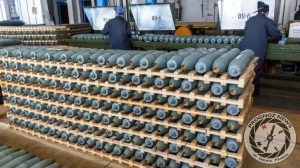
Yet there was a catch. A country can increase measured economic output by manufacturing millions of artillery shells that are fired into Ukraine and explode. It is still poorer afterwards.
The shell has not constructed a railway, educated a child, improved a hospital, established a productive factory or produced a consumer good. Its economic life lasts until somebody pulls a trigger. War expenditure therefore creates an illusion of prosperity. Factories operate around the clock. Workers receive higher salaries. Government expenditure increases. GDP rises. Yet the productive capacity of the economy is increasingly directed towards destroying things rather than creating wealth. This is the economic trap into which Russia has progressively descended.
The numbers are becoming uncomfortable
The Russian government’s own figures now reveal the strain. Between January and July 2026 the federal budget recorded a deficit of approximately 6.46 trillion roubles, equivalent to about 2.8 per cent of GDP. That is remarkable because Russia’s official budget envisaged a deficit for the entire year of only about 3.79 trillion roubles, or 1.6 per cent of GDP.
In other words, after seven months Russia’s accumulated deficit was already roughly 70 per cent larger than the original full-year target. The Finance Ministry argues — not entirely implausibly — that part of this reflects expenditure being brought forward earlier in the year. Nevertheless the trajectory is sufficiently uncomfortable that Siluanov has acknowledged that the official deficit forecast may have to be increased.
The revenue composition is equally revealing. Total federal revenues actually increased by 8.8 per cent year-on-year during January to July. But oil and gas revenues fell by 16.8 per cent, to approximately 4.6 trillion roubles. That matters because hydrocarbons remain the great external source of Russian state power.
VAT can be extracted from Russian consumers. Domestic companies can be taxed more heavily. Government bonds can be sold to Russian banks. But these methods principally redistribute wealth already inside Russia. Energy exports bring resources into the country from outside. Weakening that flow gradually transforms the financing of the war from an exercise in spending Russia’s export earnings into an exercise in consuming Russia’s accumulated domestic wealth. That process cannot continue indefinitely.
The disappearing rainy-day fund
Russia entered the war with an enormous advantage: savings. Her National Wealth Fund represented approximately 6.5 per cent of GDP at the beginning of the invasion. That cushion has been substantially consumed. The Kiel Institute estimated that by April 2026 liquid assets in the fund had fallen to around 1.8 per cent of GDP — less than one third of their pre-war level. Russian Finance Ministry figures subsequently placed liquid assets at approximately 3.61 trillion roubles on 1 July, equivalent to only about 1.5 per cent of projected GDP.
The distinction between the fund’s headline size and its genuinely liquid component is important. Russia can announce that the National Wealth Fund still contains assets worth some 13 trillion roubles. But much of this consists of investments that cannot simply be converted into cash tomorrow without consequences. The immediately usable cushion is much smaller. This does not mean Russia is approaching insolvency. It means that each successive economic shock becomes harder to absorb.
A prolonged fall in oil prices matters more. Another sanctions package matters more. Damage to energy infrastructure matters more. A banking crisis matters more. A recession matters more. The war has gradually removed the shock absorbers from the Russian economy.
The hidden war economy
There is another problem — and perhaps a more dangerous one. A substantial part of the cost of Russia’s war does not appear straightforwardly in the federal budget. The state has effectively instructed Russian banks to finance strategically important companies, particularly those associated with defence production. According to research assembled by the Kiel Institute, Russian corporate debt has increased by approximately 34 trillion roubles since the beginning of the war — roughly twice the cumulative government deficit over the same period.
Overdue enterprise debt has reportedly reached around eight trillion roubles. Problem corporate loans have risen sharply and several major banks are operating with increasingly thin capital cushions. This is ingenious in the short term. Instead of the government borrowing all the money necessary to finance the war, banks lend to companies that manufacture the equipment the government wants. The liability therefore appears partly on corporate and banking balance sheets rather than exclusively upon the Treasury’s. But accounting does not abolish economic reality. Somebody eventually bears the loss.
If defence companies cannot service their debts, banks absorb losses. If banks become unstable, the state recapitalises them. If the state recapitalises them, the cost eventually returns to the public balance sheet. The expense has merely travelled in a circle.
The interest rate trap
The Bank of Russia therefore finds itself performing one of the least enviable jobs in contemporary economics. It must simultaneously restrain inflation and accommodate an enormous fiscal war machine. Those objectives contradict one another. The government spends aggressively. Defence industries compete for scarce labour. Military salaries and recruitment bonuses raise wages. Factories compete for engineers and technicians. Imports remain constrained. The state demands more production.All of this creates inflationary pressure.
The central bank responds with high interest rates. Its key rate stood at 14 per cent following the July 2026 decision. The Bank now expects the rate to average approximately 14.5–14.6 per cent during 2026.
For a normal economy, borrowing money at anything approaching these rates is painful.
For an economy attempting simultaneously to finance war, industrial expansion, housing, infrastructure and ordinary private-sector investment, it is corrosive.
Companies postpone investment. Mortgages become expensive. Consumer credit contracts.
Government borrowing costs rise. Existing corporate debts become harder to service. Banks accumulate questionable loans. And here lies the vicious circle. The government cannot easily reduce military expenditure while the war continues. The central bank cannot dramatically reduce interest rates while government expenditure remains inflationary.
Businesses cannot invest normally while interest rates remain punitive. Economic growth therefore stagnates.
Even the Bank of Russia’s own medium-term assumptions have been modest, projecting only around 0.5 to 1.5 per cent GDP growth for 2026. This is not collapse. It is sclerosis. And sclerosis may ultimately matter more.
Russia can continue the war
This brings us to an uncomfortable conclusion for Ukraine. Russia can almost certainly continue financing the war for some considerable period. Anyone waiting for the Russian Treasury suddenly to announce that it has run out of roubles is likely to wait forever. Russia issues her own currency. She can print money. She can force banks to buy government bonds. She can increase taxes. She can confiscate or pressure private businesses. She can reduce civilian expenditure. She can compel state companies to pay larger dividends. She can tolerate higher inflation. She can impose capital controls. She can allow living standards to decline.
An authoritarian state possesses an extraordinary ability to make its population poorer without immediately threatening the survival of the government. This is why simplistic predictions of Russian economic collapse are dangerous. They encourage Ukraine and its allies to wait for an event that may never occur. The relevant question is different. Not: When does Russia become unable to fight? But: When does continuing to fight become less attractive to the Kremlin than accepting peace? Those are entirely different thresholds. The second may arrive considerably earlier than the first.
This is Bessent’s opportunity
Scott Bessent does not need to destroy the Russian economy. He needs to alter a calculation. Imagine that the Kremlin presently believes another twelve months of fighting might secure the remaining Ukrainian-held areas of Donetsk Oblast. That territory therefore has an implicit price. How many Russian soldiers? How many armoured vehicles? How much ammunition? How many billions of roubles? How much lost oil revenue? How much additional inflation? How much Chinese dependency? How much damage to Russia’s banking system? How much deterioration in civilian infrastructure? How many more years of sanctions?
If the price is sufficiently low, Putin continues fighting. Bessent’s task is to make it extraordinarily high. This is where American financial power remains formidable.
Squeeze the barrel
The most obvious target is Russian oil revenue. The objective should not necessarily be to remove every Russian barrel from world markets. That might send global oil prices soaring and perversely increase Russian revenues on the barrels Moscow still manages to sell. The more intelligent strategy is to widen the gap between the international oil price and the amount Russia actually receives. Sanction tankers. Pressure insurers. Target intermediaries. Make banks reluctant to process payments.
Sanction trading companies repeatedly established to replace previously sanctioned entities.
Threaten secondary sanctions against institutions knowingly facilitating prohibited Russian energy transactions. Increase the legal and financial risks associated with handling Russian crude. The purpose is friction. Every additional intermediary demands a fee. Every circuitous payment route costs money. Every ageing tanker requires financing. Every nervous bank demands compensation for risk. Every buyer aware of Russia’s limited alternatives demands a larger discount.
The oil may still leave Russia. But progressively less money returns. The 16.8 per cent year-on-year decline in Russian oil and gas budget revenues through July demonstrates why this matters.
The Indian and Chinese questions
Yet here Washington encounters geopolitical reality. Russia has survived Western energy sanctions because China, India and others continue buying her commodities. Therefore the decisive economic battlefield is not Moscow. It is Beijing, New Delhi, Dubai, Istanbul and the international banking system. Washington possesses substantial leverage over most financial institutions because access to dollars and American markets is worth vastly more than the profits available from facilitating marginal Russian transactions.
China is harder. The United States cannot casually threaten the entire Chinese banking system without creating enormous collateral damage. But she can identify smaller institutions, trading companies, shipping firms and intermediaries disproportionately involved in sanctions circumvention. The purpose is not economic war with China. It is to increase the transaction cost of economic war by Russia. One percentage point at a time.
Europe’s role
This strategy cannot work optimally if Europe and America pursue contradictory policies.
European officials were visibly uncomfortable with Siluanov’s return to the G20 finance gathering in Asheville. Germany’s Finance Minister publicly insisted that there could be no normalisation while Russia continued its war and European governments are preparing further sanctions.
On the substance, however, there may be less disagreement than appearances suggest.
Bessent reportedly told Siluanov essentially the same thing: no economic normalisation before peace. The dispute may therefore concern tactics rather than objectives. Europe wants Russia isolated. The Trump administration appears willing to invite the Russians into the room — and then explain the price of remaining at war.
There is an argument for both approaches. Isolation demonstrates solidarity with Ukraine. Engagement permits threats and incentives to be communicated directly. The ideal Western strategy combines them. Siluanov should be allowed into the room. But what he hears inside it should be extremely uncomfortable.
The carrot matters as much as the stick
There is nevertheless another side to economic coercion. If every sanction remains permanent irrespective of Russian behaviour, Moscow has no financial incentive to change its behaviour. Sanctions then cease to be bargaining instruments and become merely punishment. Bessent therefore needs a ladder.
At the bottom is Russia today: sanctions, restricted access to capital, frozen assets, technological isolation and dependence upon Asian intermediaries. At the top lies some conceivable future Russia with restored access to international finance, Western investment, aviation parts, technology, energy services and eventually American commercial cooperation. Russia climbs one rung for each verified act of compliance. A ceasefire. One rung. Withdrawal from an agreed area. Another. Return of Ukrainian prisoners and abducted children. Another. Acceptance of monitoring. Another. A durable security settlement. Another. Violations send Russia back down the ladder.
This is considerably more powerful than either extreme — removing all sanctions immediately or promising that sanctions will remain forever. Economic pressure works best when the target knows precisely how to make it stop.
The greatest vulnerability may be time
Russia’s economic position therefore contains an interesting paradox. She remains strong enough to continue fighting. But she becomes progressively weaker the longer the fighting continues. Her liquid reserves are smaller. Her borrowing costs are higher. Her corporate debts are larger. Her banking system is carrying more war-related risk. Her labour market is distorted. Her civilian economy is starved of investment. Her dependence upon China has increased. Her energy revenues are under pressure. Her future growth prospects are mediocre.
None of these things individually ends a war. Together they change the price of one. This is why Western policy should resist the temptation to search for a dramatic economic knockout blow. There probably isn’t one. Instead the strategy should resemble tightening a vice. Slowly.
Predictably. Relentlessly. Each month of continued war should leave Russia marginally poorer than the month before. Each additional square kilometre of Ukrainian territory should become more expensive to capture. Every year of sanctions should make the opportunity cost of peace greater. And throughout this process Washington should leave an economically attractive exit visibly open.
The question Siluanov must take home
Anton Siluanov therefore returned from Asheville with an unenviable calculation to perform. Russia can continue the war. But what does another year cost? Perhaps another enormous budget deficit. Perhaps further depletion of liquid reserves. Perhaps another year of double-digit interest rates. Perhaps greater banking-sector stress. Perhaps deeper dependence upon China. Perhaps more taxes. Perhaps weaker civilian investment. Perhaps still more soldiers’ bonuses, military pensions, compensation payments and defence procurement.
And at the end of all that Russia may still not possess the entirety of Donetsk Oblast.
Against this stands another possibility. Stop. Preserve much of what Russia presently occupies in practice, even if Ukraine never legally recognises Russian sovereignty over it. Claim victory domestically. Begin sanctions negotiations. Recover some access to Western financial markets. Attract foreign investment. Reduce defence expenditure. Rebuild reserves. Normalise trade. Perhaps eventually persuade American oil companies, technology companies and investors to return.
That is not an offer of Russian surrender. It is an offer to exchange diminishing military returns for economic rehabilitation. And this may be far more dangerous to Putin’s determination than another rhetorical Western declaration that Russia must be defeated.
The war will not end because Russia runs out of money
The comforting Western fantasy is that one morning Russia simply wakes up bankrupt. That is unlikely to happen. Russia is a large country with vast natural resources, her own currency, a substantial industrial base and a government capable of imposing extraordinary privations upon its citizens. She can afford to wage this war badly for a long time. But that is not the same as saying the war makes economic sense.
The relevant economic indicators increasingly point in one direction: the marginal cost of continuing the invasion is rising while the marginal military returns appear increasingly uncertain. That is the opening Washington must exploit. Bessent’s most powerful weapon is therefore not a particular sanction. It is choice. He can present the Russian leadership with two futures.
In one, Russia remains an enormous but increasingly militarised commodity economy — dependent upon China, burdened by expensive credit, excluded from much Western technology and consuming its national wealth in pursuit of a few more towns in Donbas.
In the other, Russia stops fighting and begins the long road back towards economic normality.
Putin need not become a pacifist to prefer the second option. He merely needs to become convinced that the first is more dangerous. That is why the meeting between Bessent and Siluanov matters. The decisive negotiations may ultimately concern neither maps nor constitutions. They may concern spreadsheets. Russia is nowhere near economic collapse. But after four and a half years of war, the figures are beginning to hurt. Scott Bessent’s task is to make sure they hurt enough.
9 Views



Most Readings


Crimea Under Pressure: Ukraine’s Long Campaign Against Russia’s Southern Bastion
96 Views