Freedom Friends: The Small Institutions That Keep Ukraine Fighting
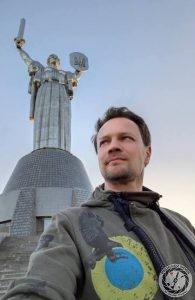
By Matthew Parish
Wednesday 9 September 2026
There is a temptation, after more than four years of full-scale war, to become accustomed to the extraordinary. Another Ukrainian organisation raises money for drones; another group of volunteers buys equipment for soldiers; another businessman spends his evenings telephoning friends and asking them for donations; another vehicle drives east carrying equipment that men and women at the front urgently need. We have heard these stories so often that their significance can become obscured by their familiarity. Yet behind them lies one of the principal reasons why Ukraine survived February 2022 and why she continues to resist a vastly larger enemy. The Ukrainian state went to war against Russia, but Ukrainian society went to war as well, creating a parallel infrastructure of volunteers, businesses, charities, personal networks and informal institutions whose cumulative contribution to the country’s defence is difficult to measure but impossible seriously to doubt.
Freedom Friends, an NGO directed by the Lviv-born consultant and civic activist Taras Byk, represents a particularly interesting example of this immense informal infrastructure that has grown up behind Ukraine’s Armed Forces. Its premise is disarmingly simple. Instead of searching endlessly for occasional spectacular donations, the organisation seeks to assemble a substantial community of friends prepared to make smaller contributions regularly, with those contributions directed systematically towards helping the Ukrainian Army. Small donations, made repeatedly and organised properly, may not provide the dramatic photographs associated with enormous fundraising campaigns, but wars are frequently sustained by precisely such unromantic mechanisms. An army’s requirements recur every day, and an organisation designed around regular rather than exceptional generosity reflects that reality.
From Lviv to Kyiv
Byk’s biography helps explain the philosophy behind Freedom Friends. Born in Lviv, he studied international relations at the Ivan Franko National University of Lviv and began his professional career as a journalist with Lvivska Gazeta. In 2006 he moved to Kyiv to work in President Viktor Yushchenko’s Presidential Secretariat. Three years later he went to Brussels for a traineeship at the European Commission and, upon returning to Ukraine, spent more than eight years with the International Republican Institute implementing good-governance programmes across the country. In 2019 he joined Wooden Horse Strategies, a Ukrainian-American government and public-relations consultancy, and in 2021 his work took him to Rivne, where he served as Head of the Advisory Board to the city’s Mayor.
There is a common thread running through this otherwise varied career. Byk became, in effect, a professional organiser. Government, international organisations, political consultancy, municipal administration and public relations all involve variations upon the same fundamental skill: persuading different groups of people, frequently with different interests and priorities, to cooperate in achieving something concrete. They also teach the less glamorous arts of institutional life: how to formulate a project, how to identify the person capable of financing it, how to explain an objective to people unfamiliar with its circumstances and how to transform goodwill into action. These skills suddenly became considerably more important in February 2022, when the normal distinctions between professional and civic life collapsed under the pressure of Russia’s invasion.
Preparing for war
By the middle of February 2022, Byk had concluded that Russia was preparing to launch a full-scale invasion. He took his family out of Kyiv and then returned to the capital himself to prepare for what was coming. When Russia invaded, he joined a military volunteer formation of Kyiv’s Territorial Defence and underwent military training in anticipation of a Russian assault upon the city. Simultaneously he began volunteering for the Armed Forces and became involved with Help Ukraine – Operation Palianytsia, an initiative established by his American business partner and Ukraine resident Brian Mefford. According to Byk, Mefford’s initiative has raised and organised more than US$4.5 million in humanitarian assistance for Ukraine.
This combination of activities was repeated across Ukraine during those extraordinary first weeks of the invasion. Bankers became logistics officers, restaurant owners cooked for soldiers, software engineers began designing military applications, lawyers drove vans, mechanics repaired military vehicles and ordinary Ukrainians stood at checkpoints with rifles they had only just learned how to use. Professional distinctions that had appeared enormously important on 23 February suddenly became rather less significant on 24 February. The relevant question became brutally simple: what can you do? In Byk’s case, one answer was that he knew how to organise people, cultivate international relationships and turn networks of acquaintances into functioning projects. These were civilian skills that proved readily adaptable to the requirements of a country fighting for survival.
Freedom Friends
One of the three principal strands of Byk’s work since the invasion has now been institutionalised as Freedom Friends, of which he is Director. Its objective is primarily to support the Ukrainian Armed Forces, while its organisational model rests upon assembling a network of people prepared to make relatively small but regular donations. The simplicity of this model disguises its sophistication because charitable fundraising traditionally concentrates upon individual campaigns: there is an objective, a financial target and an appeal; the money is raised, the object is purchased and the campaign ends. Armies, however, do not have needs that end merely because yesterday’s fundraising target has been reached.
A drone is destroyed and another is required. A vehicle breaks down and must be repaired or replaced. Electronic-warfare equipment becomes obsolete, batteries are consumed, generators fail and changing battlefield conditions create requirements that nobody anticipated a month earlier. Russian technology changes and Ukrainian technology must change with it. The battlefield therefore generates needs continuously, and a system of recurring small donations has an important advantage over occasional fundraising spectaculars because it provides a degree of predictability. One wealthy donor giving US$50,000 is immensely valuable, but hundreds of people making modest contributions month after month create something different. They create an institution, and institutions can develop relationships, experience, routines and institutional memory that persist after the enthusiasm surrounding an individual fundraising campaign has subsided.
Friendship as infrastructure
The name Freedom Friends captures something unusually important about Ukraine’s wartime economy because much of the country’s resilience has been constructed through networks of personal trust. A soldier knows a volunteer; the volunteer knows a businessman; the businessman knows somebody abroad; somebody abroad knows a church group, a company, a foundation or twenty friends willing to contribute money. An apparently casual network of acquaintances thereby becomes a supply chain, and what looks from the outside like an informal collection of personal relationships can perform functions that formal bureaucracies struggle to undertake with comparable speed.
Western observers accustomed to highly institutionalised societies can sometimes mistake this informality for inefficiency. Yet war imposes its own timetable. A military unit may need drones now, not after a six-month procurement procedure. Someone must understand which drones are required, know where they can be obtained, raise the money, verify the supplier, arrange the transport and maintain sufficient confidence with the military unit to know that the equipment has arrived where it was supposed to go. Then, because drones and other battlefield equipment are constantly being lost or consumed, the entire process must begin again. The indispensable commodity in this system is consequently not merely money but trust. Freedom Friends attempts to institutionalise that trust, transforming a network of people who know one another into a reliable stream of assistance for people fighting a war.
The drone revolution
This organisational model is particularly well suited to drone warfare because the economics of unmanned systems are unlike those of the great weapons platforms of the twentieth century. Private citizens cannot sensibly hold a collection to purchase a modern fighter aircraft or a sophisticated air-defence battery, whereas they can collectively finance drones and related equipment. This has radically shortened the distance between civilian generosity and battlefield effect. A comparatively modest sum can purchase an unmanned system capable of providing reconnaissance, carrying supplies, intercepting another drone or attacking an enemy target worth many multiples of the system’s own cost.
Yet drones are also consumable. They crash, are jammed, are shot down, are deliberately destroyed in attacks and become technologically obsolete at extraordinary speed as each side develops countermeasures to the other’s innovations. Ukraine’s drone war therefore demands not merely procurement but continuous procurement. The most valuable volunteer organisations are consequently not necessarily those capable of producing the most impressive photograph of a single delivery; they are those capable of returning week after week and month after month with another collection, another purchase and another delivery. Persistence becomes a military virtue, and the regular donor becomes part of the logistics of contemporary warfare.
From volunteer to defence professional
There is another dimension to Byk’s story because since 2025 he has also begun working directly in Ukraine’s defence sector, assisting a company producing drones and interceptor systems with the development of its international cooperation. This represents another transformation taking place throughout Ukrainian society: the boundary between volunteerism and defence industry is becoming increasingly porous. A volunteer who spends years obtaining military equipment inevitably acquires knowledge about what soldiers actually need, which technologies work, which do not, what manufacturers can provide and how military requirements change under battlefield conditions. At the same time, the volunteer develops relationships with foreign donors, companies and potential partners.
Eventually this amateur ecosystem begins to professionalise. Ukraine’s wartime defence industry has grown partly through precisely this process, in which the battlefield, volunteer network, engineer and manufacturer are connected by unusually short lines of communication. The result has been a remarkably rapid cycle of military technological adaptation. The person who begins by finding money to purchase drones may eventually find himself helping a Ukrainian drone manufacturer establish international partnerships, because the underlying skills — understanding requirements, connecting people, establishing confidence and persuading others to cooperate — remain fundamentally the same.
The second front: reconstruction
Byk’s activities extend beyond supplying the Army. He is also a board member of the Agency for Recovery and Development, an NGO helping Ukrainian communities, particularly those close to the front, overcome the consequences of war and create employment. His own description of its purpose contains an important insight: jobs create taxes and taxes finance the Armed Forces. This is reconstruction understood not merely as something that will begin after a peace treaty has been signed, but as part of Ukraine’s ability to continue fighting the war now.
A town near the front cannot contribute much to national defence if its businesses have disappeared, its working-age population has fled and its municipal finances have collapsed. Economic resilience therefore becomes military resilience. Keeping a factory operating in Kharkiv matters; helping a business reopen matters; restoring electricity matters; creating employment in a damaged community matters. Every functioning Ukrainian enterprise pays salaries and taxes, every family capable of remaining economically independent reduces pressure upon the state and every municipality able to preserve some measure of economic life contributes to the country’s capacity to continue fighting. The front line and the economy behind it cannot ultimately be separated, because armies are sustained by societies and societies require functioning economies.
The third struggle
The third institutional strand of Byk’s activities is more overtly political and considerably more controversial. He serves on the board of an NGO called Decolonization. Its premise, as he describes it, is that sustainable peace cannot be achieved while the Russian Federation remains within its current borders, and the organisation therefore supports what it describes as captive nations within Russia in pursuing independence. This proposition is plainly different in character from raising money for drones or assisting damaged Ukrainian municipalities, and it should be understood as the political position of Byk and the organisation rather than as an uncontested conclusion about Russia’s future.
Nevertheless, it forms part of an increasingly significant Ukrainian debate. For much of the post-Soviet period, western policy assumed that the territorial integrity and political stability of the Russian Federation were desirable ends in themselves. From a Ukrainian perspective after Bucha, Mariupol, Bakhmut and years of missile and drone attacks, that assumption is increasingly questioned. If Russian imperial power repeatedly regenerates itself, some Ukrainians ask whether containing Russia is sufficient or whether the imperial structure itself must eventually change. Whether one accepts that argument or not, there is an intellectual coherence connecting Byk’s three principal activities. Freedom Friends addresses the immediate requirement to defend Ukraine; the Agency for Recovery and Development addresses Ukraine’s capacity to survive economically and rebuild; Decolonization addresses what Byk and his colleagues regard as the underlying geopolitical conditions that permitted the war to occur.
The republic of volunteers
Perhaps the most remarkable feature of Freedom Friends is ultimately that there is nothing especially remarkable about it. Ukraine contains thousands of networks performing comparable functions, and that is precisely what Russia appears to have misunderstood when she launched the full-scale invasion. Before February 2022 Russian planners could count Ukrainian tanks, aircraft and artillery pieces. They could estimate ammunition stocks, brigade strengths and air-defence systems. What they could not easily count was the businessman who would telephone twenty acquaintances and raise money for drones; the woman in Poland who would buy a generator; the mechanic who would repair an evacuation vehicle without charging for his labour; or the American who knew somebody in Kyiv, who knew somebody in Dnipro, who knew somebody commanding a unit near the front.
These relationships do not appear in conventional assessments of national power, yet they are a form of national power nonetheless. Modern states tend to measure capacity through budgets, institutions and formal organisations, but Ukraine’s wartime experience demonstrates the enormous latent power contained in a society capable of organising itself rapidly through networks of confidence and mutual obligation. The state remains indispensable, of course, and volunteer networks cannot substitute for ministries, military commands or industrial-scale defence procurement. Nevertheless, they can supplement those institutions, identify gaps faster than bureaucracies and respond to immediate needs with a flexibility that centralised structures rarely possess. Ukraine’s defence since 2022 has depended in no small measure upon the interaction between these two forms of organisation: the formal power of the state and the improvised energy of civil society.
Small things, repeatedly
Ukraine’s survival increasingly depends upon people doing relatively small things repeatedly. A monthly donation becomes another drone; another telephone call produces another introduction; another introduction finds another international partner; another vehicle is repaired; another frontline community preserves a few dozen jobs; another Ukrainian defence company finds somebody abroad willing to listen to what it can build. None of these acts wins a war individually, and most will never appear in history books. Together, however, they constitute part of the machinery by which a society refuses to be defeated.
Taras Byk began his career as a journalist in Lviv, then passed through government, Brussels, international democracy programmes, consultancy and municipal administration before returning to Kyiv in February 2022 to prepare for an invasion. The war turned those accumulated experiences towards different purposes. Administration became logistics, international contacts became fundraising networks, public relations became the ability to explain Ukraine’s requirements abroad and political organisation became wartime organisation. The trajectory from Freedom Friends to reconstruction work and then into Ukraine’s developing defence industry is therefore less improbable than it might initially appear. In each case the essential task is to connect people who possess resources with people who possess needs, and then to make sure that something useful actually happens.
That may ultimately be the most interesting thing about Freedom Friends. It is not attempting to invent a revolutionary new theory of philanthropy. Instead it takes one of the oldest forms of human organisation — people who know and trust one another — and turns it into something systematic. A friend gives a little money and another friend does the same; next month they do it again, and the organisation gradually turns friendship into predictability and predictability into practical assistance. Somewhere far to the east, a Ukrainian soldier receives another drone. In the immense machinery of modern war this may seem like a very small thing, but Ukraine’s experience since February 2022 has demonstrated that enough small things, undertaken persistently by enough determined people, can become something very large indeed.
—
To contact Freedom Friends in Kyiv, please see their Facebook page: https://www.facebook.com/profile.php?id=61561110153626.
5 Views

Most Readings