𝐅𝐨𝐫 𝐠𝐚𝐬 𝐞𝐱𝐭𝐫𝐚𝐜𝐭𝐢𝐨𝐧 𝐢𝐧 𝐭𝐡𝐞 𝐞𝐚𝐬𝐭𝐞𝐫𝐧 𝐌𝐞𝐝𝐢𝐭𝐞𝐫𝐫𝐚𝐧𝐞𝐚𝐧, 𝐆𝐫𝐞𝐞𝐜𝐞, 𝐂𝐲𝐩𝐫𝐮𝐬, 𝐚𝐧𝐝 𝐈𝐬𝐫𝐚𝐞𝐥 𝐡𝐚𝐯𝐞 𝐟𝐨𝐫𝐦𝐞𝐝 𝐚 𝐭𝐫𝐢𝐥𝐚𝐭𝐞𝐫𝐚𝐥 𝐚𝐠𝐫𝐞𝐞𝐦𝐞𝐧𝐭.
- The Israeli, Greek, and Cypriot governments have decided to cooperate more closely in the energy industry to facilitate the transmission of electricity and the export of gas from the Eastern Mediterranean to Europe.
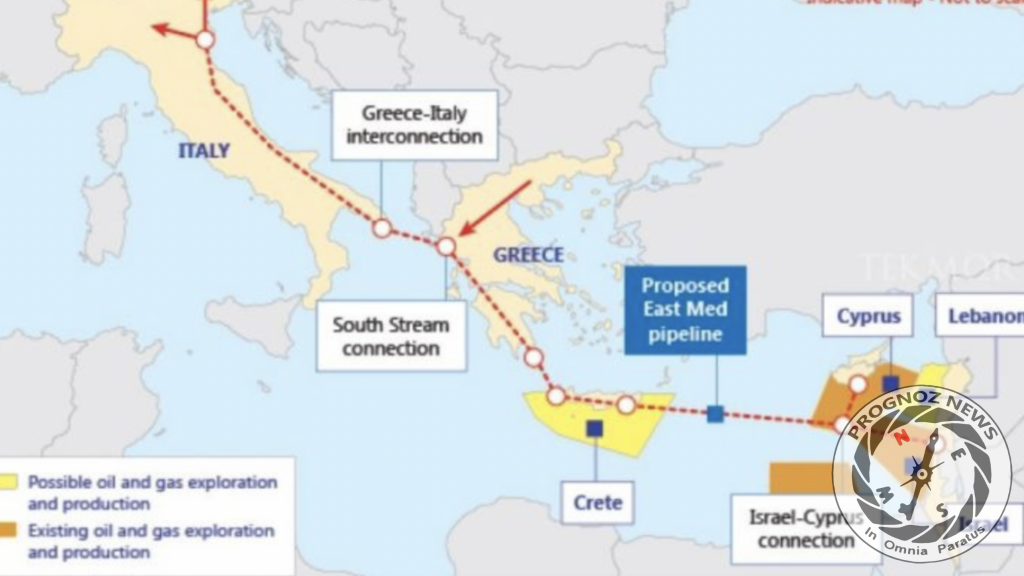 Due to the region’s prolific history of natural gas discoveries over the previous decade, interest in the area has increased in the wake of Russia’s invasion of Ukraine, which halted gas deliveries to Europe. To address Europe’s energy demands in the wake of sanctions against Russia, the Cypriot government has announced an expedited plan to build a natural gas link with Israel. Approximately 170 kilometers off the southern coast of Cyprus, the proposed EastMed Pipeline Project would begin and travel a total of 2,200 kilometers across the Mediterranean Sea, through Greece, and on to Otranto. By 2030, it is expected that Europe will require an additional 100 bcm a year in gas imports. Yuval Steinitz, Israel’s minister of energy, claimed that despite technical difficulties caused by the depths involved, the EastMed Pipeline Project’s feasibility assessment proved that the link is possible. The leaders also expressed their continued support for the installation of fiber-optic and electrical connections beneath the ocean to connect the three nations. It is anticipated that construction on the EuroAsia Interconnector will commence in 2018. Israel’s Energy Minister, Israel Katz, has advocated for a multi-fiber optic cable to be built between Ashkelon and Eilat, with potential extensions to Cyprus and Europe.
@prognoz_news
579 Views


Most Readings