𝐁𝐑𝐈𝐂𝐒 𝐜𝐨𝐧𝐭𝐢𝐧𝐮𝐞𝐬 𝐢𝐭𝐬 𝐞𝐟𝐟𝐨𝐫𝐭𝐬 𝐭𝐨 𝐫𝐞𝐬𝐡𝐚𝐩𝐞 𝐭𝐡𝐞 𝐠𝐥𝐨𝐛𝐚𝐥 𝐨𝐫𝐝𝐞𝐫 𝐛𝐲 𝐰𝐞𝐥𝐜𝐨𝐦𝐢𝐧𝐠 𝐧𝐞𝐰 𝐦𝐞𝐦𝐛𝐞𝐫𝐬.
The BRICS group grows. Egypt, Ethiopia, Iran, the UAE, and Saudi Arabia will join BRICS on January 1st. In August, the group decided to expand its membership beyond the original group of South Africa, Brazil, Russia, India, and China. Argentina was also extended an invitation to join, but President Javier Milei, who was just inaugurated, turned it down. With the growth of the bloc’s programs to decrease the usage of the dollar among member states and the extension of loans through the New Development Bank, the bloc’s overall diplomatic clout, financial might, and market size will all improve. However, disagreements and rivalries inside the bloc will increase with the arrival of new members, particularly over states’ stances toward the West and blocwide decision-making. This will make it harder for it to work together and replace international institutions dominated by the West.
@prognoz_news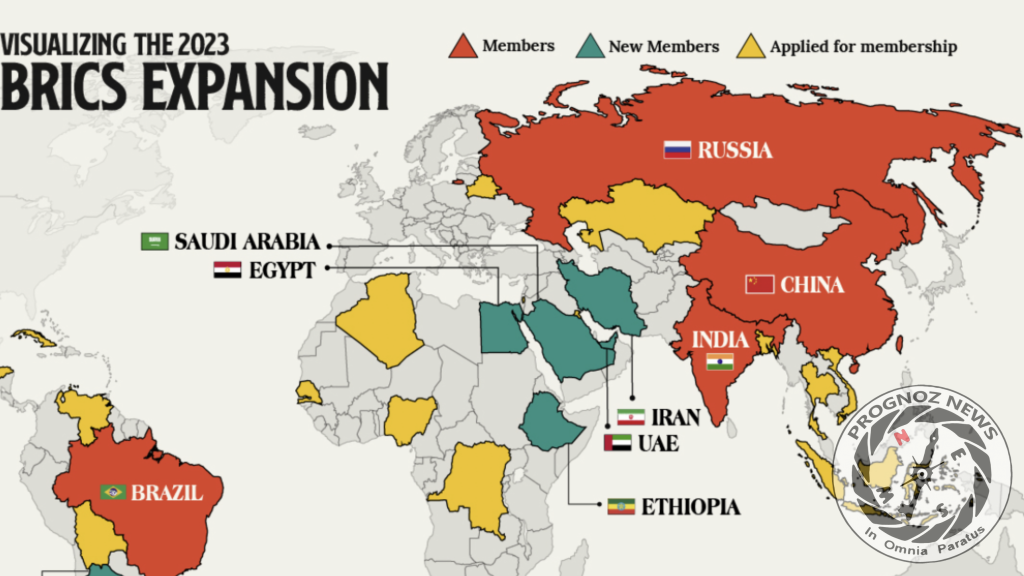



Most Readings