The Russian Central Bank’s decision to require lenders to hold reserves in Yuan
By Matthew Parish, Associate Editor
Saturday 2 May 2026
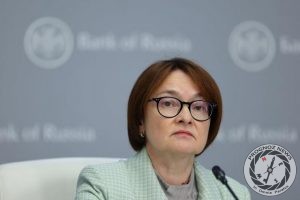
The announcement by the Central Bank of Russia under the stewardship of Elvira Nabiullina that commercial lenders may be required to hold mandatory reserves in Chinese yuan is not a mere technical adjustment in banking regulation. It is a window into the evolving architecture of a sanctions-era financial system — one in which currency, sovereignty and geopolitical alignment have become inseparable.
At first glance the policy appears prudential. Russian banks have experienced acute shortages of yuan liquidity, with swap rates spiking above 40 per cent amidst heavy borrowing and reduced inflows linked to fluctuations in oil revenues. The central bank’s concern is that excessive reliance on short-term yuan funding has created instability in the domestic financial system, a vulnerability that could be mitigated by requiring banks to maintain standing reserves.
Yet this technocratic explanation only scratches the surface. The deeper significance lies in the fact that the yuan has become Russia’s principal foreign currency — not by design, but by exclusion. Western sanctions have curtailed access to dollars and euros, effectively forcing Russia to reorient her external financial relationships towards China.
This transformation raises three interlocking geopolitical and geoeconomic questions.
The first concerns monetary sovereignty. Traditionally a state’s central bank seeks to maintain independence by anchoring its financial system in its own currency, supplemented by diversified foreign reserves. Russia now finds herself in a paradoxical position: having rejected dependence on the dollar, she is drifting into dependence on the yuan. Unlike the dollar system, which operates through deep and liquid global markets, the yuan remains partially controlled by the People’s Bank of China and subject to the strategic priorities of the Chinese state. Russia’s increasing reliance on yuan liquidity therefore imports an external political constraint into her domestic financial system.
The second issue is asymmetry. While Russia needs yuan to facilitate trade and financial transactions, China does not require roubles in equivalent measure. This imbalance creates structural leverage. Even where bilateral trade appears balanced on paper, the mechanisms of settlement — correspondent banking, clearing systems, liquidity provision — are overwhelmingly influenced by Chinese institutions. The experience of delayed payments and cautious behaviour by Chinese banks, often wary of secondary sanctions, illustrates how this asymmetry operates in practice.
Mandatory yuan reserves would, in this context, formalise Russia’s subordinate position within a Sino-centric financial ecosystem. Russian banks would be compelled to internalise the costs of maintaining access to a currency over which they have no control, effectively embedding geopolitical hierarchy within the balance sheets of private institutions.
The third question concerns the fragmentation of the global monetary order. For decades, the international system has revolved around the dollar as a universal medium of exchange and store of value. Russia’s pivot towards the yuan represents one of the most advanced attempts to construct a parallel system. Yet it is a system marked not by autonomy but by substitution: one hegemonic currency replaced by another, without the institutional depth that made the former globally dominant.
This has implications beyond Russia herself. If other sanctioned or non-aligned states observe that the price of escaping the dollar is dependence upon the yuan, they may hesitate to follow the same path. The emergence of a genuinely multipolar currency order would require diversification — a basket of alternatives, or perhaps digital settlement systems — rather than the consolidation of a new centre of gravity in Beijing.
There is also a domestic political dimension. By imposing yuan reserve requirements, the Russian central bank is asserting regulatory discipline over commercial lenders who have sought to profit from arbitrage opportunities in yuan lending. This reflects a broader tension within wartime economies: the state’s need for stability often conflicts with the private sector’s pursuit of short-term gains. Nabiullina’s remarks suggest an awareness that financial volatility, even when driven by market forces, can carry systemic risks in a constrained and sanction-affected environment.
Ultimately the proposed policy is emblematic of a deeper transformation. Russia is no longer operating within the liberal financial order that prevailed before 2022. She is constructing, under duress, a hybrid system — part domestic, part Chinese — in which liquidity, sovereignty and geopolitical alignment are tightly interwoven.
Whether this system proves sustainable remains uncertain. It may stabilise short-term liquidity and reduce volatility in the banking sector. But it also entrenches a long-term dependency that is difficult to reverse. In seeking to escape one form of financial vulnerability, Russia may be institutionalising another — less visible, but no less consequential.
The requirement for yuan reserves is not merely a monetary policy tool. It is a quiet acknowledgement that in the emerging world order, currencies are no longer neutral instruments of exchange. They are instruments of power — and to hold them is, increasingly, to accept the influence of those who issue them.
189 Views



Most Readings