The Siege of the Inbox: How to Protect Your Email in an Age of Permanent Intrusion
By Matthew Parish, Associate Editor
Wednesday 10 June 2026
Email was never designed to become the vault of modern life. Yet that is precisely what it has become.
For most people, an email account is no longer merely a means of communication. It is the master key to banking, social media, cloud storage, government services, medical records, business correspondence and personal archives. Whoever controls your email account often controls everything else. The theft of an email account today is not equivalent to intercepting a letter; it is closer to stealing the keys to a house, a car, a safe deposit box and an office building simultaneously.
This transformation has occurred gradually, and many people have failed to adjust their security practices accordingly. They continue to treat email as a convenient utility rather than a critical security asset. Meanwhile criminals, intelligence agencies, commercial espionage operations and increasingly sophisticated automated systems have devoted enormous resources to compromising electronic communications.
The result is a perpetual contest between attackers and defenders, in which complacency is often the greatest vulnerability.
Many people imagine that email accounts are compromised through cinematic feats of technical wizardry. In reality, most successful intrusions are surprisingly mundane.
The overwhelming majority of compromises begin with deception rather than technology.
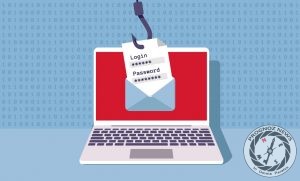
A user receives an email appearing to come from a bank, a cloud storage provider or a trusted colleague. The message creates urgency. An account is supposedly locked. A payment has allegedly failed. A document requires immediate review. The recipient clicks a link, enters credentials on a fraudulent website and unknowingly hands control of the account to an attacker.
This technique, known as phishing, remains astonishingly effective because it exploits human psychology rather than software vulnerabilities.
Artificial intelligence has made these attacks more dangerous. Historically, fraudulent messages were often identifiable through poor grammar, strange formatting or awkward language. Contemporary large language models can generate persuasive communications in virtually flawless English and numerous other languages. A phishing message can now resemble genuine corporate correspondence with remarkable accuracy.
Consequently the first principle of email security is scepticism.
Every unexpected message should be treated with suspicion, particularly if it requests passwords, financial information or urgent action.
For many years, a strong password was considered the foundation of security. While still important, passwords alone are no longer sufficient.
A password may be stolen through phishing. It may be leaked through a compromised website. It may be captured through malicious software. It may even be guessed if it follows predictable patterns.
Many individuals continue to reuse passwords across multiple services. This practice is particularly dangerous. If one website suffers a data breach, attackers can automatically test the same credentials against hundreds of other services.
A unique password should be used for every account.
Because remembering dozens or hundreds of unique passwords is impossible for most people, the use of a password manager has become essential. A reputable password manager generates long, random passwords and stores them in encrypted form.
The irony is that security improves when people stop trying to remember passwords altogether.
Perhaps the single most effective defence available today is multi-factor authentication.
This system requires more than a password to gain access. Even if an attacker acquires credentials, he cannot enter the account without possessing a second factor.
The strongest forms of multi-factor authentication rely upon dedicated hardware security keys. These small devices must be physically present during login.
Applications generating authentication codes are generally secure as well.
Text-message authentication remains better than nothing, but it is increasingly vulnerable to so-called SIM-swapping attacks, in which criminals persuade mobile telephone providers to transfer a victim’s number to a new device under their control.
If an email account protects valuable information, hardware security keys should be regarded as a necessity rather than a luxury.
Many people focus on protecting desktop computers while neglecting their telephones.
This is a serious mistake.
Modern smartphones frequently contain email applications that remain permanently authenticated. An unlocked telephone can therefore provide immediate access to an email account without requiring any password whatsoever.
Strong device passcodes should always be enabled. Biometric authentication, such as fingerprint or facial recognition, adds an additional layer of protection.
Equally important is maintaining current software updates. Many successful attacks exploit vulnerabilities that have already been patched but remain uncorrected on neglected devices.
Cybersecurity often resembles public health. The most effective measures are frequently routine and unglamorous.
Wireless networks in hotels, cafés and airports present another significant risk.
Contrary to popular imagination, modern encryption has reduced many traditional public Wi-Fi threats. Nevertheless attackers continue to create fraudulent networks designed to imitate legitimate services.
A traveller might connect to “Airport_Free_WiFi” rather than the genuine airport network.
Once connected, all traffic may pass through equipment controlled by an attacker.
A virtual private network can reduce this risk by encrypting communications between the device and a trusted server.
However users should remember that no technology can compensate for connecting to an obviously suspicious network.
The simplest defence remains caution.
Not all email services provide identical security.
Some providers invest enormous resources in monitoring suspicious activity, identifying phishing campaigns and preventing unauthorised access. Others offer comparatively limited protections.
Security-conscious users should examine features such as:
-
Multi-factor authentication support.
-
Hardware security key compatibility.
-
Account activity monitoring.
-
Encryption policies.
-
Recovery procedures.
The recovery process deserves particular attention. Many accounts are compromised not through direct attack but through weak recovery mechanisms. An attacker who can answer security questions or intercept recovery messages may bypass sophisticated technical protections entirely.
Users should therefore review recovery email addresses, recovery telephone numbers and backup authentication methods regularly.
Discussions of cybersecurity often focus exclusively on external attackers. Yet insiders may present equal or greater risks.
A former employee, a disgruntled business partner or an abusive former spouse may possess knowledge unavailable to outsiders.
For this reason security should not depend upon secrecy alone.
Credentials should be changed when relationships end. Shared devices should be reviewed. Old permissions should be revoked. Dormant accounts should be closed.
Many compromises occur because access granted years earlier is forgotten rather than because it is stolen.
The emergence of artificial intelligence has altered the security landscape profoundly.
Voice-cloning systems can imitate family members. Automated systems can generate convincing correspondence at industrial scale. Deepfake technology may increasingly be used to support fraudulent narratives.
Future attackers may not merely send emails. They may telephone, appear in video calls or create entire synthetic identities.
Consequently verification procedures become increasingly important.
Sensitive requests should be confirmed through independent communication channels. A financial instruction received by email should be verified by telephone. An unusual request received by telephone should be confirmed in writing.
Trust must increasingly be established through multiple forms of evidence rather than a single communication.
Ultimately cybersecurity is not primarily a technological problem. It is a psychological one.
Most successful attacks exploit haste, distraction, curiosity, greed, fear or trust. They succeed because people behave predictably under pressure.
The strongest defence is therefore a disciplined mindset.
Do not click impulsively.
Do not trust appearances.
Do not assume familiarity implies authenticity.
Do not believe that sophisticated institutions are immune from compromise.
The most secure individuals are often not computer experts. They are simply cautious people who recognise that every communication may be deceptive until proven otherwise.
The contemporary email account occupies a peculiar position in modern society. It is simultaneously mundane and indispensable. Most people use it every day without reflection, yet it often serves as the central authentication mechanism for their entire digital existence.
In an era of artificial intelligence, organised cybercrime, geopolitical espionage and increasingly sophisticated social engineering, no electronic system can be considered perfectly secure. The objective is not absolute invulnerability. Such a condition does not exist.
Rather, the goal is to become a sufficiently difficult target that attackers seek easier victims elsewhere.
Strong unique passwords, multi-factor authentication, hardware security keys, careful verification procedures, updated software and a healthy scepticism towards unexpected communications together form a remarkably effective defence.
The most important lesson is perhaps the simplest: your email account is no longer merely an inbox. It is the command centre of your digital life. It should be protected with the same seriousness that one would devote to the keys of a home, the combination of a safe or the deeds to a valuable property.
In the twenty-first century, losing control of one’s email may mean losing control of everything.
111 Views



Most Readings


Crimea Under Pressure: Ukraine’s Long Campaign Against Russia’s Southern Bastion
97 Views