WiFi routers: the new surveillance technology
By Matthew Parish, Associate Editor
Thursday 11 June 2026
For most of the history of surveillance, there was a simple principle that ordinary people could rely upon: if one wished to avoid being tracked electronically, one merely left one’s electronic devices behind. A mobile telephone switched off and left at home could not report its owner’s location. A laptop computer disconnected from the internet could not reveal where its user was travelling. The physical world and the electronic world remained, to a substantial degree, distinct.
That distinction is beginning to disappear.
An emerging field of sensing technology is making it increasingly possible to identify, monitor and even locate individuals without requiring them to carry any electronic equipment whatsoever. Instead the surveillance apparatus relies upon the invisible radio-frequency fields already present in modern buildings and cities, particularly those generated by WiFi routers. What was originally designed as a means of connecting computers to the internet is gradually evolving into a form of environmental sensing capable of detecting the presence, movements and, in some circumstances, the identity of individual human beings.
The implications for privacy are profound.
The Physics of Invisible Observation
To understand how this technology works, one must first appreciate that WiFi signals are not merely communications channels. They are also physical phenomena.
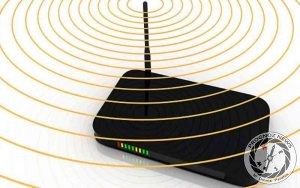
A typical WiFi router continuously emits radio waves throughout the surrounding environment. Those waves bounce off walls, furniture, doors, vehicles and human bodies. Every object alters the signal in a slightly different way. When a person moves through a room, the radio waves are disrupted and reflected differently.
Historically, these changes were regarded as interference. Engineers sought to minimise them because they reduced the efficiency of data transmission.
Recent advances in signal processing and machine learning have transformed these disturbances from nuisances into sources of information.
A sufficiently sophisticated system can analyse minute changes in radio signals and determine whether a person is present, where they are moving, how many people are in a room, and in some cases what activities they are performing.
The result is sometimes described as “WiFi sensing” or “radio-frequency sensing”.
Although the underlying principles have been understood for years, the computational power required to exploit them effectively has only recently become widely available.
Seeing Through Walls
One of the most striking capabilities of modern radio-frequency sensing systems is their ability to detect movement through obstacles.
Unlike visible light, WiFi signals can penetrate many common building materials. They can pass through plasterboard walls, wooden doors and various forms of insulation.
Consequently a receiver positioned in one room may detect the movement of a person in another room despite having no direct visual line of sight.
Military researchers have long investigated comparable technologies for urban warfare. Police and intelligence agencies have similarly experimented with systems capable of detecting human presence behind walls during hostage situations or counter-terrorism operations.
What is changing today is that the same underlying capabilities are increasingly becoming available through ordinary commercial infrastructure.
A building equipped with multiple WiFi access points already possesses much of the hardware required for such sensing.
The additional ingredient is software.
Recognising Individuals by Their Movement
Detecting that a person is present is relatively straightforward. Identifying who that person is presents a greater challenge.
Yet researchers have increasingly demonstrated that individual people possess distinctive movement patterns that can be recognised algorithmically.
Every person walks slightly differently. Gait, posture, stride length, balance and body proportions all influence how radio signals are reflected.
A sufficiently trained artificial intelligence system can learn these patterns.
The process resembles facial recognition, except that the identifying characteristic is not a person’s face but rather the unique manner in which they move through space.
Experimental systems have already demonstrated the ability to distinguish amongst individuals using only radio-frequency reflections. In laboratory environments, researchers have achieved surprisingly high accuracy rates.
As machine learning models continue to improve, such identification may become increasingly reliable.
In principle a building could eventually recognise its occupants without requiring key cards, mobile telephones, fingerprints or facial scans.
The building would know who was present simply by observing how each person moved.
Breathing, Heartbeats and Human Signatures
The capabilities extend beyond movement.
Researchers have shown that sufficiently sensitive radio-frequency sensing systems can detect respiration and, under controlled conditions, even heartbeat patterns.
The movements involved are extraordinarily small. A human chest may rise and fall by only a few millimetres during breathing. Yet modern signal-processing techniques can identify corresponding alterations in reflected radio waves.
Medical applications are immediately apparent. Elderly individuals living alone could be monitored for signs of distress without wearing uncomfortable equipment. Patients might be observed continuously without intrusive sensors attached to their bodies.
However, the same capabilities also create opportunities for surveillance.
If a system can distinguish individuals by their physiological signatures, then anonymity within monitored spaces becomes increasingly difficult to maintain.
The Home as a Sensor
The modern home contains an expanding collection of network-connected devices.
WiFi routers, smart televisions, security systems, voice assistants and internet-connected appliances all contribute to a dense electromagnetic environment.
Traditionally these devices collected information through cameras, microphones and direct user interactions.
Radio-frequency sensing introduces a new possibility: the home itself becoming a sensor.
A future smart-home system might determine that a resident has entered the kitchen, fallen asleep, exercised or departed the premises without requiring any cameras at all.
Such systems may ultimately prove less visually intrusive than video surveillance. Yet they also possess an unusual characteristic. People often understand intuitively when they are being filmed. Few individuals recognise that invisible radio waves can also reveal detailed information about their activities.
The absence of obvious observation may create a false sense of privacy.
Commercial Applications
Technology companies are naturally attracted to the commercial opportunities.
Retailers could monitor customer movements through shops without requiring customers to carry mobile telephones.
Office buildings could analyse employee occupancy patterns.
Hotels could automate environmental controls based upon room usage.
Insurance companies might eventually seek behavioural data derived from occupancy and movement patterns.
Advertisers could potentially combine location information with other datasets to create increasingly detailed behavioural profiles.
The commercial incentives are substantial because behavioural information possesses enormous economic value.
The more accurately human behaviour can be predicted, the more valuable the resulting data becomes.
Military and Intelligence Uses
Military applications are perhaps even more significant.
Modern warfare increasingly depends upon the integration of sensors.
The war in Ukraine has demonstrated how rapidly emerging technologies can transform battlefields. Drones, satellite imagery and electronic intelligence have all become central components of military operations.
Radio-frequency sensing could eventually contribute to this broader sensor network.
Buildings might reveal occupancy patterns. Urban environments could become partially transparent to sophisticated monitoring systems. Search-and-rescue operations could identify survivors hidden beneath debris. Military units could detect movement within structures without exposing personnel to direct danger.
Intelligence services are also likely to view such technologies with considerable interest.
A surveillance system that does not depend upon telephones, internet usage or electronic devices removes one of the traditional methods by which individuals have sought to avoid detection.
The End of Device-Based Privacy
Perhaps the most important implication is philosophical rather than technological.
For decades, discussions about privacy have largely centred upon devices. Citizens were advised to secure their computers, protect their telephones and encrypt their communications.
The emerging generation of radio-frequency sensing technologies challenges this framework.
Privacy may increasingly depend not upon controlling devices but upon controlling environments.
An individual may possess no electronic equipment whatsoever and still be observable because the surrounding infrastructure itself functions as a sensor.
In such circumstances, the relevant question is no longer “What information is my device revealing?” but rather “What information is my environment revealing about me?”
That is a fundamentally different problem.
A Regulatory Vacuum
Law has not yet caught up with these developments.
Most privacy legislation was drafted with cameras, microphones, telecommunications networks and internet services in mind.
Radio-frequency sensing occupies an ambiguous position. It does not necessarily record images. It may not capture audio. It can operate passively and invisibly.
Consequently, regulators often struggle to categorise it.
Yet from a civil-liberties perspective, the distinction may be largely irrelevant. If a system can determine who is present in a room, where they are moving, what they are doing and potentially even aspects of their physiological condition, then substantial privacy interests are clearly engaged.
The challenge facing legislators over the coming decade will be to decide whether such information deserves protections comparable to those applied to traditional surveillance technologies.
The Invisible Future
Much of the contemporary debate surrounding surveillance focuses upon artificial intelligence, facial recognition and mobile telephone tracking. These technologies are indeed significant. However they all depend upon identifiable sensors or devices.
WiFi-based human sensing points towards something more subtle.
The environment itself becomes the sensor.
Walls, rooms, offices, airports, railway stations and homes may increasingly acquire the ability to observe their occupants through the analysis of radio-frequency disturbances that humans neither see nor feel.
Whether this development ultimately proves beneficial or dangerous will depend largely upon the legal and ethical frameworks established around it. The medical, commercial and security applications are considerable. So too are the risks of abuse.
What seems increasingly clear is that the old assumption that one can avoid electronic tracking simply by leaving one’s telephone behind is unlikely to survive much longer. In the emerging world of radio-frequency sensing, the surveillance device may not be in one’s pocket at all. It may already be embedded in the walls around us.
130 Views



Most Readings