The Eastern Mediterranean in Transition: Türkiye, Israel, Iran, Lebanon, and the Fracturing of Regional Order
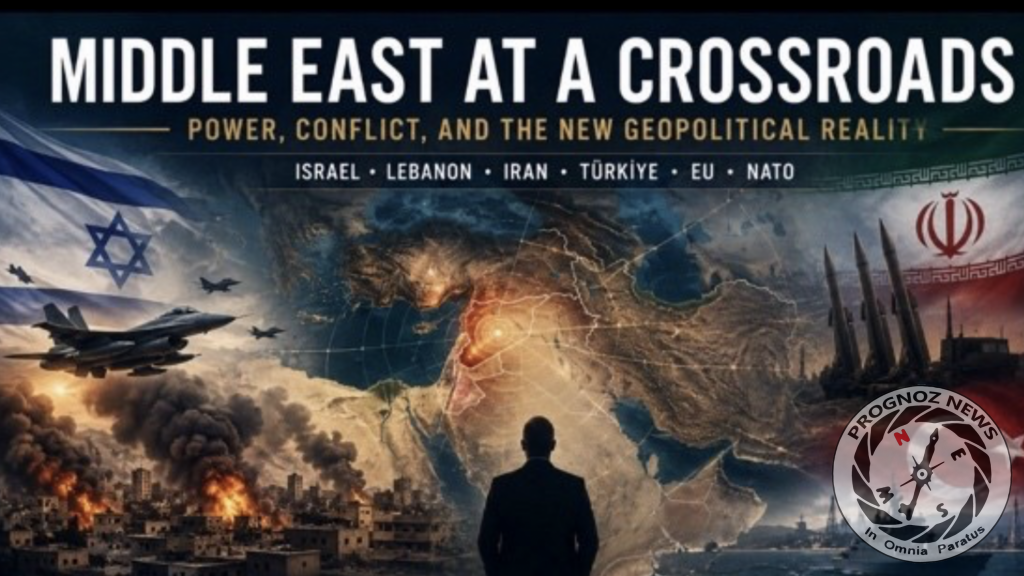 Badawi — The Eastern Mediterranean in TransitionAnadolu Agency Submission
The Eastern Mediterranean in Transition:
Türkiye, Israel, Iran, Lebanon, and the Fracturing of Regional Order
Prof. Habib Badawi
Professor of International Relations, Lebanese University, Beirut
ORCID: 0000-0002-6452-8379 | Scopus ID: 58675152100
Email: habib.badawi@ul.edu.lb
Mr. Emre Diner
Coordinator at the Center for Turkish Energy Strategies, Policies and Research (TESPAM).
Email: emrediner.cyprus@gmail.com
Abstract
The Eastern Mediterranean is undergoing a structural transformation whose scope and velocity exceed any single bilateral conflict or regional crisis. This analysis examines the interlocking strategic logics of Türkiye, Israel, Iran, and Lebanon as they contest deterrence frameworks, energy corridors, and the political character of regional order. It situates these dynamics within the broader context of transatlantic alliance management and the accelerating transition from a unipolar to a multipolar regional environment. Drawing on current scholarship and policy analysis, the article argues that sustainable stability in the Eastern Mediterranean cannot be achieved through military primacy alone and requires the construction of multilateral diplomatic frameworks commensurate with the complexity of the challenges confronting the region.
Keywords: Eastern Mediterranean, Türkiye, Israel, Iran, Lebanon, regional order, deterrence, energy geopolitics, NATO, strategic transition.
Introduction
The Middle East no longer presents itself as a theatre of isolated confrontations. What unfolds across Lebanon, Syria, the Eastern Mediterranean, and the Gulf constitutes a single, interlocking geopolitical drama in which the decisions of Jerusalem, Ankara, Tehran, and Beirut reverberate far beyond their immediate borders (Salem, 2024). The familiar distinctions between local conflict, regional rivalry, and global power competition have dissolved, giving way to a strategic environment defined by overlapping spheres of influence, contested deterrence frameworks, and the accelerating ambitions of emerging regional powers. This transformation did not happen suddenly. It is the product of decades of accumulated grievance, shifting alliances, and the gradual erosion of the post-Cold War security architecture that once lent the Eastern Mediterranean a semblance of predictability (Cook, 2026).
At the heart of this transformation lies a contest over the region’s strategic future: who will define the rules of deterrence, who will control the energy corridors and maritime zones of the Eastern Mediterranean, and who will ultimately determine the political character of the Levant. The actors engaged in this contest are diverse in their capabilities and motivations, yet united by the recognition that the current period of instability represents an opportunity to reshape the regional order in their favour (Byman et al., 2024). Israel, Türkiye, Iran, and Lebanon — each in its own way — are navigating this shifting landscape with a combination of military assertion, diplomatic manoeuvre, and strategic calculation. Their interactions, and the responses they provoke from Europe and the transatlantic alliance, will define the geopolitics of the Eastern Mediterranean for a generation (Yusuf, 2026).
Israel’s Strategic Calculus in Lebanon
Israel’s military operations in Lebanon cannot be understood solely through the lens of border security or counterterrorism. They reflect a broader and more ambitious strategic design: the establishment of a regional security architecture in which Israeli deterrence is restored, Iranian influence is contained, and the southern frontier is transformed from a zone of chronic threat into a buffer of strategic depth (Hazut & Shelah, 2024). Israeli decision-makers have articulated three interlocking objectives — the degradation of Hezbollah’s military capabilities, the compression of Iranian power projection through the Levant, and the compulsion of Hezbollah’s withdrawal from border areas — but these tactical aims are embedded within a longer strategic horizon that extends well beyond any immediate military campaign (Joffre, 2024).
The Lebanese theatre has acquired a significance that transcends the bilateral relationship between Israel and Hezbollah. It has become the primary arena in which Israel tests and communicates its deterrence posture to a regional audience that includes not only Hezbollah but also Iran, Türkiye, and the broader constellation of non-state actors that have proliferated across the post-Arab Spring landscape (Abdullah, 2023). Each military operation is therefore simultaneously a tactical engagement and a strategic signal — an assertion that Israeli freedom of action in the Eastern Mediterranean will not be constrained by the growing complexity of the regional environment. The ceasefire arrangements brokered with American mediation, which envision the Lebanese Armed Forces assuming control of southern zones while Hezbollah withdraws, reflect Israel’s preference for a negotiated buffer over indefinite occupation (Reuters, 2026a). Yet persistent disputes over implementation have repeatedly interrupted these arrangements, revealing the fragility of any settlement that fails to address the underlying structural tensions between the Israeli security imperative and the political realities of Lebanon’s fragmented state (Michaelson, 2024).
From a geopolitical perspective, Israel’s most consequential strategic challenge is not the operational suppression of Hezbollah’s rocket arsenals. It is the preservation of a favourable regional balance at a moment when multiple variables are moving simultaneously and in directions that complicate Israeli strategic planning (Byman, 2026). The growing assertiveness of Türkiye, the durability of Iranian regional networks despite sustained military pressure, and the increasing autonomy of non-state armed actors have collectively challenged the assumptions of deterrence superiority on which Israeli security doctrine has long rested (Frantzman, 2024). Israeli operations in Lebanon must therefore be read as part of a long-term effort to reassert strategic primacy before the window for doing so narrows further (Reuters, 2026b).
Türkiye’s Ascending Geopolitical Architecture
No single development has complicated Israel’s strategic environment more profoundly than the resurgence of Turkish regional ambition. Ankara’s expanding footprint across Syria, Libya, the Caucasus, and the Eastern Mediterranean represents not a series of opportunistic interventions but the expression of a coherent strategic doctrine — one that frames Türkiye as the indispensable connector between Europe, the Middle East, and the wider Islamic world (Aksoy, 2026). This doctrine is sustained by the modernisation of one of NATO’s largest and most capable military establishments, by a sophisticated diplomatic apparatus that has demonstrated the capacity to engage simultaneously with Moscow and Washington, and by an increasingly assertive foreign policy narrative that positions Ankara as a defender of Muslim interests in contested theatres from Gaza to Nagorno-Karabakh (Frantzman, 2024).
The structural competition between Türkiye and Israel has deepened considerably over the past several years, driven by overlapping and incompatible interests across multiple theatres (Çevik, 2024). In Syria, Turkish and Israeli forces operate in proximity, pursuing objectives that are frequently contradictory. Ankara seeks to consolidate influence over northern Syria, prevent Kurdish autonomy, and project itself as a dominant external actor in the post-conflict political settlement (Ciddi, 2025). Israel, by contrast, conducts sustained air operations against Iranian military infrastructure in Syrian territory, and views Turkish influence in Syria with growing unease as it adds another unpredictable variable to an already complex threat environment. Friction between these competing agendas has intensified as both states manoeuvrefor position in what remains a deeply unstable strategic space (Reuters, 2025).
Energy geopolitics have introduced an additional dimension of competition that is as economically consequential as it is strategically significant. The Eastern Mediterranean has emerged as one of the world’s most contested energy frontiers, with substantial natural gas reserves concentrated in zones where Turkish, Israeli, Greek, Cypriot, and Egyptian maritime claims intersect and collide (IISS, 2025). Turkish efforts to assert influence over maritime delimitation and energy corridor development are in direct tension with Israeli ambitions to monetise its offshore gas fields through Mediterranean export routes and regional energy partnerships (Gjevori, 2026). These competing visions for Eastern Mediterranean energy architecture are not merely commercial disputes; they are expressions of deeper rivalries over regional leadership, economic leverage, and the capacity to shape the political geography of the sea itself (Şafak, 2024). A direct military confrontation between Ankara and Tel Aviv remains improbable in the near term — both states retain channels of communication and understand the catastrophic risks of escalation — but the structural competition between them is unlikely to diminish. It will instead intensify as Turkish military and diplomatic capabilities expand and as the Eastern Mediterranean becomes an ever more consequential arena of great-power rivalry (Aksoy, 2026).
The Military Balance: A Comparative Assessment
A rigorous assessment of the military balance between Türkiye and Israel reveals a competition defined less by numerical superiority than by qualitative asymmetries and divergent industrial trajectories. With approximately 1,070 total aircraft — including some 205 combat aircraft — and a helicopter fleet of approximately 500 platforms, Türkiye maintains a quantitative advantage over Israel’s force structure of roughly 600 aircraft and 140 helicopters (IISS, 2025). Türkiye’s defence budget of approximately forty billion US dollars similarly exceeds Israel’s twenty-four billion dollar allocation. Yet what distinguishes Türkiye most decisively from its regional competitors is not raw inventory but rather the architecture of its domestic defence-industrial ecosystem (Şafak, 2024).
The KAAN fifth-generation fighter, the Bayraktar TB2, Akıncı, and Kızılelma unmanned aerial vehicle platforms, the HÜRJET jet trainer and light attack aircraft, the ALTAY main battle tank, the MİLGEM and İSTİF-class frigates, the TCG Anadolu amphibious assault vessel, and the HİSAR and SİPER layered air defence systems collectively constitute an indigenous capability that eliminates embargo vulnerabilities and sustains autonomous modernisation under national control (Aksoy, 2026). This industrial depth transforms Türkiye from a net importer into a leading exporter of defence technology, conferring durable strategic advantages that transcend any single operational comparison. Israel, by contrast — notwithstanding the formidable technological sophistication of its F-35 fleet, Iron Dome, David’s Sling, and Arrow air defence architecture, and its renowned cyber and intelligence capabilities — remains significantly dependent on foreign procurement for its most advanced systems (Byman, 2026). The conclusion that emerges from this assessment is unambiguous: Israel maintains superiority in technological intensity and certain high-end capability domains, while Türkiye commands a broader deterrence envelope through scale, versatility, and an increasingly autonomous and exportable industrial capacity (Şafak, 2024; IISS, 2025).
The Hejaz Railway Agreement: Strategic Geometry Redrawn
Among the most consequential recent developments in the regional strategic landscape is the cooperation agreement signed between Türkiye and Saudi Arabia on 9 June 2026 in the fields of railway development and logistics. Through this agreement, Ankara has secured a strategic corridor passing through Aleppo and Damascus, extending Turkish strategic influence from the Bosphorus Strait to the Red Sea — a geoeconomic achievement whose significance extends far beyond the infrastructure it encompasses. The revival of the historic Hejaz Railway, with an estimated investment cost of approximately five and a half billion US dollars and a committed Asian Development Bank contribution of seven hundred and fifty million dollars, is projected to reduce cargo transportation times from more than thirty days by sea to less than two weeks via overland routes (Aksoy, 2026; Reuters, 2026c).
Critically, this corridor bypasses Israel entirely, converting the ongoing regional crisis into a structural strategic opportunity for Ankara. Through a single multilateral infrastructure agreement, Türkiye has widened its advantage over Israel not merely in military terms but in regional influence and strategic partnership architecture — achieving simultaneously the consolidation of influence in post-Assad Syria, the deepening of partnership with Riyadh, and the creation of a physical manifestation of Turkish strategic doctrine that will outlast any individual government or diplomatic cycle (Çevik, 2024; Ciddi, 2025).
Iran’s Strategic Depth and the Limits of Deterrence
Iran’s regional strategy is constructed around the concept of strategic depth — the cultivation of allied armed movements across Lebanon, Syria, Iraq, Yemen, and Gaza that extend Iranian deterrence outward from the Islamic Republic’s borders and impose costs on adversaries at multiple points simultaneously (Mousavian, 2024). This architecture has provided Tehran with an extraordinary capacity for asymmetric power projection, enabling a middle-income state of modest conventional military capability to sustain influence across an arc of territory stretching from the Gulf to the Mediterranean (Wastnidge, 2024). It has also, however, generated a structural vulnerability: because Iranian deterrence is mediated through proxies and partners whose operational decisions are not always perfectly controlled from Tehran, the risk of inadvertent escalation is permanently elevated. Localised confrontations in Lebanon or Syria can rapidly acquire a momentum that neither Iran nor its adversaries fully anticipated or desired (Robinson & Merrow, 2024).
The stakes of Iranian escalation extend far beyond the immediate theatres of confrontation. A significant Iranian military engagement — whether through direct strikes on Israeli territory or through the activation of the full spectrum of its regional proxy network — would trigger cascading consequences across Lebanon, Syria, Iraq, the Gulf, and the Eastern Mediterranean (Robinson & Merrow, 2024). Maritime trade routes through the Strait of Hormuz would be placed at immediate risk. Energy markets would experience acute disruption; Reuters (2026d) reported oil prices climbing more than three dollars per barrel following Israeli strikes on Lebanon in June 2026, offering a modest but instructive indicator of the volatility that a broader conflict would unleash. The pressure on regional supply chains and European energy imports would be severe and potentially sustained (IISS, 2025).
For these reasons, Iran has so far calibrated its deterrence with a degree of strategic restraint, seeking to impose costs through proxies while avoiding the threshold of direct confrontation that would invite a decisive and potentially regime-threatening military response (Mousavian, 2024; Wastnidge, 2024). The sustainability of this balance, however, is not guaranteed. Sustained military pressure on Hezbollah, direct Israeli strikes on Iranian personnel and infrastructure in Syria, and the gradual attrition of Iran’s regional network have placed growing strain on a deterrence architecture whose coherence depends on the credibility of threatened retaliation (Reuters, 2026b; Byman, 2026). As Reuters (2026e) reported in January of that year, Türkiye’s foreign minister publicly assessed that Israel continued to seek an opportunity to strike Iran — a perception that, if acted upon, would alter the regional calculus with consequences no actor could fully control.
Lebanon at the Intersection of Regional Rivalries
Lebanon occupies one of the most precarious positions in the contemporary Middle East: a state of limited institutional capacity situated at the convergence of the region’s most consequential rivalries, possessing insufficient power to control the external forces that continuously shape its domestic security environment (Hamzawy & Brown, 2025). The country’s challenge is not merely military. It is constitutional, economic, and political in equal measure. A fragmentary confessional system that has repeatedly resisted reform, a sovereign debt crisis of historic proportions, and the profound institutional capture exercised by Hezbollah have combined to produce a state that is simultaneously present on the map and largely absent from the governance of its own territory (Michaelson, 2024). This structural vulnerability has made Lebanon the preferred arena through which external powers — Iran, Israel, Saudi Arabia, Türkiye, and the wider international community — project influence, pursue geopolitical objectives, and contest the character of regional order (Cook, 2024).
Lebanon’s responses to the escalating cycle of Israeli military operations have taken multiple forms, each reflecting a different dimension of the country’s complex strategic posture. At the diplomatic level, the Lebanese government has engaged with American-mediated ceasefire efforts, demanding an end to Israeli strikes and a restoration of the conditions that would permit genuine state authority to extend across the south (Reuters, 2026a). At the security level, the Lebanese Armed Forces have positioned themselves as the legitimate instrument through which ceasefire terms should be implemented, asserting the primacy of state institutions over armed non-state actors in what amounts to a quiet but significant effort to reclaim sovereign authority over Lebanese territory. These efforts are complicated, however, by the parallel reality of Hezbollah’s continued military engagement — a dynamic that repeatedly interrupts ceasefire implementation and preserves the conditions of strategic ambiguity that serve neither Lebanese stability nor any durable resolution of the underlying conflict (Joffre, 2024; Reuters, 2026b).
Lebanon’s greatest strategic vulnerability, in this context, is not the immediate destruction wrought by military escalation but the risk of permanence — the gradual consolidation of a condition in which Lebanese territory becomes a fixed battleground through which competing regional powers pursue objectives that bear little relationship to Lebanese national interests (Salem, 2024). The durability of Lebanese stability will ultimately depend not on the outcome of any single military operation but on the capacity of Lebanese state institutions to reassert authority over the full extent of Lebanese territory, to resist incorporation into external geopolitical projects, and to build the domestic political consensus necessary for a genuinely sovereign foreign policy (Hamzawy & Brown, 2025). These are formidable requirements for a state whose institutions have been weakened by decades of external interference, internal division, and economic collapse. They are nonetheless the conditions without which no ceasefire, however carefully negotiated, can produce lasting stability.
Europe, NATO, and the Strategic Repercussions of a Wider War
The implications of escalation in the Eastern Mediterranean extend far beyond the region itself, carrying consequences for the European Union, the transatlantic alliance, and the broader architecture of international security (Pierini, 2026; McNeil & Cook, 2026). Europe’s exposure to Middle Eastern instability is multidimensional. Energy markets remain acutely sensitive to disruptions in the Gulf and the Eastern Mediterranean; any significant Iranian military escalation would transmit immediate shocks through oil and gas prices to European households and industrial sectors that have not yet fully recovered from the energy crises of the preceding years (European Union External Action Service, 2024). Maritime trade routes through the Red Sea, the Suez Canal, and the Eastern Mediterranean carry a substantial proportion of European commercial traffic; sustained disruption of these corridors would impose significant costs on European supply chains and accelerate inflationary pressures that remain politically sensitive across the continent (Pierini, 2024).
The most consequential European exposure, however, is political. A major conflict involving Iran would expose the fault lines within the Euro-Atlantic alliance with a clarity that has thus far been obscured by the managed ambiguity of European Middle East policy (Adrian et al., 2026). Several European governments have demonstrated considerable reluctance to commit to military operations against Iran or its proxies, reflecting both domestic political constraints and genuine strategic disagreement with Washington over the appropriate framework for engaging with Tehran (Çalışkan, 2026). NATO’s leadership has expressed concern about alliance cohesion in previous Iran-related crises, and these concerns would be amplified dramatically in the event of a major regional war. The divergence between American and European strategic priorities — visible in debates over sanctions, nuclear diplomacy, and the appropriate balance between deterrence and engagement — would be forced into the open, creating pressures on alliance solidarity at a moment when the transatlantic relationship is already navigating the complexities of the war in Ukraine and the reconfiguration of burden-sharing arrangements (McNeil & Cook, 2026).
The paradox of a major Iranian conflict, from NATO’s perspective, is that it would likely simultaneously reinforce the alliance’s military relevance and expose its political fractures (Adrian et al., 2026; Çalışkan, 2026). The operational demands of protecting maritime routes, assisting allied forces in the region, and managing the consequences of refugee flows would concentrate minds and generate a logic of collective action. But the deeper questions of strategic purpose — what Europe and America are actually seeking to achieve in the Middle East and through what combination of instruments — would resist easy resolution. The Eastern Mediterranean has become a critical strategic bridge connecting European energy security, migration management, maritime commerce, and alliance defence planning in ways that defy neat categorisation (Pierini, 2024; Pierini, 2026). Any major regional conflict would force European policymakers to confront the interconnection of these challenges not as an abstract analytical proposition but as an immediate governing reality.
Toward a New Regional Order: The Geopolitics of an Uncertain Transition
The region is approaching what may be described as a critical inflection point — a moment at which the accumulated pressures of shifting power balances, contested deterrence frameworks, and competing visions of regional order are likely to produce either a new and more durable equilibrium or a cycle of escalation whose consequences no single actor can fully control (Byman et al., 2024; Cook, 2026). The interactions among Israel, Iran, Hezbollah, Türkiye, and the external powers that engage with the Eastern Mediterranean are no longer containable within the analytical categories of isolated security incidents or bilateral disputes. They have become components of a broader geopolitical contest over the character of regional leadership, the legitimacy of competing security architectures, and the distribution of influence in one of the world’s most strategically consequential geographic spaces (Salem, 2024).
The most significant structural trend shaping this contest is the transition from a regionally unipolar order — in which American power and Israeli deterrence provided a framework of constraints that largely governed state behaviour — toward a genuinely multipolar and fragmented landscape in which no single actor exercises decisive influence over the regional environment (Cook, 2024; Yusuf, 2026). This transition is not simply a function of declining American engagement, though that has been a contributing factor. It reflects the simultaneous rise of Turkish military and diplomatic capabilities, the persistence of Iranian strategic depth despite sustained pressure, the growing assertiveness of Gulf states pursuing independent foreign policies, and the maturation of non-state armed actors whose operational sophistication increasingly approximates that of conventional military forces (Wastnidge, 2024; Ciddi, 2025). In this environment, power is no longer a monopoly of conventional military superiority. It is distributed across economic leverage, energy diplomacy, information operations, technological capability, and the capacity to shape the narrative frameworks through which regional and international audiences interpret events (Gjevori, 2026).
The future trajectory of the Eastern Mediterranean will be determined not merely by the military calculations of its principal actors but by the strategic architecture that emerges from the present period of instability (Hamzawy & Brown, 2025). Two broad futures present themselves. In the first, the pressures of mutual vulnerability, economic interdependence, and the deterrent weight of potential escalation generate a gradual movement toward negotiated understandings — arrangements that fall short of formal peace but establish sufficient predictability to permit regional economic development, energy cooperation, and the management of security competition within bounded limits. In the second, the logic of escalation, ideological polarisation, and the accumulation of miscalculation produces a cycle of confrontation whose costs progressively exceed the capacity of any actor to absorb without fundamental domestic consequences (Robinson & Merrow, 2024). The distinction between these futures will depend not only on the strategic choices of regional leaders but on the willingness of the international community to invest in the diplomatic infrastructure necessary to reduce rather than amplify the sources of instability (Pierini, 2026; Adrian et al., 2026).
What is clear is that the Middle East of the coming decade will bear little resemblance to the strategic environment that prevailed at the turn of the millennium (Byman et al., 2024). The decisions taken in Jerusalem, Beirut, Ankara, Tehran, Brussels, and Washington will shape not only the immediate security landscape of the Eastern Mediterranean but the broader contours of twenty-first-century geopolitics — its energy architecture, its alliance structures, its migration patterns, and its norms of international engagement (Yusuf, 2026). The challenge facing policymakers across this arc of decision is therefore not simply how to manage the crises of the present moment but how to build the strategic frameworks, the diplomatic habits, and the institutional arrangements that might enable a genuinely stable regional order to emerge from the turbulence of transition (McNeil & Cook, 2026; Çalışkan, 2026).
Conclusion
The central lesson of this geopolitical moment is unambiguous: stability in the Middle East cannot be achieved or sustained through military superiority alone (Salem, 2024; Byman, 2026). The actors who will most effectively shape the emerging regional order are not those who project the greatest coercive power but those who can integrate deterrence with diplomacy, national interest with regional cooperation, and competitive ambition with the discipline of crisis management (Cook, 2026). In an environment of deepening multipolarity and accelerating technological change, strategic success will belong to those who understand that sustainable security is a political achievement as much as a military one — and that the transformation of power into lasting political order remains, as it has always been, the supreme test of strategic statecraft (Yusuf, 2026; Hamzawy & Brown, 2025).
Türkiye’s trajectory illustrates this principle with particular clarity. Its expanding military capability, indigenous defence-industrial architecture, and the geoeconomic leverage generated by the Hejaz Railway agreement collectively constitute a form of strategic power that extends beyond coercion into the realms of infrastructure, connectivity, and regional governance (Aksoy, 2026; Gjevori, 2026). Whether the broader regional order can accommodate these ambitions within a framework of shared stability — or whether the competitive dynamics among Türkiye, Israel, and Iran will produce the escalatory spiral that all parties ostensibly seek to avoid — remains the defining question of Eastern Mediterranean geopolitics in the years immediately ahead.
References
Abdullah, I. (2023). Israeli strategic objectives in the Eastern Mediterranean. Journal of International Security Studies, 41(3), 17720–17748.
Adrian, C., et al. (2026). NATO and the Middle East: Alliance implications of regional escalation. Brussels Policy Review, 12(1).
Aksoy, D. (2026). Turkish foreign policy and Eastern Mediterranean security. Ankara Strategic Studies Quarterly, 8(2).
Byman, D. (2026). Israel’s strategic environment in the post-October 7 era. Brookings Institution.
Byman, D., Egel, D., Martini, J., & Talmadge, C. (2024). The new Middle East: Regional order after October 7. International Security, 48(4), 5–48.
Çalışkan, M. (2026). NATO’s southern flank and the Iranian challenge. Centre for Strategic Research.
Çevik, S. (2024). Turkish perceptions of Israeli regional strategy. Middle East Policy, 31(1), 44–59.
Ciddi, S. (2025). Turkish military presence in Syria: Strategic implications. Foundation for Defense of Democracies.
Cook, S. A. (2024). The Arab world and the fracturing of the Middle East order. Council on Foreign Relations.
Cook, S. A. (2026). Regional fragmentation and the future of the Eastern Mediterranean. Foreign Affairs, 105(2).
European Union External Action Service. (2024). Statement by the High Representative on behalf of the EU on the military escalation between Israel and Hezbollah. EEAS.
Frantzman, S. J. (2024). Türkiye and the Middle East: A new paradigm of influence. Jerusalem Post Strategic Affairs Supplement.
Gjevori, E. (2026). Turkish maritime strategy in the Eastern Mediterranean. Mediterranean Geopolitics Review, 4(1), 12–34.
Hamzawy, A., & Brown, N. J. (2025). Geopolitical transformation and governance failure in the Arab world. Carnegie Endowment for International Peace.
Hazut, A., & Shelah, O. (2024). Israel’s deterrence strategy and the northern front. Institute for National Security Studies (INSS).
International Institute for Strategic Studies [IISS]. (2025). Eastern Mediterranean energy security and strategic rivalry. Military Balance+.
Joffre, T. (2024, October). The war in Lebanon: Military aims and strategic stakes. Jerusalem Post.
McNeil, B., & Cook, L. (2026). Transatlantic relations and the Middle East: Managing divergence. German Council on Foreign Relations.
Michaelson, R. (2024). Lebanon at the crossroads: Sovereignty, Hezbollah, and the Israeli offensive. The Guardian.
Mousavian, S. H. (2024). Iran’s regional strategy: Deterrence, proxies, and the arc of resistance (pp. 89–105). I.B. Tauris.
Pierini, M. (2024). The EU’s Eastern Mediterranean strategy: From reactive to proactive. European University Institute.
Pierini, M. (2026). Europe and the Middle East in an era of strategic fragmentation. Carnegie Europe.
Reuters. (2025, April 4). Turkey wants no confrontation with Israel in Syria, foreign minister says.
Reuters. (2026a, June 3). Israel and Lebanon agree to implement the ceasefire.
Reuters. (2026b, June 7). The Israeli military has struck ‘terrorist’ headquarters in Beirut.
Reuters. (2026c, June 9). Turkey and Saudi Arabia sign railway and logistics cooperation agreement.
Reuters. (2026d, June 7). Oil prices climb more than $3 after Israeli strikes on Lebanon.
Reuters. (2026e, January 23). Turkey’s foreign minister says Israel is still seeking opportunity to attack Iran.
Robinson, K., & Merrow, W. (2024). Iran’s escalation calculus and regional consequences. Council on Foreign Relations.
Salem, P. (2024). The Middle East in transition: Instability, conflict, and the search for order. Middle East Institute.
Şafak, Y. (2024). Turkish–Israeli strategic competition in the Eastern Mediterranean. Ankara Geopolitics Journal, 11(2), 105–124.
Wastnidge, E. (2024). Iran’s axis of resistance: Strategic logic and regional consequences. International Affairs, 100(1), 53–68.
Yusuf, M. (2026). Strategic coexistence in the multipolar Middle East. Brookings Doha Center.
About the Author
Prof. Habib Hassan Badawi is Professor of International Relations at the Lebanese University, Beirut. His research focuses on the political economy of the Middle East, the geoeconomics of great-power competition, and the strategic dimensions of regional order during periods of hegemonic transition.
The views expressed in this article are those of the author and do not necessarily reflect the editorial position of Anadolu Agency.
379 Views


Most Readings