The Islamabad Memorandum and the JCPOA: Two Visions of Diplomacy with Iran
By Matthew Parish, Associate Editor
Friday 19 June 2026
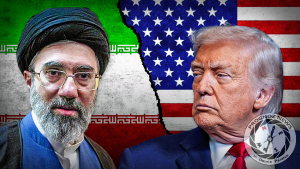
The agreement reached this week between the United States and Iran, provisionally known as the Islamabad Memorandum, invites inevitable comparison with the Joint Comprehensive Plan of Action (JCPOA) concluded in 2015 by the administration of President Barack Obama together with Britain, France, Germany, Russia, China and the European Union. Yet despite involving many of the same issues, the two agreements emerge from profoundly different historical circumstances and embody strikingly different diplomatic philosophies.
The JCPOA was born from negotiation before war. The Islamabad Memorandum has emerged after war.
That distinction may prove more important than any individual clause.
The JCPOA represented the culmination of years of painstaking multilateral diplomacy. It sought to prevent a future military confrontation by imposing detailed technical restrictions upon Iran’s nuclear programme in exchange for sanctions relief. Iran accepted strict limits on uranium enrichment, reduced her stockpile of enriched uranium, dismantled significant portions of her centrifuge infrastructure and subjected herself to an extensive inspection regime administered by the International Atomic Energy Agency (IAEA). In return, international sanctions were gradually lifted and Iran was reintegrated into portions of the global economy.
The agreement was highly technical. Its hundreds of pages specified enrichment percentages, stockpile limits, inspection schedules and timelines extending over decades. It reflected the belief that international security problems could be managed through detailed legal obligations and verification procedures.
The Islamabad Memorandum is almost the opposite.
According to details released this week, it is not a comprehensive nuclear agreement at all. Rather it is a ceasefire and political framework designed to end a destructive regional conflict and create a sixty-day negotiating process during which a more comprehensive settlement may be attempted. The document addresses military operations, sanctions, maritime security in the Strait of Hormuz, economic reconstruction and future nuclear negotiations, while leaving many of the most difficult questions unresolved.
The JCPOA attempted to solve the nuclear issue first and leave broader regional disputes for another day.
The Islamabad Memorandum does the reverse. It seeks first to stop the shooting and only later address the nuclear question.
This reflects the dramatically altered geopolitical landscape of 2026.
When the JCPOA was negotiated, Iran’s nuclear programme remained constrained by international pressure, her regional influence was expanding and military confrontation appeared avoidable. The Obama administration calculated that engagement offered the best route to preventing nuclear proliferation. European governments largely agreed. The agreement reflected the post-Cold War belief that adversaries could be transformed through economic integration and diplomatic engagement.
Today that confidence has largely disappeared.
The intervening years witnessed the American withdrawal from the JCPOA in 2018, the reimposition of sanctions, the expansion of Iran’s enrichment programme, escalating proxy conflicts throughout the Middle East and ultimately direct military confrontation. Iran now possesses vastly greater quantities of enriched uranium than she held under the JCPOA framework and has accumulated technical capabilities that did not exist when the original agreement was signed.
Consequently the new agreement accepts realities that the JCPOA sought to prevent.
One of the most notable differences concerns uranium enrichment itself. Under the JCPOA, enrichment was strictly capped at 3.67 per cent purity and stockpiles were sharply limited. The new framework appears far less prescriptive. Reports suggest that discussions will focus upon managing existing stockpiles and ensuring that Iran does not acquire nuclear weapons rather than restoring the detailed restrictions of 2015. Some reports indicate that limited enrichment on Iranian soil may be tolerated provided sufficient monitoring mechanisms can be agreed.
This represents a fundamental shift.
The Obama administration pursued non-proliferation through outright prevention. The current framework appears to pursue non-proliferation through management of what Iran has built up.
The economic dimensions differ equally sharply.
The JCPOA provided gradual sanctions relief tied to specific nuclear milestones. It was essentially transactional. Iran would restrict her nuclear activities and sanctions would be lifted accordingly.
The Islamabad Memorandum contains a much broader economic vision. Reports indicate discussion of substantial reconstruction funding, restoration of commercial shipping routes, renewed oil exports and eventual large-scale economic normalisation. The emphasis is not merely on nuclear compliance but on regional stabilisation through economic incentives.
This reflects another important difference between the two periods.
The Obama administration viewed Iran primarily as a nuclear challenge.
The current negotiations treat Iran as both a nuclear challenge and a regional power whose cooperation is necessary for maritime security, energy markets and wider Middle Eastern stability.
European involvement has also changed significantly.
The JCPOA was perhaps the high-water mark of European diplomatic influence in the Middle East. Britain, France and Germany were central participants. The European Union played a vital coordinating role. The agreement embodied the European preference for multilateral diplomacy and international institutions.
In contrast the Islamabad Memorandum appears to have been negotiated largely outside traditional European frameworks. Europe remains supportive but largely peripheral. The principal actors are Washington, Tehran and a small group of regional intermediaries. European leaders have welcomed the cessation of hostilities while expressing caution about the agreement’s long-term viability.
This reflects broader changes in international politics. The world of 2015 was more confident in multilateral institutions and collective diplomacy. The world of 2026 is increasingly characterised by ad hoc arrangements negotiated amongst a smaller number of powerful states.
Perhaps the greatest contrast lies in the expectations attached to each agreement.
Supporters of the JCPOA often spoke as though the agreement might transform relations between Iran and the West. There was optimism that successful nuclear diplomacy could lead to wider political normalisation.
Few observers entertain such hopes today.
The Islamabad Memorandum is being judged not by whether it creates friendship but by whether it prevents further war. Expectations have become markedly more modest. The objective is stability rather than reconciliation.
This may paradoxically enhance its chances of survival.
The JCPOA carried the burden of competing expectations. Critics viewed it as appeasement. Supporters often presented it as a pathway towards a fundamentally different Middle East. Both sides loaded the agreement with ambitions extending beyond its actual provisions.
The new framework is more narrowly focused. It seeks to reduce violence, manage nuclear risks and stabilise regional commerce. It does not pretend to resolve the profound ideological and geopolitical disagreements that separate Iran from the United States and several of her neighbours.
Whether that realism proves sufficient remains uncertain.
The Islamabad Memorandum is currently a framework rather than a final settlement. Numerous critical issues remain unresolved, including the future of Iran’s enriched uranium stockpile, the scope of sanctions relief, verification mechanisms and the precise role of regional actors. Even supporters acknowledge that the coming sixty days will determine whether the framework develops into a durable agreement or collapses under the weight of its contradictions.
Nevertheless one conclusion already seems justified.
The comparison between the JCPOA and the Islamabad Memorandum illustrates how dramatically the strategic environment has changed over the past decade. The Obama administration sought to prevent a crisis. The current administration is attempting to conclude one.
The JCPOA was an exercise in confidence.
The Islamabad Memorandum is an exercise in damage limitation.
History will ultimately determine which approach was more successful. Yet the emergence of this week’s agreement demonstrates a sobering reality: diplomacy abandoned often returns later under less favourable circumstances. The negotiations of 2026 are taking place in a world shaped, in large measure, by the collapse of the diplomatic architecture created in 2015.
111 Views



Most Readings