Izolyatsiya: The Prison That Became a Symbol of Occupation
By Matthew Parish, Associate Editor
Friday 10 July 2026
The story of Izolyatsiya is one of the most disturbing episodes of Russia’s occupation of eastern Ukraine. It is a story that begins not with soldiers or prisons but with art, culture and the optimism of an independent Ukraine. The transformation of a celebrated cultural centre into an alleged torture prison encapsulates the broader tragedy of the Donbas since 2014: places built to encourage creativity and freedom have been repurposed into instruments of repression and fear.
Located in occupied Donetsk, Izolyatsiya was originally an industrial complex built during the Soviet period to manufacture insulation materials for heavy industry. After the collapse of the Soviet Union, the factory fell into disuse. In 2010 it was reborn through the vision of entrepreneur and philanthropist Lyubov Mykhailova, who established the IZOLYATSIA Foundation on the site. The vast industrial buildings became one of eastern Europe’s most innovative centres for contemporary art, attracting internationally renowned artists and hosting exhibitions, concerts and educational programmes. It represented a modern, outward-looking Ukraine, deeply connected to European artistic and intellectual life.
That experiment lasted only four years.
In June 2014, shortly after Russian-backed armed groups seized control of much of Donetsk, militants occupied the complex. The official explanation offered at the time was that the site would be used to store humanitarian aid and provide military facilities. Instead, the cultural centre was looted, artworks were destroyed or stolen and the premises were converted into a secret detention facility under the control of the self-proclaimed “Donetsk People’s Republic” security apparatus. The foundation itself escaped to Kyiv, where it continues its cultural activities in exile.
From that point onwards, Izolyatsiya acquired a far darker reputation.
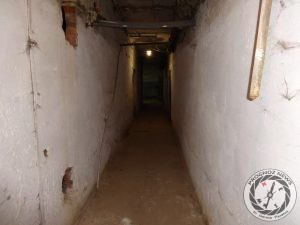
Unlike an ordinary prison, Izolyatsiya allegedly functioned as an unofficial detention centre, beyond the reach of recognised legal institutions or independent inspection. Former Ukrainian soldiers, journalists, civic activists, businesspeople, suspected informants and even individuals accused by the occupation authorities of internal disloyalty have all reported being held there. Detainees were often arrested without lawful warrants, denied legal representation and subjected to proceedings before institutions unrecognised under international law.
The allegations made by former prisoners are remarkably consistent despite originating from individuals detained at different times over a period of years.
Survivors describe prolonged solitary confinement, severe overcrowding, deprivation of food and water, denial of medical treatment and forced labour. More disturbing still are repeated allegations of systematic torture. Numerous former detainees have described electric shocks, beatings, stress positions, mock executions, suffocation, sleep deprivation and threats against family members. Reports have also documented allegations of sexual violence and other forms of degrading treatment intended not merely to extract information but to terrorise prisoners into complete submission. The consistency of these testimonies has attracted the attention of the Office of the United Nations High Commissioner for Human Rights and numerous human rights organisations.
Perhaps the best-known witness is Stanislav Aseyev, the Ukrainian journalist who spent more than two years imprisoned in Izolyatsiya before being released in a prisoner exchange in 2019. His subsequent writings describe an institution where torture had become routine rather than exceptional, where violence served not merely investigative purposes but functioned as an administrative method of control. According to his account, prisoners frequently continued to be abused even after providing confessions, suggesting that cruelty had become institutionalised rather than instrumental. His testimony has become one of the principal documentary sources concerning conditions inside the prison.
International humanitarian law is unambiguous regarding many of the acts alleged to have occurred within Izolyatsiya. The torture of detainees, cruel treatment, outrages upon personal dignity, unlawful imprisonment and denial of fair judicial guarantees all constitute serious violations of the Geneva Conventions when committed during an armed conflict.
Where such abuses form part of a widespread or systematic policy directed against civilians, they may also amount to crimes against humanity under the Rome Statute of the International Criminal Court. Recent legal analyses by human rights investigators argue that the available evidence points towards precisely such a systematic pattern of abuse rather than isolated criminal acts.
Assigning legal responsibility, however, is more complicated than documenting the crimes themselves. The prison operated under the structures of the self-proclaimed Donetsk People’s Republic, yet there has long been extensive evidence of Russia’s effective control over the occupied territories. Human rights investigators have increasingly focused not only upon individual guards and interrogators but also upon command structures linking occupation authorities with Russian security institutions. Establishing those chains of command remains central to future criminal prosecutions.
Some efforts towards accountability have already begun. Ukrainian prosecutors have investigated a number of individuals allegedly involved in operating Izolyatsiya, while several European jurisdictions have also examined cases under the principle of universal jurisdiction. In 2026 French authorities arrested a former alleged participant in abuses at Izolyatsiya on suspicion of war crimes and crimes against humanity, illustrating that accountability efforts increasingly extend beyond Ukraine itself. As with all criminal proceedings, the allegations remain to be proved before independent courts.
The symbolism of Izolyatsiya extends well beyond the suffering of those imprisoned within its walls. The prison represents the destruction of an entire civic culture. A centre devoted to artistic experimentation, dialogue and openness was converted into an institution allegedly characterised by secrecy, violence and fear. The transition was not accidental but reflected the replacement of pluralism with authoritarian control in occupied Donetsk.
History has repeatedly demonstrated that authoritarian regimes often begin by suppressing independent culture before suppressing independent people. Books, paintings and exhibitions are rarely viewed as military threats. Yet they represent alternative ways of thinking and remembering, qualities that authoritarian systems instinctively distrust. Izolyatsiya’s transformation from an internationally respected arts foundation into one of the most infamous detention centres in occupied Ukraine illustrates this progression with chilling clarity.
As investigations continue and further testimony emerges, Izolyatsiya is likely to occupy a place in the historical record comparable to other notorious detention centres associated with political repression. Whether future courts ultimately establish individual criminal responsibility for every allegation remains to be seen. What is already beyond serious dispute is that the former cultural centre has become one of the defining symbols of life under Russian occupation in eastern Ukraine—a place where creativity gave way to coercion, and where the architecture of culture was repurposed into the architecture of fear.
143 Views



Most Readings