An Ode to the Eternal Brotherhood: Twenty-Five Years of Russia and China Discovering Who Is Holding Whose Leash
By Matthew Parish, Associate Editor
Friday 17 July 2026
There are friendships born of affection. There are friendships born of necessity. Then there is the uniquely modern strategic partnership between Moscow and Beijing: a relationship so perfectly equal that one partner writes the speeches while the other supplies the discounted oil.
To commemorate the twenty-fifth anniversary of the Treaty of Good-Neighbourliness, Friendship and Cooperation, Russia’s Foreign Minister Sergey Lavrov has offered a characteristically lyrical celebration of a relationship supposedly founded upon equality, mutual respect and a shared commitment to a glorious multipolar world. The treaty, signed in 2001, has become, in the official telling, the bedrock of a partnership immune to geopolitical storms and destined to reshape history.
One can only admire such optimism.
After all, few relationships have evolved quite so dramatically. Twenty-five years ago Russia imagined herself as the senior partner, generously introducing China to the finer points of strategic diplomacy. Today Russia arrives in Beijing much like an anxious provincial relative arriving in the capital, hoping that this year’s allowance will be slightly larger than last year’s.
How touching.
The official narrative insists that both countries stand shoulder to shoulder as equal architects of a new international order. Reality has developed an unfortunate tendency to ignore press releases.
China manufactures the electronics. Russia exports the hydrocarbons.
China finances infrastructure. Russia finances military parades.
China plans fifty years ahead. Russia plans until the next sanctions package.
China negotiates from strength. Russia negotiates from necessity.
What magnificent symmetry.
The Kremlin repeatedly explains that its growing dependence upon China is evidence not of weakness but of enlightened strategic vision. This requires a level of philosophical sophistication previously found only in medieval theologians debating how many angels could dance upon the head of a pin.
Every discount demanded by Beijing is presented as another triumph of sovereign diplomacy.
Every delayed pipeline agreement becomes proof of patient statesmanship.
Every increasingly one-sided commercial arrangement demonstrates the limitless advantages of equal partnership.
It is an intellectual achievement worthy of international recognition.
Particularly impressive is the doctrine of the “multipolar world”. In theory it promises a civilisation where no single power dominates another. In practice it increasingly resembles a system with several poles, one industrial superpower and one very enthusiastic supplier of raw materials.
The transformation has been breathtaking.
For centuries Russian rulers dreamed of turning westward to join Europe’s great powers.
Now they look eastward, smiling broadly while explaining that dependence is merely another word for sovereignty.
China, for her part, has mastered the ancient diplomatic art of appearing endlessly courteous while quietly obtaining exactly what it wanted all along.
No public humiliation.
No raised voices.
Simply another long banquet, another joint communiqué celebrating eternal friendship and another advantageous commercial contract.
Confucius would surely approve.
The language surrounding the anniversary has become ever more majestic. Friendship is described as unbreakable. Trust is limitless. Cooperation is comprehensive. The future is radiant.
One is reminded that the greater the adjectives, the more carefully one should inspect the balance sheet.
None of this means the partnership is fictitious. Quite the contrary. It is very real indeed.
Russia genuinely needs China. China genuinely finds Russia useful. That is a perfectly rational arrangement.
It simply bears only a passing resemblance to the relationship described in official speeches.
History has an ironic sense of humour. The Soviet Union once lectured Beijing about ideology, economics and international affairs. Today Moscow celebrates a partnership in which it increasingly resembles the junior shareholder applauding every decision of the majority owner.
The applause, naturally, is entirely voluntary.
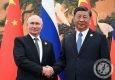
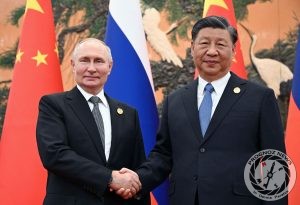
As the twenty-fifth anniversary passes, there is every reason to expect many more declarations of everlasting solidarity. More photographs before ornate backdrops. More carefully choreographed embraces. More eloquent essays explaining that equality has never looked quite so unequal.
Diplomacy has always required theatre.
In this production the costumes are magnificent, the choreography impeccable and the dialogue thoroughly rehearsed.
Only the casting has changed.
89 Views



Most Readings