Lenin’s Poisoned Legacy: Why History Should Remember Him as an Enemy of Humanity
By Matthew Parish, Associate Editor
Thursday 30 July 2026
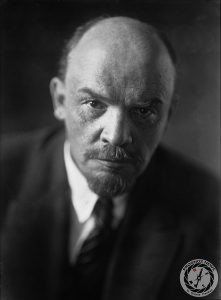
Every age produces individuals whose influence changes the course of civilisation. Some elevate humanity. Others drag it into darkness. Vladimir Ilyich Lenin belongs emphatically to the latter category. If Karl Marx conceived the intellectual blueprint for revolutionary dictatorship, Lenin built the machine itself. He transformed abstract theory into a functioning apparatus of oppression, demonstrating that political terror could be organised with industrial efficiency and justified with philosophical precision.
For Ukraine, Lenin is not a remote historical curiosity. He is not merely a figure embalmed beneath the Kremlin walls. He remains one of the principal authors of the tragedy that has defined Ukraine’s modern history, because it was Lenin who extinguished one of Ukraine’s first genuine opportunities for independent statehood and subordinated the country to a new imperial project masquerading as international liberation.
The Soviet Union did not represent the end of empire. It represented its reinvention.
Much has been written about Stalin’s monstrous crimes, and rightly so. The Holodomor, the Great Terror and the vast network of labour camps have become synonymous with Soviet barbarity. Yet Stalin did not invent the political instruments he employed. He inherited them. The secret police, political terror, one-party dictatorship, censorship, arbitrary imprisonment and the deliberate destruction of democratic institutions were all established under Lenin. Stalin enlarged the machinery, but Lenin designed the engine.
There remains a curious reluctance among some Western intellectuals to confront this uncomfortable reality. Lenin is still occasionally presented as an idealist whose noble aspirations were corrupted by his successor. Such arguments collapse upon even a modest examination of the historical record. Lenin never concealed his contempt for liberal democracy. He did not regard political pluralism as a virtue but as an obstacle. When Russia’s Constituent Assembly produced an electoral outcome that denied the Bolsheviks an overwhelming mandate, he simply abolished it. Democracy was acceptable only when it delivered the “correct” answer.
That decision deserves to rank among the great catastrophes of modern European history.
The twentieth century became the bloodiest century humanity had ever experienced. While many factors contributed to that catastrophe, Lenin demonstrated that totalitarian government could be both intellectually respectable and administratively effective. The dictatorship of the proletariat rapidly became the dictatorship of the Party, followed by the dictatorship of a handful of men and finally the dictatorship of one.
Millions paid the price.
Ukraine understood the nature of Lenin’s project almost from its inception. As the Russian Empire collapsed in 1917, Ukrainians sought to build an independent democratic republic. They did not ask Moscow’s permission to exist. They exercised what Lenin himself repeatedly proclaimed as the universal right of nations to determine their own destiny.
Yet Lenin’s commitment to self-determination proved remarkably conditional.
National independence was enthusiastically endorsed when it weakened Russia’s enemies. It became counter-revolutionary the moment it threatened Bolshevik control. The Red Army invaded Ukraine repeatedly. Military force replaced political consent. Soviet rule arrived not because Ukrainians freely embraced Bolshevism but because Bolshevism possessed armies.
This contradiction remains one of the defining hypocrisies of communist ideology.
The Soviet Union spoke endlessly of liberation while constructing one of history’s most centralised empires. It condemned colonialism while denying subject nations genuine sovereignty. It denounced oppression while imprisoning dissenters by the millions. It promised equality while creating a privileged ruling elite beyond democratic accountability.
The language changed.
The empire did not.
Some observers argue that Lenin should receive credit for recognising Ukraine as a Soviet republic or encouraging limited Ukrainian cultural development during the 1920s. Such arguments mistake tactics for principle. Lenin understood politics. He appreciated that naked Russian chauvinism would provoke resistance. Temporary concessions therefore served the practical purpose of consolidating Bolshevik authority.
But culture without political freedom is theatre.
A nation permitted to sing her songs while forbidden to choose her government remains unfree.
The consequences of Lenin’s constitutional architecture became horrifyingly apparent under Stalin. Ukraine suffered perhaps more than any other European nation. The Holodomor was not an isolated accident within an otherwise benevolent political system. It emerged from a state already stripped of every institutional safeguard capable of preventing mass criminality. Independent courts had disappeared. Independent newspapers had disappeared. Opposition parties had disappeared. Civil society had disappeared. Everything had become subordinate to Party authority.
Lenin ensured that no lawful mechanism remained capable of restraining absolute power.
This is perhaps his greatest historical crime.
Dictators are dangerous.
Systems that manufacture dictators are infinitely more dangerous.
Lenin built precisely such a system.
Nor did his influence end at the Soviet frontier. Throughout the twentieth century, governments claiming Lenin as their intellectual ancestor emerged across Europe, Asia, Africa and Latin America. Their local histories differed. Their cultures differed. Yet striking similarities repeatedly emerged: censorship, political prisons, secret police, ideological conformity and the criminalisation of independent thought. Whether in Eastern Europe, China, Cambodia or elsewhere, revolutionary certainty repeatedly became humanitarian catastrophe.
The numbers themselves are almost beyond comprehension.
Tens of millions dead.
Hundreds of millions deprived of liberty.
Entire societies conditioned to fear their own governments.
History has produced few political legacies so consistently destructive.
It is therefore unsurprising that Winston Churchill regarded Lenin as one of civilisation’s most dangerous adversaries. Churchill devoted much of his public life to exposing Bolshevism as a mortal threat to ordered liberty. A striking aphorism, frequently attributed to Churchill, suggests that Russia’s greatest tragedy was Lenin’s birth and its second greatest his death. Whether Churchill actually uttered those exact words remains uncertain. Yet the sentiment faithfully reflects his broader judgement. He believed Bolshevism to be not merely another political movement but a profound assault upon civilisation itself.
Events have done little to undermine that assessment.
Indeed contemporary Russia illustrates how incompletely Lenin’s legacy has been abandoned. Although the Soviet Union disappeared in 1991, many of the habits it cultivated survived. Centralised authority, suspicion of independent institutions, contempt for political opposition, manipulation of history and imperial nostalgia continue to shape Russian political culture. Modern Russia is not the Soviet Union, nor should the two be conflated. Yet it is difficult to understand the persistence of authoritarian traditions without recognising how deeply Lenin transformed the relationship between state and citizen.
Ukraine’s resistance therefore possesses a significance extending well beyond territory.
It represents the rejection of Lenin’s imperial inheritance.
When Ukrainians dismantled Lenin statues following the Revolution of Dignity, they were not conducting a campaign against bronze monuments.
They were rejecting an entire philosophy of government.
They were declaring that no nation exists merely as a province of another people’s historical imagination.
They were insisting that liberty belongs to individuals before it belongs to states.
That principle remains the precise opposite of Leninism.
Lenin believed history justified coercion.
Ukraine insists that legitimacy arises from consent.
Lenin believed ideology outweighed individual dignity.
Ukraine has demonstrated repeatedly that free citizens will endure extraordinary sacrifice to preserve their independence.
Lenin believed power flowed from the barrel of a gun.
Ukraine has reminded the world that power also flows from democratic legitimacy, national identity and the refusal to surrender.
History should not sanitise such contrasts.
There is an understandable temptation, particularly among academics, to explain rather than judge. Explanation is indispensable. Judgment, however, is equally necessary. Some ideas deserve condemnation because their implementation predictably produces human misery on an immense scale.
Lenin’s belongs among them.
His revolution destroyed democratic possibility where it found it.
His political philosophy sanctified terror.
His state criminalised disagreement.
His institutions survived him because they were designed to survive him.
The suffering they inflicted echoed across generations.
From Kyiv to the Solovetsky Islands, from the forests of Katyn to the frozen wastes of Kolyma, from the villages emptied by famine to the prisons filled with poets, priests, teachers and farmers, the shadow cast by Lenin extended far beyond his own lifetime.
The twentieth century cannot be understood without him.
Nor can the present war in Ukraine.
The Kremlin’s rhetoric has changed. Its flags have changed. Its economic system has changed. Yet beneath these changes there persists an enduring conviction that Ukraine exists only insofar as Moscow permits it to exist. That conviction did not begin with Vladimir Putin. It was institutionalised under Lenin, clothed in revolutionary language and defended by force.
It remains one of the most destructive political delusions in modern European history.
If civilisation is ultimately measured by the value it places upon individual human dignity, constitutional government and the freedom of nations to determine their own futures, then Lenin stood in opposition to every one of those principles. His achievement was not the liberation of humanity but the perfection of ideological despotism. His monument is not the mausoleum on Red Square.
It is the long trail of broken nations, shattered families and stolen lives that stretches across the history of the twentieth century.
That is why history should remember Lenin not as a visionary, nor as a tragic idealist, but as one of humanity’s most formidable enemies.
144 Views


Most Readings