The Passport and the Rifle: Life in the Russian-occupied Territories
By Matthew Parish, Associate Editor
Sunday 2 August 2026
There are occupations that seize land, and there are occupations that seek to seize souls. The first is visible on maps. The second is written in school registers, civil records, marriage certificates and passports. It is measured not in kilometres but in identities. The Russian occupation of large areas of Ukraine has become an exercise in precisely this second form of conquest—a systematic effort not merely to administer territory but to erase the distinction between occupier and occupied.
The most potent symbol of that effort is a small burgundy booklet.
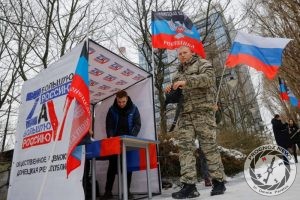
To accept a Russian passport in occupied Ukraine is, for many people, not an expression of political loyalty but an act of survival. It may determine whether one can obtain medical treatment, own property, receive a pension, enrol children in school, register a birth or simply continue living without constant harassment. The choice presented by the occupation authorities is seldom a genuine choice at all. It is a bureaucratic ultimatum dressed as administrative convenience.
Authoritarian states have long understood that paper can become a weapon. A passport is never merely evidence of nationality. It is a declaration about who the state believes you are. When issued under coercion, it becomes an instrument designed to transform reality itself. Once enough people have been compelled to accept Russian citizenship, Moscow can point to statistics of its own creation and proclaim that these territories are populated by Russians.
The fiction becomes the evidence for further fiction.
Yet the passport is only the beginning.
The greatest cruelty emerges when the sons of occupied Ukraine reach the age of eighteen.
For generations, eighteenth birthdays have marked the threshold into adulthood—a moment of celebration, freedom and possibility. In occupied Ukraine, that birthday may instead become the day upon which a young man receives notice that he must report for military service in the armed forces of the state occupying his hometown.
The moral obscenity scarcely requires elaboration.
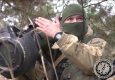
An eighteen-year-old from Melitopol, Berdiansk, Mariupol or occupied parts of Kherson may find himself compelled to wear a Russian uniform, swear an oath to the Russian Federation and carry a rifle whose purpose may ultimately be directed against Ukrainian soldiers—perhaps even against relatives, former classmates or neighbours.
War has always produced tragedies of divided loyalties. Civil wars are filled with brothers fighting brothers. But this is something different. It is the deliberate use of occupation to manufacture divided loyalties where none naturally existed. It seeks to transform victims into unwilling participants in their own nation’s suffering.
Some refuse and flee, risking imprisonment or dangerous escape across front lines. Others go into hiding, living in perpetual fear of discovery. Some submit because they see no alternative. It is easy to pronounce moral judgments from comfortable capitals thousands of kilometres away. It is rather harder to decide what one would do when refusal threatens not only oneself but one’s parents, spouse or younger siblings.
Occupation is designed precisely to eliminate clean choices.
International humanitarian law recognises this reality. The occupying power bears obligations towards the civilian population and is prohibited from compelling protected persons to serve in its armed forces. These principles exist because history has repeatedly demonstrated the particular injustice of forcing conquered peoples to fight for those who conquered them. The law reflects centuries of accumulated moral experience.
Yet laws, however carefully drafted, require enforcement to possess practical meaning. In occupied territories, enforcement often yields to raw power.
The long-term consequences may prove even more profound than the immediate injustice.
Young men compelled into Russian military structures are exposed not merely to military discipline but to an alternative historical narrative. Ukrainian identity is denounced as artificial. Ukrainian language becomes suspect. Ukrainian history is rewritten. Loyalty is rewarded. Doubt is punished. The objective is not simply military manpower but political transformation.
Empires have always sought soldiers from their frontiers. Rome did so. The Habsburgs did so. The Ottoman Empire did so. The Soviet Union did so on an immense scale. What distinguishes modern Russia’s policy in occupied Ukraine is that it unfolds before a world equipped with satellites, smartphones and instantaneous communication. There can be little claim that nobody knew. The evidence accumulates continuously.
The tragedy is deeply personal. Somewhere tonight, an eighteen-year-old Ukrainian in occupied territory will lie awake wondering whether tomorrow brings another summons from the occupation authorities. Somewhere else, parents will discuss whether there remains any route of escape. Grandparents who remember Soviet rule may recognise old patterns beneath new uniforms. Every family becomes a strategist. Every conversation becomes quieter.
Wars are often described through missiles, tanks and casualty figures. These are necessary statistics, but they are incomplete. They fail to capture the slow violence inflicted upon ordinary lives by administrative coercion. The requirement to exchange one’s passport. The pressure to abandon one’s language. The obligation to salute another flag. The demand eventually to fight beneath it.
These measures reveal that this conflict concerns far more than territory. If it were only about land, there would be little need to replace passports or rewrite school curricula. Such policies betray an ambition extending beyond military occupation towards the remoulding of identity itself.
History suggests that such efforts rarely achieve their ultimate objective. National identities survive astonishing pressures. Poland endured partitions. The Baltic peoples survived decades of Soviet rule. Ukraine itself preserved its language, literature and historical memory through Tsarist censorship, Soviet repression and the Holodomor. Identity possesses remarkable resilience precisely because it lives not only in institutions but in families, churches, songs, memories and quiet acts of remembrance.
The occupied territories therefore remain places of suspended justice, where administrative paperwork conceals profound human suffering. Every coerced passport tells a story. Every conscription notice tells another. Neither should ever be mistaken for consent.
One day these records will become historical evidence. Future historians will examine the decrees, the registration forms, the military summonses and the confiscated documents. They will reconstruct how an occupation attempted to transform citizens into subjects and neighbours into enemies. They will also discover countless quieter stories of resistance—of identities preserved despite every bureaucratic effort to extinguish them.
A passport issued under coercion cannot rewrite the heart. Nor can a rifle erase the country against which it is unwillingly carried.
116 Views


Most Readings