The Bridge at the Edge of Asia: Could Ukraine Sever Russia’s North Korean Lifeline?
By Matthew Parish, Associate Editor
Friday 14 August 2026
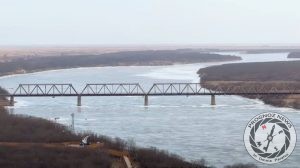
There are places on the map whose strategic importance bears remarkably little relationship to their physical size. The Friendship Bridge across the Tumen River is one of them. A modest railway bridge connecting the Russian settlement of Khasan with North Korea at Tumangang, it sits close to the point at which Russia, North Korea and China almost meet. For decades it was an obscure curiosity of Asian geography. The war in Ukraine has transformed it into something altogether more interesting — a potential artery connecting two increasingly intimate military partners.
That matters because North Korean participation in Russia’s war is no longer hypothetical. North Korea has already supplied Russia with enormous quantities of ammunition and ballistic missiles, and North Korean soldiers have fought alongside Russian forces. In August 2026 President Volodymyr Zelenskyy said that a decision had been made to deploy between 30,000 and 50,000 additional North Korean troops to Russia. Ukrainian intelligence has separately reported the deployment of a North Korean missile unit to western Russia.
If substantial numbers of those soldiers travel by rail, the Friendship Bridge therefore presents an obvious question for Ukrainian military planners: why not destroy the bridge?
The answer is that the idea is strategically attractive, militarily extremely difficult and politically dangerous — and that these three considerations have to be kept quite separate.
A remarkable geographical bottleneck
The attraction is easy to understand. The Friendship Bridge is approximately 623 metres long and historically has constituted the railway connection between Russia and North Korea. It carries dual-gauge track because Russian and North Korean railways use different gauges.
In military logistics, bottlenecks are precious. An army may have thousands of kilometres of railway behind it, but if all its matériel must pass through one bridge, tunnel or mountain pass then the apparent complexity of the logistical system collapses into a single vulnerable point.
That is why bridges have been attacked throughout the history of warfare.
The Tumen crossing is particularly conspicuous because North Korea and Russia share only a tiny land frontier. There is no enormous network of parallel railway crossings through which traffic can simply be diverted. If trains carrying North Korean troops, ammunition or missiles are crossing the Friendship Bridge, its military significance is consequently obvious.
There is also an important distinction between attacking North Korean soldiers merely because they are North Korean and attacking them because they have become participants in the war. The United States Department of Defense stated as early as November 2024 that North Korean forces engaging in combat support operations against Ukraine would become legitimate military targets. The principle is straightforward: a state cannot ordinarily dispatch armed forces to participate in a war while insisting that those forces remain immune from attack.
But the bridge presents a substantially harder question than attacking North Korean troops already deployed with Russian forces in Kursk or elsewhere.
The problem of distance
The first obstacle is geography.
Khasan is in the Russian Far East, thousands of kilometres from Ukraine. Ukraine has demonstrated a steadily increasing capacity for extraordinary long-distance strikes against Russian military and industrial infrastructure. That achievement should not be underestimated. Ukrainian forces have repeatedly forced strategists to revise assumptions about the practical radius within which Russian territory is safe.
Yet there remains a vast difference between striking targets deep inside European Russia or even parts of Siberia and reliably attacking a small piece of infrastructure on the Pacific frontier.
Indeed the comparison illustrates an important principle about long-range drone warfare. Maximum range is not the same thing as useful operational range. An aircraft must navigate, survive, find its target and deliver sufficient destructive force to achieve the intended military effect. Bridges are also notoriously awkward targets. Damaging railway track is one thing; rendering a substantial bridge unusable for a prolonged period is another.
A spectacular raid that merely dents the structure for several days might accomplish little. Russia and North Korea could repair it while simultaneously exploiting the attack politically.
The relevant question is therefore not can something Ukrainian conceivably reach Khasan? It is whether Ukraine could produce a sufficiently reliable military effect there to justify the enormous operational and diplomatic costs involved.
At present that proposition is far less convincing.
The more serious problem is political
The Friendship Bridge is unlike an ammunition depot deep inside Russia for another reason. It is an international frontier.
The border itself runs through the bridge. A strike against it would therefore create an obvious possibility that weapons or debris would fall upon North Korean territory or that North Korean personnel and infrastructure would be struck. The 1990 Soviet–North Korean frontier agreement specifically defines the international boundary as passing across the railway bridge.
That would matter enormously.
Ukraine already confronts North Korean troops participating in Russia’s war. Kyiv can make a powerful argument that soldiers sent by Pyongyang to fight Ukraine cannot expect sanctuary merely because they originated in a third country.
Attacking North Korea itself is another proposition.
Pyongyang could portray such an attack as Ukrainian aggression against North Korean territory. Moscow would enthusiastically endorse that interpretation. The Russian–North Korean strategic partnership would acquire a convenient additional justification and Kim Jong Un might find it easier to portray an expeditionary commitment to Russia as a defensive war against a country that had attacked the DPRK.
The strike could therefore achieve the opposite of its intended political purpose.
Instead of discouraging North Korean intervention, it might legitimise deeper intervention in the eyes of the North Korean regime.
Then there is China
The geography makes matters still more delicate.
The bridge lies near the Chinese frontier. China does not want a wider war developing around the Tumen estuary, nor would Beijing be likely to regard Ukrainian long-range weapons operating beside its border with equanimity.
China’s reaction would not necessarily be military. Indeed direct Chinese military intervention would remain exceedingly improbable. But Beijing possesses many less dramatic ways of making its displeasure felt.
Ukraine has consequently spent much of the war performing a difficult diplomatic balancing act towards China — objecting to Chinese assistance sustaining Russia’s economy and war industries while avoiding unnecessarily transforming China from Russia’s powerful partner into Ukraine’s declared enemy.
A Ukrainian attack within sight of Chinese territory would provide Beijing with an uncomfortable precedent. Chinese strategists would inevitably ask what it implied about long-range attacks upon infrastructure immediately adjoining Chinese borders.
This is one of those occasions upon which a target’s political geography matters more than its engineering.
The disappearing monopoly of the railway bridge
There is another reason why the military case is becoming weaker.
Russia and North Korea have been constructing a road bridge across the Tumen. The Russian government announced the project in April 2025, describing a bridge approximately one kilometre long with two traffic lanes and associated border infrastructure. Recent reporting has emphasised precisely the concern relevant to Ukraine: the new crossing could substantially increase the capacity for movement between Russia and North Korea, including military traffic.
This changes the strategic calculation.
The old Friendship Bridge was exceptionally interesting precisely because it represented a geographical choke point. Once several transportation routes exist, destroying one of them produces diminishing returns.
Troops are also easier to reroute than enormous quantities of heavy matériel. Even if railway movements were interrupted, Russia and North Korea could adapt through road transport, maritime transport, air movements or combinations of these systems. The result might be inconvenience rather than isolation.
And there is a more fundamental point. Once a North Korean train has crossed into Russia, it must traverse thousands of kilometres of Russian railway before its passengers arrive anywhere near Ukraine.
That enormous logistical chain creates alternatives to attacking the international border crossing itself.
Ukraine need not necessarily cut the umbilical cord at the point where it leaves the mother.
Strategy is about choosing the least expensive vulnerability
This distinction is important because military discussions often become mesmerised by symbolic targets.
The Friendship Bridge possesses tremendous symbolic appeal. Destroying it would generate extraordinary photographs. It would demonstrate Ukrainian reach across almost the entire Eurasian landmass. It would humiliate Moscow and Pyongyang simultaneously.
None of those things necessarily makes it the best target.
If the military objective were to delay North Korean reinforcements, the rational question would instead be where their logistical chain becomes vulnerable while remaining clearly inside the Russian war system. Once troops and matériel are moving through Russian territory towards operational areas supporting the invasion of Ukraine, the political and legal ambiguities become substantially smaller.
Railway logistics are networks. Bridges are merely nodes within them.
Ukraine’s objective would not need to be the cinematic destruction of the frontier bridge. It would be interruption of the transportation system sufficiently frequently that Russia could no longer depend upon predictable delivery schedules. That is a less glamorous conception of warfare but frequently a more effective one.
The distinction resembles Ukraine’s campaign against Russian petroleum infrastructure. The purpose is not principally to produce spectacular explosions. It is to impose costs upon a complicated industrial and logistical machine faster than Russia can absorb, repair or circumvent them.
There is nevertheless value in the bridge’s vulnerability
None of this means that the Friendship Bridge is strategically irrelevant.
Quite the contrary. Its existence exposes something important about the Russia–North Korea relationship.
North Korea may possess enormous reserves of ammunition and potentially hundreds of thousands of soldiers. Russia may possess the money, technology and battlefield in which Pyongyang wishes to acquire combat experience. But geography connects the two countries through an extraordinarily narrow corridor.
That makes their alliance physically fragile in a way that the Sino-Russian relationship is not.
The bridge therefore has value even if Ukraine never attacks it. Russia and North Korea must protect it. They must defend the surrounding infrastructure. They must contemplate what happens if transportation through the region is interrupted. They must invest in redundancy — which is presumably one reason why the new road bridge has acquired such strategic significance.
A threatened bridge can consume resources without ever being destroyed.
There is also political utility in drawing international attention to what crosses it. Satellite imagery, intelligence disclosures and diplomatic pressure may establish that the Tumen corridor is not merely facilitating innocent bilateral commerce but supporting a European war.
For South Korea and Japan in particular this matters profoundly. North Korea is acquiring something in Russia that decades of military exercises could never provide: sustained experience of twenty-first century combat. Zelenskyy’s warning that Pyongyang is gaining knowledge of modern warfare and Russian military technology should therefore concern Seoul at least as much as Kyiv.
The Tumen bridge is consequently not merely a Ukrainian question. It is the physical junction between the security systems of Europe and northeast Asia.
The bridge that should probably remain standing
There is an understandable instinct in wartime to identify an enemy’s most conspicuous vulnerability and conclude that it ought to be destroyed. Good strategy is more discriminating.
If North Korean troop trains are indeed crossing the Friendship Bridge, then the bridge forms part of the logistical architecture supporting Russia’s war. In the abstract that makes it militarily significant.
But significance does not automatically produce wisdom.
For Ukraine, attacking it would require an exceptionally demanding long-range operation against a relatively difficult target. The military benefit might prove temporary. Alternative transport infrastructure is emerging. Most importantly, an attack upon a bridge physically divided between Russia and North Korea risks converting a war against Russian aggression into an overt Ukrainian military action at the frontier of a nuclear-armed Asian state — immediately beside China.
There are few conceivable military advantages worth accepting that combination of uncertainties.
The more sensible Ukrainian strategy would therefore be to regard the Friendship Bridge primarily as an intelligence problem and a logistical indicator. Watch what crosses it. Establish where those trains go. Identify how North Korean forces and matériel are incorporated into the Russian military system. Then deal with the resulting military threat where it becomes part of Russia’s war machine and where the strategic return is greater and the diplomatic consequences smaller.
Wars are not won by destroying everything one has the capacity to destroy.
They are won by understanding which things are worth destroying — and which bridges are more useful as evidence of the enemy’s dependence than as ruins in a river.
38 Views



Most Readings


Crimea Under Pressure: Ukraine’s Long Campaign Against Russia’s Southern Bastion
97 Views