Kramatorsk Civilian Evacuations — An Update and an Appeal for Volunteers
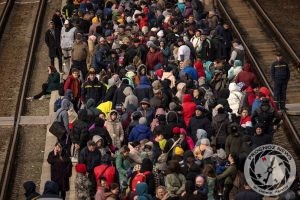
By Matthew Parish, Associate Editor
Thursday 20 August 2026
There are moments in a war when humanitarian work becomes remarkably uncomplicated in its purpose. People are in danger. They need to leave. Someone has to go and collect them.
The Ukraine Development Trust is continuing its civilian evacuation project in and around Kramatorsk, in eastern Ukraine, where the proximity of the front and the continuing danger to civilian communities mean that evacuation remains an urgent humanitarian necessity. The Trust is now partnering with Impact Partners, an NGO working on the ground in Kramatorsk, to help civilians who wish to leave dangerous areas reach greater safety.
The immediate requirement is not principally for money. Funding for the majority of the project’s expenses is already covered. What is needed most urgently is something simultaneously more prosaic and more difficult to find — competent volunteer drivers.
The drivers we need
We are looking for volunteers able to drive small vehicles as part of a civilian humanitarian evacuation effort. This is not military work and volunteers are not being recruited to participate in combat. Nevertheless, eastern Ukraine is a wartime environment and nobody contemplating volunteering should underestimate the seriousness of the undertaking.
Drivers should be self-sufficient, practical and confident behind the wheel. In particular, they must be capable of navigating with conventional maps and a compass rather than depending upon GPS. Electronic navigation cannot be assumed to be continuously reliable in a conflict environment and the ability to navigate without it is therefore an important practical qualification.
Basic vehicle maintenance skills are also highly desirable. A volunteer need not be a professional mechanic, but an ability to diagnose and remedy ordinary vehicle problems may make an enormous difference when operating in difficult circumstances.
Volunteers must otherwise be financially self-sufficient. However, the Ukraine Development Trust will provide immigration support pro bono for appropriate volunteers who require assistance with the formalities associated with coming to Ukraine.
The purpose is straightforward — to provide reliable drivers who can assist Impact Partners in moving civilians away from areas in which it is no longer prudent or safe for them to remain.
A limited appeal for donations
We are also seeking financial donations specifically for fuel and vehicle repairs.
Vehicles engaged in repeated humanitarian journeys inevitably consume substantial quantities of fuel and suffer wear and tear. Roads and operating conditions in eastern Ukraine can be demanding even without the additional complications created by war. A comparatively modest repair bill can take a vehicle temporarily out of service and every unavailable vehicle represents fewer opportunities to move civilians to safety.
Other principal expenses associated with the project are already covered. We are therefore making a focused appeal: donations will help keep the vehicles fuelled, maintained and on the road.
This is one of those forms of humanitarian assistance in which relatively modest sums can have an unusually tangible effect. Fuel becomes kilometres travelled. Repairs become vehicles returned to service. Vehicles become journeys and journeys become people carried away from danger.
Why Kramatorsk matters
Kramatorsk has long been one of the principal civilian centres of Ukrainian-controlled Donetsk Oblast. Throughout the war, the city and surrounding communities have existed under the shadow of military operations farther east. As circumstances change, civilians — particularly elderly people, families and those without their own transport — may find themselves faced with the difficult decision to leave homes in which they have spent much or all of their lives.
Making that decision is only the first problem. Somebody must then provide the means to leave.
Large-scale humanitarian organisations perform indispensable work, but wars also generate countless smaller practical problems that are most effectively addressed by flexible local organisations. A person who needs collecting from a particular village, an elderly resident with luggage, a family without a car or somebody who has delayed evacuation until circumstances have become intolerable may require something much simpler than an elaborate humanitarian operation.
They may simply need a car and a competent person willing to drive it.
That is where cooperation between organisations such as the Ukraine Development Trust and Impact Partners can make a difference. One can help mobilise international support while the other possesses knowledge and experience on the ground. Neither replaces the work of the Ukrainian authorities or the major humanitarian organisations. Rather, this sort of partnership can help fill the innumerable gaps that inevitably emerge during a prolonged war.
A particular sort of volunteer
We should emphasise that this appeal is not an invitation to adventure tourism. Eastern Ukraine is not a place for people wishing to acquire dramatic photographs or war stories. The useful volunteer is almost the opposite sort of person — calm, disciplined, practical and capable of following the safety procedures and instructions of the humanitarian organisation operating on the ground.
A good evacuation driver does not need to be heroic. Indeed, excessive enthusiasm for danger is positively undesirable.
The qualities required are mundane ones: drive carefully, maintain a vehicle, read a map, use a compass, remain calm when plans change, listen to experienced people and remember at every stage that the passenger in the back of the vehicle may be frightened, exhausted or leaving his or her home for the last time.
Humanitarian work often consists of precisely these unglamorous virtues.
Nobody should travel to or operate in a conflict-affected area without understanding the risks involved and receiving appropriate safety guidance from the organisations coordinating the work. Volunteers should not improvise their own evacuation missions or routes. The object is to assist an organised civilian humanitarian effort — not to create additional people who themselves require rescuing.
How readers can help
There are therefore three immediate ways to assist.
First, if you are an experienced and self-sufficient driver, are comfortable navigating by map and compass and preferably possess basic vehicle maintenance skills, consider volunteering.
Second, if you cannot volunteer but would like to contribute financially, donations towards fuel and vehicle repairs will help keep the evacuation vehicles operating.
Third — and perhaps most importantly for many readers — please circulate this appeal.
Share it with friends, colleagues, former military personnel now engaged in civilian life, experienced overland drivers, humanitarian volunteers, motoring enthusiasts and others who may possess the practical temperament and skills required. Share it on social media. Send it to organisations whose members may include suitable volunteers. Somewhere within those networks may be precisely the driver this project needs.
The war in Ukraine is sometimes discussed in abstractions measured in billions of dollars, hundreds of kilometres and great movements of armies. Humanitarian work takes place at a different scale.
One vehicle. One tank of fuel. One driver with a paper map folded beside him. One family climbing into the back.
Then the car turns west.
Please circulate this appeal as widely as possible. Thank you.
—
If you want to assist in this project, please in the first instance write to contact@development-foundation.org and/or info@impactpartnersua.org. Thank you for your support.
51 Views



Most Readings