M23 Rebels seize Uvira, Democratic Republic of Congo
By Matthew Parish, Associate Editor
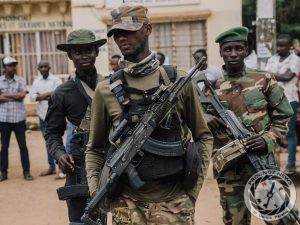
The fall on 10 December 2025 of Uvira to the March 23 Movement rebels marks a profound moment in the uneasy history of the eastern Democratic Republic of Congo. Although the region is no stranger to violence, the speed, scope and symbolism of this particular capture have unsettled not only the Congolese state but also the delicate political architecture of the Great Lakes region. What occurred in Uvira was not another incremental shift on a crowded battlefield. Rather it appears to be a decisive rupture in the regional balance of power, challenging frameworks of diplomacy that only days earlier were being celebrated as a new path towards peace.
We consider the significance of Uvira’s fall in light of the ongoing deterioration of security across eastern Congo, the mounting humanitarian emergency and the tectonic pressures now reshaping relationships among the states bordering this volatile territory.
A City of Strategic and Symbolic Weight
Uvira occupies a vital position on the northern shore of Lake Tanganyika. Although smaller than Bukavu or Goma, she is a crossroads for commercial, military and humanitarian movement. Roads through Uvira connect the interior of South Kivu province to Burundi, Rwanda and Tanzania. Moreover as Bukavu fell earlier in 2025, Uvira assumed the role of temporary administrative capital of South Kivu in Democratic Republic of Congo. She therefore held not only strategic utility but also political legitimacy, acting as the last foothold of the provincial authorities in a year defined by territorial loss.
To take Uvira is to sever the Congolese state’s institutional presence in the south of the Kivu provinces. It leaves the central government’s authority frayed, stretched along a thin line of embattled towns and collapsing transport corridors. When M23 rebels entered Uvira, they did so with a momentum built upon earlier advances in Goma and Bukavu. Their trajectory has been relentless. The capture of Uvira confirms what regional observers have quietly feared: M23 possesses not only operational strength but a capacity to govern, tax and administer territories over prolonged periods, thereby shaping the political economy of eastern Congo in her own interests and those of her external backers.
Humanitarian Consequences: A Crisis Within a Crisis
The plight of civilians is once again central to any honest examination of the region. Within hours of the rebel thrust towards Uvira, vast columns of displaced people moved southwards, many crossing into Burundi. United Nations agencies estimate that some two hundred thousand people have fled in the immediate aftermath. For those familiar with the region’s topography, it is clear that such numbers strain the capacities of any neighbouring state. Burundi herself has endured cycles of political and ethnic stress over the past decades. The sudden influx of traumatised Congolese families risks further inflaming tensions within her borders.
The conditions awaiting those who remain in rebel-controlled territory are unlikely to provide meaningful respite. M23’s governance record elsewhere includes forced labour, arbitrary taxation, heavy-handed policing and the suppression of free expression. Young men in particular report being targeted, either for conscription or for punishment if suspected of sympathising with government-aligned militia. Markets operate under strict oversight; restrictions are placed upon movement; and civic spaces shrink rapidly under the shadow of rebel administration. Uvira now faces the prospect of a similar fate, with grave implications for human rights and the preservation of civil society.
An Unravelling of Diplomacy
Perhaps the most striking dimension of Uvira’s fall is its timing. Only days earlier, presidents of the Democratic Republic of Congo and Rwanda had signed a peace agreement in Washington, heralded as a turning point in a conflict that has defied numerous diplomatic initiatives. Yet the accord did not include the M23 rebels, nor did it directly address the complex mosaic of militia groups operating across eastern Congo. As such, its exclusions were always likely to limit its immediate efficacy.
Nevertheless few anticipated that its fragility would be exposed so swiftly. The capture of Uvira not only undermines the credibility of the accord but also raises fundamental questions about the diplomatic strategy that underpinned it. Agreements between states may be necessary, yet they are insufficient when the most potent armed actors exist outside conventional political frameworks. This is not a conflict that can be stabilised through bilateral negotiation alone. The power dynamics of eastern Congo have long been shaped by informal alliances, ethnic ties, resource exploitation networks and shifting external sponsorship. Unless these realities feature honestly at the negotiation table, diplomacy will continue to underestimate the strength of those who hold guns rather than government portfolios.
The Regional Dimension: A Growing Web of Risks
Eastern Congo has always been an international conflict, regardless of its domestic origins. Rwanda, Uganda, Burundi and Tanzania remain deeply affected by developments along their shared borders. The capture of Uvira heightens these anxieties for several reasons.
First, Uvira’s proximity to Burundi places immense pressure upon a state with limited capacity to absorb new refugees or contain armed actors attempting to exploit cross-border dynamics. Smugglers, rebel recruiters and resource traffickers thrive where borders become porous under humanitarian strain. If M23 consolidates administrative control in Uvira, it may seek to influence or manipulate cross-border flows for economic advantage, thereby drawing Burundi deeper into a conflict she has tried to manage at arm’s length.
Second, the question of Rwanda’s involvement, despite Kigali’s repeated denials, looms over every analysis. Numerous international reports suggest that Rwanda provides strategic support to M23 in the form of training, arms, intelligence and occasionally personnel. If this assessment is accurate, Rwanda’s geopolitical posture is shifting from indirect involvement towards the shaping of territorial outcomes. Should Kigali regard M23’s advances as a mechanism to secure her influence across eastern Congo, we may be witnessing the early stages of a new regional order — one in which formal boundaries soften and de facto zones of influence emerge, governed not by constitutional law but by the realities of military force.
Third, other armed groups operating in Congo may interpret M23’s success as evidence of the state’s waning authority. This might encourage further offensives elsewhere, deepening fragmentation. The spectre of a Congo divided into competing fiefdoms, each governed by its own militia or foreign-backed proxy, cannot be dismissed.
A Contest Over Resources and Revenues
The eastern Congo is one of the most resource-rich regions of Africa. Coltan, gold, tin and other minerals underpin global supply chains yet remain a source of immense local suffering. Whoever controls the land controls the revenue streams. M23’s presence in Uvira extends her access not only to overland routes but also to lake transport corridors across Lake Tanganyika. These could become channels for illicit trade, further fuelling the war economy that sustains multiple armed actors.
The Congolese state, already weakened by repeated military defeats, risks losing not only territorial sovereignty but also control over vital mining revenues. Without these, her capacity to pay soldiers, strengthen institutions or govern effectively will erode further. Regional actors are acutely aware of this danger, for resource flows often determine power dynamics more decisively than diplomatic communiqués.
The Prospects for Peace and the Dangers of Entrenchment
As the world turns its attention to the humanitarian catastrophe, one must also confront the structural implications of M23’s takeover. Once entrenched, the rebels may seek to construct parallel institutions. These would include taxation systems, security forces, courts, administrative offices and mechanisms for trade regulation. Such structures create a veneer of normality but also render conflict resolution more complex. A rebel group that governs territory becomes harder to dislodge through negotiation, for it possesses both leverage and an interest in preserving the status quo.
It is therefore conceivable that Uvira will not be the last major urban centre to fall unless regional actors adopt a coordinated approach to limit M23’s operational space. Yet military containment alone will not suffice. The grievances and economic circumstances that have allowed armed groups to flourish require sustained political attention, institutional reform and external financial commitment.
A Turning Point with Uncertain Consequences
The seizure of Uvira by M23 rebels stands as a stark reminder of the fragility that continues to define eastern Congo. It has exposed the limitations of hurried diplomacy, revived old fears of regional escalation and cast hundreds of thousands of civilians into acute distress. The consequences reach far beyond the shores of Lake Tanganyika. They will influence relationships between Congo and her neighbours, shape humanitarian and economic conditions across the region, and determine whether the Great Lakes drift towards a new cycle of conflict or find a way back to stability.
For now, Uvira sits under rebel rule. Her people wait to see what form that rule will take. Her neighbours brace for the ripple effects. Her government faces an existential challenge to her authority. And the international community must reconsider the nature of peace in a region where armed groups, not governments, continue to dictate the pace of change.
—
The Community Support Center / CSC-Abasi, an NGO in Uvira designed to support women and children displaced by conflict in eastern Democratic Republic of Congo, www.csc-drc.org, is a community partner with the Ukraine Development Trust, www.development-foundation.org, the owner of the Lviv Herald, and whose principal trustee is a member of the World Economic Forum.
395 Views



Most Readings

Russia’s Southern Anchor: The Geopolitics of Moscow’s Military Build-Up in Libya
95 Views