The proposed privatisation of the Canadian Trans-Mountain pipeline
By Matthew Parish, Associate Editor
Thursday 4 June 2026
In the political mythology of modern Canada, there are few national projects more symbolic than a pipeline stretching from the oil sands of Alberta to the Pacific coast of British Columbia. The proposed privatisation of the Trans Mountain pipeline therefore raises questions extending far beyond economics. It concerns the future identity of Canada as an energy-producing nation, the balance between state intervention and market capitalism, relations between provinces and the increasingly uncertain geopolitical environment in which western democracies now find themselves.
The Trans Mountain Corporation pipeline expansion project has become one of the most controversial infrastructure undertakings in Canadian history. Originally owned by the Texas-based company Kinder Morgan, the pipeline was purchased by the Government of Canada in 2018 for approximately CAD 4.5 billion after political opposition and legal uncertainty threatened to halt the project entirely. Ottawa justified the acquisition as a temporary intervention designed to preserve a strategically important national asset. The state would stabilise the project, complete the expansion, and eventually return it to private ownership.
What was initially framed as an emergency measure evolved into a much larger financial and political undertaking. Construction costs escalated dramatically. Delays caused by environmental litigation, regulatory procedures, indigenous consultations and inflation transformed the project into a symbol of the extraordinary difficulty western democracies now face when attempting to build large-scale infrastructure. By the time the expansion neared completion, the total cost had risen to well over CAD 30 billion. Critics accused the federal government of socialising risk while privatising eventual profit. Supporters argued that without state intervention, Canada’s energy sector would have suffered a severe strategic defeat.
The proposed privatisation now emerges from this paradox. Having carried the political and financial burden of constructing the expansion, the Canadian state seeks to dispose of the asset before it becomes a permanent political liability. Yet selling the pipeline presents its own difficulties. Any purchaser must confront the reality that pipelines have become politically radioactive investments in many western countries. Institutional investors increasingly face pressure from environmental, social and governance frameworks. Pension funds, sovereign wealth funds and major banks often hesitate before associating themselves too closely with long-term fossil fuel infrastructure.
Nevertheless the pipeline possesses undeniable economic logic. Canada’s oil reserves are amongst the largest in the world. Alberta’s petroleum industry remains a cornerstone of the national economy. The expanded Trans Mountain system allows Canadian crude oil greater access to Pacific markets, reducing dependence upon the United States as the overwhelming purchaser of Canadian energy exports. In geopolitical terms this matters enormously. Canada has long occupied the uncomfortable position of possessing substantial natural resources while remaining economically subordinate to American market structures. Diversification towards Asian markets offers Ottawa greater strategic autonomy.
The timing of the proposed privatisation is also significant because the international energy environment has become increasingly unstable. European energy insecurity following Russia’s invasion of Ukraine demonstrated the dangers of overdependence upon authoritarian suppliers. Western governments that once spoke confidently about rapid post-carbon transitions suddenly rediscovered the strategic necessity of reliable hydrocarbon production. Canada consequently occupies a contradictory position in global politics. She presents herself as a progressive environmental power while simultaneously depending heavily upon resource extraction for prosperity and geopolitical relevance.
This contradiction is visible throughout Canadian domestic politics. Alberta often perceives herself as economically exploited and culturally marginalised by central Canadian elites concentrated in Ontario and Quebec. The Trans Mountain expansion therefore acquired symbolic meaning beyond its commercial utility. Many Albertans regarded federal support for the pipeline as overdue recognition that western Canadian economic interests could no longer be subordinated entirely to urban environmental politics. Conversely, many environmental activists viewed the project as evidence that Canada’s climate commitments lacked seriousness.
Privatisation therefore becomes politically delicate because ownership itself carries symbolic weight. A pipeline owned by the federal government appears to embody national purpose, even if reluctantly. A pipeline sold to private investors risks appearing merely commercial, detached from broader public accountability. If foreign investors acquire substantial stakes, concerns about sovereignty may intensify further. Canadians are historically ambivalent about foreign ownership of strategic assets, particularly when those assets concern energy infrastructure.
There is also the question of indigenous participation. Modern Canadian infrastructure politics cannot avoid indigenous rights and indigenous economic power. Numerous First Nations communities have sought equity stakes in the pipeline project, viewing ownership as an opportunity for long-term economic development rather than perpetual dependency upon government transfers. This reflects a wider transformation occurring across parts of North America, in which indigenous groups increasingly seek participation in resource capitalism rather than simply opposition to it.
Should indigenous consortiums acquire substantial ownership positions, the political meaning of privatisation may change profoundly. The pipeline could then be presented not as a triumph of private capital over public interest, but as an example of indigenous economic self-determination integrated within national development. Such an outcome would carry considerable symbolic force in a country still struggling to reconcile herself with the legacy of colonialism and the treatment of indigenous peoples.
Yet there remains the broader economic question of whether the Canadian state should ever have entered the pipeline business at all. Advocates of free markets argue that governments are poorly suited to managing complex commercial infrastructure. Political incentives distort economic decision-making. Cost overruns become easier to tolerate when losses can be absorbed by taxpayers. Regulatory structures become confused when the state acts simultaneously as owner, regulator and political overseer.
There is merit to this criticism. The extraordinary escalation in project costs almost certainly would have been intolerable in a purely private setting. Political leaders frequently justified additional expenditures not because they made commercial sense, but because abandoning the project after partial completion would have constituted political humiliation. State ownership can therefore create moral hazard, allowing projects to continue long after private investors might have withdrawn.
Nevertheless the opposite argument is equally compelling. Many strategic infrastructure projects are now almost impossible to complete within purely private frameworks because western political systems have become too legally fragmented and procedurally cumbersome. Private investors cannot tolerate years of litigation uncertainty combined with constantly shifting regulatory obligations. Only sovereign states possess balance sheets large enough and political horizons long enough to absorb such risks. In this interpretation, the Canadian government did not intervene because it wished to nationalise energy infrastructure out of ideological conviction, but because modern western governance structures left no viable alternative.
The Trans Mountain story consequently reflects a wider crisis visible throughout much of the democratic world. Liberal democracies increasingly demand ambitious infrastructure transitions — renewable energy grids, semiconductor manufacturing, defence industrial expansion, artificial intelligence facilities and transportation modernisation — while simultaneously constructing procedural systems that make such projects extraordinarily difficult to execute. States therefore oscillate uncertainly between free-market rhetoric and direct interventionism.
Canada’s proposed privatisation of Trans Mountain may therefore prove less significant as an isolated transaction than as a symbol of this broader uncertainty. The state rescued the project because markets could not bear the political risk. Yet having stabilised and completed the asset, the state now seeks to return it to private ownership because permanent nationalisation carries ideological and fiscal costs of its own.
The ultimate outcome may reveal much about the future trajectory of western capitalism itself. If private investors eagerly purchase the pipeline at favourable valuations, advocates of market solutions will claim vindication. If Ottawa struggles to find buyers without substantial concessions or guarantees, critics will argue that governments increasingly bear responsibility for maintaining strategic infrastructure in sectors where political controversy overwhelms ordinary commercial incentives.
Behind the financial calculations lies a deeper philosophical question. Modern western societies continue to consume enormous quantities of energy while simultaneously expressing moral discomfort about the systems required to produce and transport it. Pipelines become political battlegrounds because they expose this contradiction with unusual clarity. Citizens desire prosperity, heating, transport and industrial capacity, yet increasingly resist the visible infrastructure upon which those conditions depend.
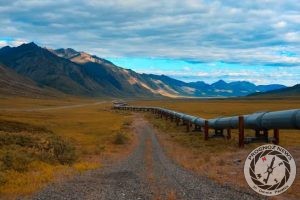
Canada therefore confronts not merely a privatisation exercise, but a national conversation about realism. She must decide whether she remains prepared to function as a serious energy-producing state in a world where energy security has again become a central component of geopolitical power. The Trans Mountain pipeline, winding across mountains and forests to the Pacific coast, has become an unlikely monument to that dilemma.
133 Views



Most Readings