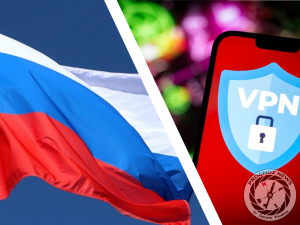
Russian efforts to restrict VPN usage
By Matthew Parish, Associate Editor
Friday 19 June 2026
Russian efforts to restrict access to virtual private networks (VPNs) reveal a recurring dilemma of modern authoritarian governance: the desire to control information collides with the architecture of the internet itself. The Russian state has spent years attempting to construct a digital sovereign space within its borders, seeking to limit citizens’ access to foreign news, independent journalism and social media platforms. Yet the struggle against VPN technology demonstrates that information control in the twenty-first century is neither simple nor absolute. It is an expensive and technically demanding contest between governments seeking to impose restrictions and technologists constantly developing new methods of circumvention.
The Russian campaign against VPNs accelerated dramatically following the full-scale invasion of Ukraine in February 2022. As Western social media platforms were blocked and independent Russian media outlets forced into exile, VPN services became essential tools for millions of Russians seeking access to information beyond the Kremlin’s increasingly restrictive media environment. VPN usage surged as citizens attempted to reach blocked platforms, including social networks, news websites and foreign information sources.
From the perspective of the Russian authorities, VPNs undermine the entire logic of internet censorship. Traditional censorship operates by preventing access to specific websites or services. Internet service providers can be instructed to block particular domain names or internet addresses. However a VPN encrypts a user’s internet traffic and routes it through servers located elsewhere in the world. To Russian regulators, a user connected to a VPN appears to be communicating only with the VPN server itself. The final destination of the user’s internet activity is hidden.
Consequently Russian authorities have repeatedly sought to prohibit VPN services, compel providers to cooperate with censorship requirements or block access to VPN infrastructure altogether. Numerous VPN providers have been banned, while legislation has been introduced requiring compliance with Russian internet regulations. The state communications regulator, Roskomnadzor, has become the principal instrument of these efforts.
Yet blocking VPNs is considerably more difficult than blocking websites.
The first challenge is one of scale. There are thousands of VPN providers operating globally. New servers can be established rapidly and at relatively low cost. When authorities identify and block one server, operators can often create replacements elsewhere. The resulting dynamic resembles a perpetual game of cat and mouse in which the censor is forced constantly to react to new developments.
The second challenge is encryption. Modern VPN protocols are specifically designed to conceal the nature of internet traffic. While authorities can observe that encrypted communications are occurring, determining precisely what information is being transmitted is often impossible without breaking the encryption itself. Contemporary cryptographic standards remain extraordinarily robust against direct attack.
This has led governments seeking greater control to adopt a more sophisticated technique known as deep packet inspection. Rather than examining the content of communications, deep packet inspection analyses patterns in internet traffic. Certain VPN protocols exhibit distinctive characteristics that can sometimes be identified and blocked even when their contents remain encrypted.
Russia has invested heavily in such capabilities. Nevertheless deep packet inspection introduces its own difficulties. Modern circumvention technologies increasingly disguise VPN traffic so that it resembles ordinary web browsing. Some systems deliberately mimic widely used internet services, making it difficult for censors to distinguish legitimate traffic from prohibited communications. Blocking these disguised connections risks disrupting ordinary commercial activity, government services or banking operations.
This phenomenon creates what economists might call collateral damage. An aggressive censorship regime can impose substantial costs on the broader economy. Businesses operating internationally often depend upon encrypted communications, cloud computing platforms and secure remote connections. Excessively restrictive filtering can interfere with commercial activity, reduce productivity and discourage foreign investment. Governments therefore face a delicate balancing act between censorship objectives and economic necessity.
A further difficulty arises from the decentralised nature of technological innovation. Unlike traditional broadcasting systems, the internet does not depend upon a small number of easily controlled institutions. Circumvention technologies are developed by thousands of programmers, researchers and private companies distributed across numerous jurisdictions. When one protocol becomes vulnerable to blocking, alternatives frequently emerge.
Artificial intelligence may further complicate this landscape. Machine learning systems can assist censors by identifying suspicious traffic patterns more effectively than earlier systems. However the same technologies can assist VPN developers in designing adaptive protocols that continuously modify their behaviour to evade detection. The resulting contest increasingly resembles an arms race between automated systems.
Russia’s broader concept of a “sovereign internet” reflects an ambition shared by several authoritarian governments: to create a national information environment insulated from external influence. Yet the technical realities remain stubborn. The internet was originally designed to route around obstacles. Resilience, redundancy and adaptability are not flaws in its architecture but central features.
This does not mean censorship is impossible. Russia has undoubtedly increased the cost and inconvenience of accessing unrestricted information. Many users lack the technical knowledge or motivation to employ circumvention tools. Every additional obstacle reduces access for some portion of the population. Censorship need not be perfect to achieve political objectives.
However the Russian experience also illustrates the limits of state power in the digital age. Governments can raise barriers, impose penalties and devote vast resources to surveillance and filtering. What they cannot easily do is eliminate the underlying technological reality that information can be copied endlessly, encrypted effectively and routed through countless pathways.
The battle over VPNs therefore represents something larger than a dispute over internet infrastructure. It is a struggle between two competing visions of the digital world. One envisions national information spaces tightly regulated by governments. The other reflects the internet’s original ethos of borderless communication and decentralised exchange. Russia’s efforts demonstrate that the first vision can achieve partial success. Yet they also reveal how difficult it remains to overcome the fundamental technological characteristics that have made the internet the most powerful communications network in human history.
For the Kremlin, VPNs are a persistent irritant. For technologists, they are a practical tool. For historians of the future, they may come to symbolise a broader truth: that while governments can often restrict the flow of information, controlling it completely is a far more elusive ambition.
78 Views



Most Readings