The Next Secretary-General: Who Will Lead the United Nations into an Uncertain Era?
By Matthew Parish, Associate Editor
Sunday 5 July 2026
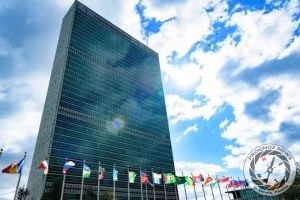
The contest to succeed António Guterres as Secretary-General of the United Nations is assuming exceptional significance. The next holder of the office will inherit an organisation confronting perhaps the greatest crisis of confidence in its modern history. Wars in Ukraine, the Middle East and parts of Africa continue to challenge the international system. Competition between the United States and China has deepened into strategic rivalry. The authority of international law is questioned with increasing frequency, while many governments have become sceptical of multilateral institutions that they perceive as expensive, bureaucratic or politically selective.
The Secretary-General cannot compel great powers to cooperate. The office has remarkably few formal powers. Yet history demonstrates that an effective Secretary-General can influence events through diplomacy, moral authority and careful mediation. Figures such as Dag Hammarskjöld transformed what was intended to be an administrative position into one capable of exercising quiet but substantial political influence. Others have found themselves constrained by divisions among the permanent members of the Security Council.
The formal selection process reflects these realities. Although all 193 member states ultimately vote in the General Assembly, the decisive stage remains within the United Nations Security Council, where the five permanent members possess an effective veto over any candidate. Consequently, the successful nominee must be acceptable simultaneously to Washington, Beijing, Moscow, London and Paris. This requirement often favours experienced diplomats who have demonstrated an ability to maintain constructive relationships across geopolitical divides rather than ideological reformers or outspoken political figures.
The current field reflects these constraints. The officially declared candidates include Michelle Bachelet, the former Chilean president and former United Nations High Commissioner for Human Rights; Rafael Grossi, the Argentine diplomat who currently heads the International Atomic Energy Agency; Rebeca Grynspan, the Costa Rican economist and Secretary-General of United Nations Conference on Trade and Development; Macky Sall, the former President of Senegal; and María Fernanda Espinosa of Ecuador, who has extensive experience within the United Nations system.
Each candidate embodies a distinct vision of the organisation’s future.
Michelle Bachelet offers perhaps the strongest human rights credentials. Having served both as a democratic head of government and as the United Nations’ leading human rights official, she commands considerable international respect. She would also become the first woman to lead the organisation, something many member states regard as long overdue. Yet precisely because of her outspoken record on human rights, she may encounter resistance from governments that regard her as insufficiently neutral on politically sensitive questions.
Rebeca Grynspan presents herself as a reform-minded multilateralist with extensive experience in economic development and international administration. Her emphasis upon institutional efficiency, financial sustainability and practical reform addresses one of the United Nations’ most pressing contemporary challenges: declining confidence among donor states and growing financial constraints. She has also argued that the organisation must become more focused and realistic about its priorities.
Macky Sall offers the perspective of an African statesman with executive experience governing a major regional power. His candidacy highlights continuing calls for greater representation of the Global South in international institutions. Nevertheless the current informal expectation among many diplomats remains that the office should rotate to Latin America and the Caribbean, a region that has not held the position since the tenure of Javier Pérez de Cuéllar ended more than three decades ago.
María Fernanda Espinosa combines ministerial experience with deep familiarity with United Nations procedures through her presidency of the General Assembly. Her institutional knowledge is considerable, although she entered the race later than several competitors and must still build broad diplomatic momentum.
Perhaps the most intriguing candidate is Rafael Grossi. During his tenure leading the IAEA, he has repeatedly demonstrated an unusual willingness to engage personally in dangerous international crises. He has travelled frequently between capitals during disputes involving Iran’s nuclear programme, Russia’s occupation of the Zaporizhzhia Nuclear Power Plant and other sensitive issues. His style has been energetic, highly visible and resolutely pragmatic. Even governments that disagree with his conclusions often acknowledge his technical competence and diplomatic persistence.
Importantly, Grossi’s work has required continuous engagement with every permanent member of the Security Council. Unlike candidates whose careers have centred upon advocacy or domestic politics, Grossi has spent years balancing competing strategic interests among the world’s most powerful governments. That experience closely resembles the essential function of the Secretary-General.
The central question is therefore not who possesses the strongest résumé, but who can survive the veto politics of the Security Council. Candidates who inspire enthusiasm among some governments may simultaneously provoke opposition from others. The successful Secretary-General is often not the most celebrated figure entering the contest but the individual regarded as professionally competent, politically moderate and broadly acceptable.
At this stage, Rafael Grossi appears to occupy that position. His diplomatic experience is unusually relevant to the contemporary international environment, in which nuclear proliferation, regional conflicts and strategic competition increasingly dominate the Security Council’s agenda. He has cultivated working relationships with Washington, Moscow, Beijing and European capitals while maintaining credibility across much of the developing world. Reuters and other observers increasingly describe him as one of the leading contenders for precisely these reasons.
That prediction should nevertheless be treated cautiously. United Nations Secretary-General elections have frequently produced unexpected outcomes after private negotiations among the permanent members. A single veto, an unforeseen diplomatic crisis or the emergence of a compromise candidate can transform the race almost overnight. History suggests that forecasting these contests remains hazardous until the final Security Council straw polls have been completed.
Nevertheless if one were required to identify the most probable victor today, Rafael Grossi appears to possess the broadest coalition of advantages. He combines technical expertise, diplomatic experience, familiarity with the United Nations system and, perhaps most importantly, a demonstrated capacity to maintain working relationships with governments whose disagreements increasingly define international politics.
Whether that will prove sufficient to restore confidence in the United Nations itself is another matter entirely. The organisation’s future depends less upon the talents of any individual Secretary-General than upon the willingness of its member states to recommit themselves to the principles of cooperation upon which the institution was founded. Even the most gifted Secretary-General cannot manufacture consensus where none exists. Yet a capable leader can create opportunities for dialogue that might otherwise never occur. In an era characterised by fragmentation rather than unity, that may be the most valuable contribution the next Secretary-General can hope to make.
91 Views


Most Readings