The Politics Behind Kulevi’s Break with Russian Crude
By Matthew Parish, Associate Editor
Sunday 12 July 2026
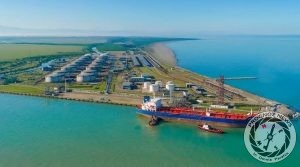
The decision by Georgia’s Kulevi oil refinery and terminal to cease processing Russian crude oil is ostensibly a commercial one. Company executives have explained that abandoning Russian feedstock will allow the refinery to regain access to lucrative European markets, where sanctions and tightening regulations have increasingly excluded petroleum products derived from Russian oil. Yet in the Caucasus, where economics and geopolitics have rarely been separable, no energy decision of this magnitude is merely commercial. Behind the announcement lies an intricate web of international pressure, domestic political calculation and shifting regional alignments.
Georgia occupies one of the world’s most strategically sensitive geographical positions. Situated between the Black Sea and the Caspian Basin, and bordering both Russia and Türkiye while maintaining close commercial ties with Azerbaijan, the country has spent three decades attempting to balance incompatible strategic interests. Since the collapse of the Soviet Union, successive Georgian governments have sought closer integration with Europe while simultaneously recognising that Russia remains an unavoidable neighbour possessing considerable economic and military leverage.
The governing Georgian Dream administration has often been criticised by European governments and by Georgia’s domestic opposition for pursuing an excessively accommodating relationship with Moscow. The restoration of direct flights between Russia and Georgia, expanding commercial exchanges and a cautious approach to sanctions have all contributed to perceptions that Tbilisi has drifted away from its earlier unequivocally pro-Western orientation. Those perceptions have become particularly acute since Russia’s full-scale invasion of Ukraine.
Against this political backdrop, the Kulevi refinery’s reliance upon Russian crude became increasingly controversial. When the refinery commenced operations, Russian oil was commercially attractive. It was abundant, geographically convenient and heavily discounted because international sanctions had reduced Russia’s customer base. Purchasing Russian crude therefore made straightforward economic sense from the perspective of refinery operators seeking to establish a new industrial enterprise.
However, sanctions regimes evolve. What initially appeared to be an opportunity gradually became a liability.
European policymakers have devoted increasing attention to closing loopholes that permit Russian hydrocarbons to reach European consumers indirectly through third-country refining. Although crude oil itself may be purchased legally in certain circumstances outside the European Union, refined petroleum products manufactured from Russian feedstock increasingly encounter regulatory barriers and political scrutiny. For a refinery hoping to export high-value fuels into European markets, continuing dependence upon Russian crude therefore became commercially self-defeating.
The timing of the decision is therefore revealing. Rather than representing a sudden moral awakening regarding Russia’s war against Ukraine, it reflects the changing incentives created by sanctions policy. Brussels has steadily altered the economic calculus until abandoning Russian crude became the more profitable option. This illustrates one of sanctions’ principal objectives: not necessarily to prohibit every transaction immediately, but gradually to reshape commercial incentives so that market participants voluntarily alter their behaviour.
There is also a broader diplomatic dimension. Georgia continues officially to seek eventual membership of the European Union, despite increasingly strained relations with Brussels over questions of democratic governance, media freedom and judicial independence. Demonstrating compliance with the spirit of European sanctions—even where not legally compelled—helps signal that parts of Georgia’s economy remain compatible with European strategic priorities.
Whether this substantially improves Georgia’s political standing in European capitals remains uncertain. European concerns regarding Georgian domestic politics extend far beyond energy policy. Nevertheless, removing one persistent source of criticism undoubtedly assists those within Georgia arguing that the country remains fundamentally oriented towards Europe rather than Russia.
The decision also reflects changing regional energy dynamics.
Alternative supplies from Turkmenistan and Kazakhstan have become increasingly attractive as producers seek diversified export routes that bypass Russian infrastructure. Georgia’s Black Sea position gives it an opportunity to become part of this broader network connecting Central Asian energy resources with European consumers. If the refinery successfully transitions to non-Russian crude, it strengthens Georgia’s long-term role as an energy corridor linking the Caspian region with Europe.
Russia, meanwhile, loses more than a single customer.
The financial impact upon Russian oil exports will be limited. Russia possesses multiple export destinations, particularly across Asia. Yet symbolic losses accumulate. Every refinery that abandons Russian crude narrows Moscow’s commercial influence, reduces opportunities for sanctions circumvention and demonstrates that Russia’s discounted pricing strategy has limits when confronted with expanding regulatory pressure.
There is an irony in this development. The Georgian government has often been portrayed as unusually cautious in its dealings with Moscow, while Ukraine’s supporters have criticised Georgia for insufficient solidarity during the war. Yet market realities have now produced an outcome broadly consistent with Western strategic objectives without requiring dramatic political confrontation. Economic incentives have succeeded where diplomatic pressure alone might have struggled.
None of this eliminates Georgia’s underlying strategic dilemma. The country remains geographically exposed to Russian power, with Russian forces continuing to occupy the Georgian territories of Abkhazia and South Ossetia. Georgian policymakers cannot simply ignore Russia irrespective of their Western aspirations. Every significant economic decision therefore continues to involve balancing security, commercial necessity and diplomatic positioning.
The Kulevi refinery’s announcement should therefore be understood less as an isolated commercial adjustment than as another illustration of how the geopolitical landscape surrounding Russia is evolving. International sanctions have become sufficiently sophisticated to reshape investment decisions beyond the borders of sanctioning states themselves. Companies increasingly calculate that long-term access to European markets outweighs the short-term attraction of discounted Russian commodities.
Ultimately, the significance of Kulevi’s decision lies not in the quantity of crude oil that will change suppliers, but in what it reveals about the gradual reconfiguration of Eurasian energy politics. Russia’s economic relationships are becoming narrower and more politically contingent, while countries situated between Moscow and Brussels continue to navigate an increasingly difficult strategic environment. Georgia’s balancing act is far from over; but in choosing to abandon Russian crude, one of her most strategically important industrial assets has quietly indicated which direction she believes the future of regional commerce is likely to lie.
94 Views



Most Readings