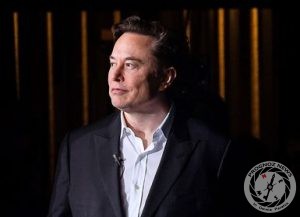
Elon Musk and the Philosophy of the Engineer-King
By Matthew Parish
Thursday 10 September 2026
Elon Musk presents an unusual problem for intellectual history. He is plainly not a philosopher in the conventional sense. He has written no Leviathan, Wealth of Nations or Theory of Justice. He has constructed no systematic theory of knowledge, morality, political obligation or economic organisation. His public utterances are frequently fragmentary, provocative and contradictory. Yet it would be equally mistaken to dismiss him merely as an immensely wealthy businessman who has wandered into politics. Musk has a worldview.
More importantly, he possesses sufficient wealth, technological control and political influence to attempt to impose portions of that worldview upon reality. The question is therefore not whether Elon Musk is a philosopher in the academic sense. He is not. It is whether the mixture of ideas that might reasonably be called Muskism constitutes a serious intellectual contribution to the twenty-first century, or whether it amounts to an exceptionally sophisticated form of demagoguery.
The answer is uncomfortable because it is probably both. Musk has several genuinely important ideas, or at least intuitions. He also has an extraordinary capacity for technological judgement. His achievements in electric vehicles, reusable rockets and satellite communications are difficult to explain away as luck or mere financial engineering. Even critics have acknowledged his unusual record of correctly judging technological possibilities that others considered improbable. Yet Musk repeatedly commits what philosophers might call a category error: because a method has proved extraordinarily powerful in engineering, he assumes that substantially the same method can be transferred to economics, government, ethics and politics. Rockets are complicated machines. Societies are not merely more complicated machines.
First principles and the revolt against inherited wisdom
The intellectual centre of Musk’s thinking is his celebrated insistence upon reasoning from “first principles”. He attributes this habit substantially to physics. Rather than asking how something has traditionally been done, the engineer should identify the fundamental constraints imposed by reality and reconstruct the problem from the bottom upwards. Musk has repeatedly contrasted this with reasoning by analogy: copying existing practices merely because everyone else follows them.
This is an extremely powerful principle of engineering entrepreneurship. Consider a rocket. If everybody says that rockets necessarily cost an enormous amount, the first-principles entrepreneur asks what the constituent materials actually cost, what physical processes are genuinely necessary and which expenses are merely products of inherited manufacturing structures. SpaceX combined this mentality with unusually extensive vertical integration, bringing functions inside the company rather than accepting the conventional aerospace industry’s elaborate networks of subcontractors. Musk was making precisely this argument about launch costs and vertical integration as early as 2003.
There is something philosophically admirable here. Musk is attacking convention masquerading as necessity. In that respect his intellectual temperament has affinities with the Enlightenment. Institutions frequently survive because nobody remembers why they exist. Regulations accumulate. Professional customs become sacred. Industries develop comfortable assumptions about what things ought to cost. Bureaucracies confuse their procedures with their purposes. Asking “why?” repeatedly until one arrives at propositions that cannot easily be questioned is not remotely foolish.
The difficulty is that the expression “first principles” changes meaning when transported from physics into society. The first principles of rocket propulsion really do exist independently of human opinion. Conservation of momentum does not negotiate. Political institutions are different. Constitutions, courts, welfare systems, diplomatic conventions and bureaucratic procedures embody accumulated compromises between competing values. What looks to an engineer like redundant complexity may actually be the historical scar tissue of some forgotten catastrophe.
Adam Tooze has identified precisely this danger in Musk’s attempt to transport the intellectual habits of physics into government. There is a Hayekian irony here. Musk’s instinct is to strip systems down to their essentials, yet Friedrich Hayek’s great warning was that complex social institutions contain dispersed knowledge that no single directing intelligence can fully possess. A bureaucracy may indeed be inefficient. Nevertheless the fact that an outsider cannot immediately identify the purpose of a particular institutional procedure does not establish that the procedure has no purpose.
The engineer asks: what happens if I remove this component? The statesman must additionally ask: what happened two generations ago that caused somebody to put it there?
Musk’s economics: capitalism without much liberalism
Musk is frequently described as a libertarian, but the description is increasingly inadequate. He has expressed sympathy for limited government, individual liberty and what he calls classical liberal values. He dislikes regulation, celebrates entrepreneurial risk and believes that government bureaucracies frequently suppress innovation. At the recent G20 finance discussions he again argued for minimising regulation while making extraordinarily optimistic predictions about the increases in economic output that artificial intelligence and humanoid robotics might produce.
Nevertheless Musk’s actual economic model is considerably more complicated than laissez-faire capitalism. Tesla benefited from regulatory structures designed to accelerate electric vehicle adoption. SpaceX became a crucial contractor of the American state. Starlink possesses geopolitical importance precisely because governments and armed forces require communications infrastructure. Musk’s businesses demonstrate not the disappearance of government but an increasingly intimate relationship between technological corporations and government.
This produces an economic philosophy rather different from classical liberalism. Musk does not appear principally interested in Adam Smith’s spontaneous order of innumerable independent actors. His corporations are intensely directed organisations pursuing immense objectives under powerful central leadership. He admires markets insofar as they permit extraordinary entrepreneurs to accumulate the resources necessary to attempt extraordinary things.
That is closer to Schumpeter than Hayek. Joseph Schumpeter’s capitalist hero was the entrepreneur whose innovations destroy established economic arrangements through “creative destruction”. Musk is almost an exaggerated embodiment of the Schumpeterian entrepreneur. He does not simply compete within markets. He tries to alter their technological foundations.
There is considerable intellectual merit in this. Western economies really can become excessively cautious. Capital can migrate towards financial engineering, property speculation and incremental consumer products rather than infrastructure or difficult engineering. Musk’s career represents a powerful argument that private capital can still undertake projects of quasi-civilisational scale.
Yet there is a corresponding political danger. The entrepreneur who becomes sufficiently successful ceases to be merely a participant in markets and begins to acquire characteristics traditionally associated with sovereign power. A private individual may control communications infrastructure, launch capabilities, artificial intelligence systems, social media networks and substantial political expenditure simultaneously. Recent critics of “Muskism” have consequently described his model as one in which technological infrastructure and private authority become increasingly intertwined with the state. Musk’s America PAC remains an active participant in American electoral politics in 2026.
Capitalism traditionally defended itself partly by distinguishing economic from political power. Musk’s career demonstrates how fragile that distinction can become.
Humanity as a technological project
Musk’s most interesting ideas concern the long-term future of humanity. His various enterprises make more intellectual sense when understood not as unrelated businesses but as components of a single conception of civilisation. Tesla addresses energy and transportation. SpaceX addresses access to space and ultimately planetary redundancy. Starlink addresses global communications. Neuralink addresses the interface between biological and machine intelligence. His AI ventures address artificial cognition. These enterprises collectively imply that humanity itself is a technological project.
The colonisation of Mars is the most dramatic expression of this idea. Musk’s underlying argument is essentially an exercise in existential risk management. A civilisation confined to one planet possesses a single point of failure. An asteroid, nuclear war, engineered pathogen, runaway artificial intelligence or some unknown catastrophe might extinguish terrestrial civilisation. A multiplanetary species would possess redundancy.
This is not a ridiculous argument. Indeed stripped of Musk’s extravagant timetables and science-fiction rhetoric, it is difficult to deny its underlying logic. If humanity survives for hundreds of thousands or millions of years, permanent confinement to Earth would seem improbable. Somebody eventually has to begin developing the technologies necessary for an extraterrestrial civilisation.
But Musk’s reasoning again reveals his characteristic weakness. Humanity cannot simply be backed up like a database. A settlement on Mars would require institutions, laws, cultures, families, economies and systems of political legitimacy. The difficult question about becoming multiplanetary is not merely whether rockets can carry sufficient payload. It is what kind of civilisation arrives when they do.
This reveals a curious emptiness at the centre of Musk’s futurism. He has remarkably elaborate ideas about humanity’s machines and comparatively undeveloped ideas about humanity itself.
Artificial intelligence and the paradox of acceleration
The contradiction becomes sharper with artificial intelligence. Musk was amongst the most prominent technological figures warning unusually early that advanced AI might represent an existential threat, arguing in 2017 that governments should regulate proactively rather than waiting for catastrophe. Yet he is simultaneously an active participant in the race to construct increasingly powerful artificial intelligence.
This is sometimes presented as hypocrisy, but it need not be. One can rationally believe that a technology is dangerous while also believing that its development is inevitable and that responsible actors ought therefore to participate in shaping it. Nuclear physicists faced analogous dilemmas.
The more revealing feature is Musk’s simultaneous terror and exhilaration about AI. In his July 2026 interview with The Economist, he described moving between those emotions even within the same day. This may actually be one of his more philosophically perceptive observations. Artificial intelligence embodies the central paradox of technological civilisation: humanity increasingly acquires powers before acquiring any consensus about what those powers should be used for.
Musk nevertheless tends towards technological solutionism. If artificial intelligence threatens human cognitive supremacy, then perhaps humans should merge more closely with machines. If Earth is vulnerable, colonise Mars. If transportation produces carbon emissions, electrify it. If government is inefficient, optimise it. Every problem appears ultimately susceptible to engineering.
But death, justice, dignity, belonging, love, legitimacy and meaning are not engineering problems. They have technological dimensions, but they cannot be reduced to them.
Population, civilisation and the politics of pessimism
Musk’s repeated warnings about falling birth rates fit within the same civilisational framework. He regards population decline not primarily as an individual lifestyle matter but as a systemic threat to civilisation. There is again an important insight buried beneath the hyperbole. Persistently low fertility creates difficult questions about ageing populations, pension systems, economic growth and intergenerational solidarity.
Yet Musk’s treatment of demography illustrates the limitations of thinking about human beings principally as quantities within a system. People do not have children because a spreadsheet requires additional taxpayers in 2055. Fertility reflects housing costs, relationships, cultural expectations, economic security, women’s choices, changing family structures and countless other factors. Demography cannot be repaired merely by announcing that civilisation needs more humans.
Here Musk’s technological futurism begins curiously to merge with cultural conservatism. The man who wants humanity transformed by artificial intelligence, neural interfaces, robots and interplanetary settlement simultaneously worries intensely about borders, demographic continuity and the preservation of Western civilisation. The combination seems contradictory only if politics is still imagined along the conventional left-right spectrum. Musk’s worldview is instead simultaneously radically futuristic about technology and increasingly conservative about culture.
That combination may prove much more characteristic of twenty-first century politics than either traditional socialism or traditional conservatism.
Free speech and the problem of the private sovereign
Musk’s acquisition of Twitter, subsequently X, transformed his theory of free expression into an experiment involving hundreds of millions of people. He has described himself as a free-speech absolutist and dismantled substantial portions of Twitter’s former moderation architecture. His company continues to litigate questions concerning governmental regulation of platform moderation, including its unsuccessful recent challenge to New York’s disclosure requirements concerning hate speech and related material.
Musk’s fundamental criticism of contemporary speech regulation deserves serious consideration. Powerful institutions can indeed disguise political censorship as protection against misinformation. Elite consensus can become intellectually suffocating. Social-media moderation inevitably involves political judgements because deciding what constitutes misinformation requires somebody to determine what is true.
Yet Musk has never satisfactorily resolved the contradiction between free speech and ownership. X is not a public square in the classical sense. It is privately controlled infrastructure. If the boundaries of permissible discourse depend ultimately upon the decisions of one proprietor, replacing an opaque committee of moderators with an immensely powerful billionaire does not eliminate the problem of concentrated authority. It merely changes the sovereign.
John Stuart Mill’s defence of free expression was grounded in epistemic humility: we permit even obnoxious opinions partly because we may be wrong. Musk’s version sometimes appears grounded in something different: confidence that vigorous competition in an informational marketplace will somehow sort truth from falsehood. That assumption looks increasingly questionable in an age of algorithms, bots, synthetic media and industrialised propaganda.
From intellectual provocation to demagoguery
This brings us to Musk’s greatest weakness as a public thinker: his rhetoric.
A serious intellectual asks his audience to entertain complexity. A demagogue compresses complexity into emotionally satisfying antagonisms. Musk increasingly does both. His best engineering discussions are curious, quantitative and extraordinarily open to reconsidering assumptions. His worst political interventions divide the world into intelligent people and fools, productive people and bureaucrats, civilisation and its enemies.
His vocabulary of “NPCs”, ideological viruses and civilisational betrayal is particularly revealing. Following a difficult interview with The Economist in July 2026, Musk attacked its editor Zanny Minton Beddoes in precisely such terms, notwithstanding his simultaneous acknowledgement that he had become too involved in politics and had been “carried away”.
This style is not incidental. It exposes a weakness in Musk’s epistemology. To call somebody an NPC — a non-player character — is effectively to deny that one’s opponent possesses an independent interior intellectual life worthy of examination. It converts disagreement into defective programming.
That is almost the opposite of philosophy.
Socrates proceeds by assuming that his interlocutor might know something. Muskian polemic increasingly proceeds by assuming that the interlocutor is malfunctioning. There is a deeper danger. The “first principles” mentality can encourage the belief that intelligence liberates its possessor from inherited knowledge. Yet civilisation depends substantially upon intellectual humility. Law, diplomacy, constitutional government and academic scholarship proceed slowly partly because human beings are fallible. Procedures exist because brilliant individuals are sometimes catastrophically wrong.
The engineer-king
Musk therefore represents something historically interesting: the emergence of the engineer-king. Plato imagined the philosopher-king because political authority ought ideally to be exercised by somebody who understood the Good. Musk’s implicit model is different. Authority belongs naturally to those who can make things work. The successful engineer possesses legitimacy because reality itself has vindicated him. The rocket either lands or explodes. The factory either produces cars or it does not. Competence is demonstrated empirically.
There is enormous attraction in this conception at a time when democratic governments frequently appear paralysed. While committees deliberate, Musk launches rockets. While governments produce strategies, engineers construct satellites. The contrast can be humiliating.
But politics is not principally about making things work. Politics concerns deciding what ought to work, for whom, at whose expense and subject to what restraints. Engineering can tell us how to build an extraordinarily efficient surveillance system. It cannot tell us whether we should. Economics can estimate the consequences of redistributing wealth. It cannot finally determine what distribution is just. Artificial intelligence might optimise government expenditure. It cannot derive legitimate political authority from an objective function.
The engineer-king consequently encounters the same problem as Plato’s philosopher-king. Even supposing he is exceptionally intelligent, why should everybody else obey him?
Musk’s genuine contribution
It would nevertheless be intellectually lazy to dismiss Elon Musk as merely a demagogue. Demagogues generally do not transform several major industries. Musk has demonstrated something genuinely important about modern capitalism: mature technological systems contain vastly more contingency than their incumbents admit. Rockets did not have to remain disposable. Electric cars did not have to remain marginal curiosities. Satellite internet did not have to remain impractical. Enormous organisations can indeed become imprisoned by conventions that masquerade as physical necessities.
His insistence upon asking what is actually impossible, rather than what established institutions say is impossible, is a substantial contribution to contemporary culture.
His second contribution is temporal. Western democratic politics has become remarkably short-term. Elections arrive every few years, corporate results every quarter and social-media controversies every hour. Musk insists upon asking questions measured in decades, centuries or longer: whether humanity should become multiplanetary, whether artificial intelligence threatens civilisation, whether demographic decline matters and what relationship eventually ought to exist between biological and machine intelligence. Even where his answers are inadequate, the scale of the questions is refreshing.
His third contribution is the rehabilitation of ambition. Contemporary Western societies sometimes treat gigantic projects with suspicion precisely because they are gigantic. Musk’s enterprises remind us that civilisation still requires people willing to attempt things that initially sound absurd.
None of these achievements makes Musk a great philosopher. They make him something different and perhaps more characteristic of our age: an entrepreneur possessing a philosophical temperament but insufficient philosophical discipline.
The value — and danger — of Muskism
The final judgement must therefore remain divided. Musk is not merely a charlatan, because physical reality has validated too many of his technological judgements. Nor is he merely a demagogue, because several of the questions around which he has organised his enterprises are amongst the profound questions of our century. Humanity really does need to think about artificial intelligence, demographic change, energy, space, technological stagnation and the concentration of institutional power.
Yet Musk becomes least convincing precisely when he moves from asking those questions to assuming that his methods of answering engineering questions qualify him to answer political and moral ones.
His deepest intellectual error may be the belief that civilisation resembles software: that its defects are bugs, its institutions are modules, its inefficient portions can be deleted and its performance can be optimised. Civilisation is considerably stranger than that. It is an accumulation of memories, loyalties, compromises, irrationalities, tragedies, customs and moral intuitions. Its apparent inefficiencies frequently protect values that cannot readily be entered into a spreadsheet.
Elon Musk should therefore be taken seriously, but not literally and certainly not reverentially. He deserves neither the cult that regards him as an omniscient technological prophet nor the counter-cult that regards everything he says as evidence of stupidity or malevolence. Both responses commit precisely the intellectual sin of which Musk himself is increasingly guilty: replacing argument with tribal identification.
Perhaps his greatest significance is ultimately symbolic. Musk embodies the extraordinary confidence of technological civilisation at the moment when technology is acquiring unprecedented power over human affairs. He embodies our conviction that sufficiently intelligent people equipped with sufficiently powerful machines can solve almost anything. He also embodies our growing suspicion that the people who control those machines may themselves become more powerful than the institutions created to restrain them.
The important question is therefore not whether Elon Musk is a genius or a demagogue. He plainly possesses elements of both. The more consequential question is whether technological genius, when combined with immense wealth and political power, naturally tends towards demagoguery because the experience of repeatedly proving other people wrong eventually destroys the habit of wondering whether they might sometimes be right.
That is not merely a question about Elon Musk. It may become one of the defining political and philosophical questions of the artificial intelligence age.
5 Views



Most Readings