Demographic decline in Ukraine’s occupied territories
By Matthew Parish, Associate Editor
Tuesday 21 July 2026
The demographic catastrophe in the occupied territories of Ukraine is one of the least visible yet most consequential dimensions of Russia’s full-scale war. While artillery duels, missile strikes and diplomatic manoeuvres dominate headlines, a quieter transformation is unfolding behind the front lines. Entire communities are disappearing, populations are being replaced, birth rates are collapsing and the social fabric that once sustained these regions is being systematically dismantled. Even if peace were to come tomorrow, the demographic consequences would endure for generations.
Before Russia’s occupation of Crimea in 2014 and her subsequent seizure of large portions of the Donetsk and Luhansk regions, eastern and southern Ukraine already faced demographic challenges familiar across much of Eastern Europe. Low fertility, an ageing population and outward migration in search of economic opportunity had slowed population growth for decades. Yet despite these trends, the occupied territories remained home to millions of Ukrainians with deeply rooted local identities, functioning communities and significant industrial and agricultural economies.
The occupation fundamentally altered this trajectory. Millions fled. Those with the means, the motivation or simply the opportunity left for government-controlled Ukraine or sought refuge elsewhere in Europe. Families often departed in stages, with younger members leaving first and elderly relatives remaining behind because of age, ill health or attachment to their homes. Communities that had evolved over centuries rapidly became populated disproportionately by the elderly and those least able to relocate.
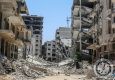
The destruction wrought by the full-scale invasion accelerated this process dramatically. Cities such as Mariupol, once vibrant industrial centres with hundreds of thousands of residents, were reduced to ruins after months of siege and bombardment. Even where reconstruction has begun under Russian administration, it has often occurred without the return of the original inhabitants. New apartment blocks may stand where older districts once existed, but many former residents remain scattered across Ukraine or Europe, uncertain whether they will ever return.
Russia has simultaneously pursued policies encouraging migration into occupied territories from elsewhere within the Russian Federation. Civil servants, military personnel, construction workers and their families have been offered incentives to relocate. Such policies have historical precedents in Soviet internal migration and reflect an apparent objective not merely of territorial control but of demographic transformation. While precise figures remain difficult to establish because independent access to occupied territories is extremely limited, there is substantial evidence that population replacement has become an important element of Russian administrative policy.
Children occupy a particularly tragic place within this demographic story. Numerous reports by international organisations have documented the transfer of Ukrainian children into Russia or Russian-controlled territory under a variety of circumstances. Some were separated from parents during military operations. Others emerged from institutions or temporary care arrangements. Many have reportedly been placed with Russian families or subjected to programmes of political and cultural assimilation. These practices have attracted intense international legal scrutiny because they affect not merely individual families but the long-term continuity of Ukrainian national identity.
Birth rates within occupied territories appear to have fallen sharply. War creates profound uncertainty. Young couples delay starting families when employment is precarious, housing has been destroyed and the future remains impossible to predict. Medical infrastructure has also suffered severe disruption. Maternity hospitals, specialist clinics and routine healthcare services have frequently been damaged, relocated or deprived of qualified personnel. The result is fewer births precisely as mortality rises.
Deaths arise from multiple causes beyond combat itself. Elderly people often lose access to medicines and specialist treatment. Chronic illnesses become harder to manage. Psychological stress contributes to deteriorating physical health. Infrastructure failures affect water supplies, heating and sanitation. These indirect consequences rarely attract the attention commanded by missile strikes, yet collectively they may prove equally devastating over time.
Economic decline compounds every demographic challenge. Occupied territories increasingly depend upon subsidies from Moscow while many traditional industries have ceased operating or function only intermittently. Private investment has largely vanished. Younger, educated workers have particularly strong incentives to leave whenever circumstances permit, creating a classic brain drain that weakens prospects for eventual recovery.
Education has also undergone radical transformation. Ukrainian curricula have been replaced in many occupied areas with Russian educational standards. Ukrainian language instruction has been significantly reduced or eliminated in numerous schools. Teachers unwilling to cooperate have frequently departed. Children growing up under prolonged occupation therefore experience not merely demographic separation from the rest of Ukraine but educational and cultural divergence that may persist long after military hostilities cease.
Reliable demographic data remain exceptionally difficult to obtain. Both Ukrainian authorities and independent researchers face obvious obstacles in conducting surveys within occupied territory. Russian official statistics must likewise be interpreted cautiously because they emerge from an intensely politicised environment. Nevertheless multiple strands of evidence point consistently towards substantial population loss, profound ageing, large-scale displacement and continuing uncertainty regarding future population trends.
History demonstrates that demographic catastrophes can outlast wars themselves. Bosnia and Herzegovina, parts of the Caucasus and numerous regions affected by ethnic conflict continue to experience altered demographic realities decades after peace agreements were signed. Refugees establish new lives elsewhere. Children grow into adulthood speaking different languages, attending different schools and building careers in different countries. Entire generations may never return to the places from which they were displaced.
For Ukraine, eventual reconstruction will therefore require far more than rebuilding roads, bridges and apartment blocks. It will require rebuilding communities. That means creating conditions attractive enough for displaced families to return voluntarily, restoring confidence in long-term security, rebuilding schools and hospitals, creating employment opportunities and ensuring that those who choose to come back can recover homes, property rights and social connections wherever possible.
Some losses, however, cannot be reversed. Elderly residents who died in isolation, families permanently dispersed across continents and children whose formative years unfolded under entirely different political systems represent changes that no reconstruction programme can fully undo. Demography possesses a momentum all of its own. A generation that is never born cannot later be recreated through policy alone.
The occupied territories of Ukraine therefore present a warning extending beyond the battlefield. Modern warfare is not confined to military objectives or territorial boundaries. It can reshape the very composition of societies, altering who lives where, which languages are spoken, which memories endure and which futures become possible. Long after the sound of artillery has faded, the demographic consequences of occupation may remain among the most enduring legacies of this war.
69 Views



Most Readings