Azov: Politics, War and the Transformation of a Ukrainian Movement
By Matthew Parish
Monday 14 September 2026
There are certain words in contemporary Ukraine that cease, after a while, to mean quite what foreigners imagine them to mean. Azov is one of them. Outside Ukraine, the word may still summon photographs from 2014, arguments about obscure political organisations, controversial symbols, accusations of neo-Nazism and the interminable Russian claim that Ukraine must be “denazified”. Inside wartime Ukraine, Azov is more likely to summon thoughts of Mariupol, Azovstal, prisoners of war, dead soldiers, assault infantry and military formations with reputations for discipline and ferocity. These two understandings are not entirely unrelated, but neither are they the same. The distance between them is the story of what happened to Ukraine between 2014 and the present day.
Few names arising from Ukraine’s long war with Russia have accumulated as much mythology. To its admirers, Azov represents the transformation of a small collection of determined volunteers into some of Ukraine’s most formidable soldiers, culminating in the extraordinary defence of Mariupol in 2022 and the subsequent reconstruction of the formation after many of its original members had been killed or captured. To its critics, particularly outside Ukraine, the name remains inseparable from the radical nationalist politics of some of the organisation’s founders. To Russia, meanwhile, Azov has become something approaching an obsession: simultaneously a military enemy, a propaganda device and purported evidence for Moscow’s otherwise implausible assertion that its invasion of Ukraine represented a campaign of “denazification”. Each of these narratives contains fragments of the truth, but none by itself provides an adequate account of what Azov became.
The history of Azov is interesting precisely because it is a history of transformation. It began amongst political radicals on the margins of Ukrainian society. It became a volunteer battalion because in 2014 the Ukrainian state desperately needed armed men willing to fight at a moment when much of the country’s conventional security apparatus was paralysed, compromised or unreliable. It was subsequently absorbed into the institutions of the state, professionalised, enlarged and subjected to conventional military command. Its political offshoot failed to establish itself as a significant electoral force. Its military descendants, by contrast, became disproportionately influential and acquired reputations for determination, discipline and institutional cohesion. The word “Azov” therefore came to signify several different things, and much of the controversy surrounding the movement derives from an unwillingness to distinguish between them.
The uncomfortable part of Azov’s history should neither be concealed nor exaggerated. The original organisation emerged partly from the Ukrainian radical nationalist milieu associated with Andriy Biletskyi, Patriot of Ukraine and the Social-National Assembly. Some people involved in these circles expressed racist, ultranationalist and, in certain instances, unmistakably neo-Nazi ideas. The symbolism used by the early movement contributed to these associations, as did inflammatory statements by individual leaders. These facts were not inventions subsequently manufactured by Russian propaganda, although Russian propaganda would later magnify them grotesquely. They formed part of the genuine political background from which a portion of the original Azov leadership emerged, and serious discussion of Azov ought to begin by admitting this rather than attempting to wish it away.
Scale, however, is indispensable. Before 2014 these organisations existed on the extreme fringes of Ukrainian politics. They were not mass movements, they did not control the Ukrainian state and they enjoyed nothing resembling the electoral support required to implement their more radical ambitions. The subsequent electoral history of Ukrainian radical nationalism demonstrated repeatedly that militant nationalism could exercise considerably greater cultural and military influence than electoral influence. Ukrainians might admire men prepared to fight for their country without wanting those same men, or their political associates, to govern it. This distinction, obvious enough to anyone familiar with Ukraine, was almost entirely lost in Russia’s subsequent propaganda.
The Revolution of Dignity, Russia’s seizure of Crimea and the eruption of Russian-sponsored separatism in Donetsk and Luhansk changed the significance of these marginal groups almost overnight. The Ukrainian Armed Forces of early 2014 were badly prepared for war after decades of neglect, corruption and institutional penetration by Russian interests. Police and security structures across parts of eastern Ukraine were unreliable, while some collapsed altogether. Kyiv therefore found itself dependent upon volunteer formations assembled from people willing to fight immediately, without the lengthy institutional preparation that a conventional military would ordinarily require.
That environment rewarded precisely some of the characteristics possessed by ideological activists: organisation, commitment, willingness to accept danger and networks of people accustomed to acting collectively. This is one of the uncomfortable truths about war. Peaceful societies can afford to be selective about the political opinions of people who wish to carry weapons. States confronting disintegration tend to ask a more immediate question: will these people fight? In the spring of 2014 Ukraine did not enjoy the luxury of conducting an extended philosophical inquiry into the beliefs of every volunteer willing to defend its territory.
The paradox at the heart of Azov’s origins is therefore that people whose political programme had attracted comparatively little democratic support suddenly possessed something the Ukrainian state urgently required. They were prepared to fight at a moment when the state was struggling to find sufficient numbers of reliable people capable of doing so. War converted political marginality into military usefulness, and the subsequent history of Azov was shaped by the Ukrainian state’s attempt to transform that usefulness into a disciplined institution.
Azov was formally created in May 2014 as a special-purpose volunteer battalion under the Ministry of Internal Affairs. Its early ranks included nationalist activists, football ultras and volunteers from a variety of backgrounds. The name came from the Sea of Azov, around which some of the most important fighting of the period was taking place. Whatever the political ambitions of individual founders, however, it was warfare rather than elections that would make the organisation famous.
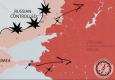
The decisive early episode was Mariupol. During the confused fighting of spring 2014, control of this strategically vital industrial and port city was contested between Ukrainian authorities and Russian-backed separatist forces. Ukrainian forces retook Mariupol in June, with Azov playing a prominent role. The victory mattered strategically because the loss of the city would have strengthened the possibility of Russian-controlled territory extending westwards along the Sea of Azov towards Crimea. It mattered psychologically because Ukraine desperately needed victories after the humiliation of losing Crimea and the rapid expansion of separatist control across substantial parts of Donbas.
Azov subsequently participated in further fighting in eastern Ukraine, including operations connected with Marinka and Ilovaisk. At Ilovaisk the broader Ukrainian operation ended disastrously after regular Russian forces intervened directly and Ukrainian formations attempting to withdraw suffered severe casualties. This was an early demonstration of a lesson that would recur throughout the war: courage, ideological motivation and tactical competence could compensate for many deficiencies, but they could not abolish the mathematics of warfare. Lightly equipped volunteer formations could not indefinitely overcome superior artillery, armour, logistics and organised regular forces.
The Ukrainian state nevertheless recognised Azov’s military utility. During the latter part of 2014 it expanded from a battalion into a regiment and was incorporated into the National Guard of Ukraine. Armour, artillery and increasingly sophisticated training structures followed. This institutionalisation was enormously important because the Azov that subsequently fought Russia became progressively different from the irregular political militia that had appeared in the spring of 2014. The longer the war continued, the more the military organisation was subjected to the structures and requirements of the Ukrainian state, while recruitment extended far beyond the ideological circles from which some of its earliest members had originated.
Azov’s next significant military episode came during fighting east of Mariupol around Shyrokyne in early 2015. Ukrainian forces sought to push Russian-backed formations away from the approaches to the city, and Azov participated prominently in offensive operations that moved the front eastwards. These actions reinforced the unit’s reputation as an aggressive formation particularly suited to infantry operations. During the comparatively static years that followed the Minsk agreements, Azov invested heavily in training and developed elaborate systems for selecting recruits, educating junior commanders and maintaining cohesion. An organisation originating partly amongst political radicals was gradually developing many of the characteristics of a professional military institution.
Meanwhile an attempt was made to translate Azov’s wartime prestige back into politics. A network of political and civic organisations emerged around veterans and activists associated with the movement, most notably the National Corps. Yet the political project never reproduced the military organisation’s success. This distinction is fundamental to understanding modern Ukraine. The Ukrainian electorate consistently declined to give radical nationalist movements anything approaching the political influence that Russian propaganda attributed to them. The ballot box and the battlefield delivered remarkably different verdicts upon Azov: its military reputation expanded while its political ambitions remained peripheral.
Then came 24 February 2022, and everything changed. Russia’s full-scale invasion transformed Azov once again because Mariupol was one of Moscow’s principal objectives. Capturing the city would complete the land corridor between Russian-controlled territory in Donbas and occupied Crimea, deprive Ukraine of a major industrial centre and give Russia effective control over the coastline of the Sea of Azov. Azov was amongst the principal formations defending the city, alongside Ukrainian Marines, border guards, police officers and other military and security units.
The ensuing battle became one of the defining episodes of the invasion. Ukrainian defenders fought for almost three months while Russian forces progressively surrounded, bombarded and occupied the city. Civilian districts were devastated, communications collapsed and supplies of ammunition, food, water and medical equipment became increasingly desperate. The surviving Ukrainian defenders eventually withdrew into the enormous Azovstal industrial complex, whose underground structures offered a final defensive position amid a city that had been reduced to ruins.
From the conventional perspective of military geography, Mariupol was a Ukrainian defeat. The city was lost, much of it was destroyed and large numbers of Ukrainian soldiers were killed, wounded or captured. The surviving Azovstal defenders eventually surrendered in May 2022 after receiving orders from the Ukrainian high command. It serves no useful purpose to disguise this reality merely because the defence was courageous. Military history becomes meaningless if every reverse is retrospectively transformed into a victory, and Ukraine has paid too high a price in this war for us to indulge in comforting euphemisms about what defeat means.
Yet tactical defeat may coexist with strategic achievement, and this is why Mariupol occupies such an unusual place in the Ukrainian understanding of the war. Its defenders compelled Russia to devote substantial forces, ammunition and attention to reducing an isolated city while decisive operations were taking place elsewhere. Their resistance became an extraordinary symbol of national determination, particularly as photographs and messages emerged from inside Azovstal describing the progressively impossible circumstances in which the remaining defenders were fighting. Azov therefore suffered its greatest defeat and acquired its greatest fame in precisely the same battle. There is no contradiction in this. Military history is filled with famous defeats whose political and strategic consequences extend far beyond the territory surrendered.
The surrender at Azovstal might reasonably have been expected to destroy Azov as an effective military institution. A substantial proportion of its experienced personnel had been killed or captured, its home city was occupied and Russia had made the elimination of the formation one of the symbolic objectives of the invasion. Instead Azov regenerated. Personnel who had not been trapped in Mariupol, new volunteers and members of related formations provided the foundations for reconstruction, while prisoner exchanges gradually returned some experienced commanders and soldiers to Ukraine.
At the same time the broader Azov military tradition expanded beyond the original National Guard formation. Volunteers associated with Azov had formed units in Kyiv at the beginning of the full-scale invasion, and these structures evolved into what became the 3rd Separate Assault Brigade of the Ukrainian Ground Forces. This distinction is frequently overlooked in foreign discussion. The 12th Special Forces Brigade Azov of the National Guard and the 3rd Separate Assault Brigade are not the same formation, even though they possess overlapping historical origins and emerged from the broader Azov military milieu. The word “Azov” consequently came to describe not merely one regiment or brigade but something approaching a distinctive school of Ukrainian military organisation.
This is where the foreign image of Azov begins to look particularly dated. One can spend endless hours examining photographs from political demonstrations a decade ago, identifying symbols on flags and excavating inflammatory remarks made by obscure activists. These things have historical importance and ought not to be suppressed. Yet the Ukrainian soldier entering an Azov-associated formation in the middle of the present war inhabits a radically different universe. His immediate concerns are drones, artillery, electronic warfare, casualty evacuation, ammunition, communications, rotations, training and whether the men beside him will remain dependable when a position comes under sustained Russian assault.
That is what war does to ideology. It does not necessarily abolish it, but it subjects abstract political beliefs to an extraordinarily brutal practical examination. A soldier may enter a formation carrying romantic notions about nation, history, sacrifice or martial virtue, but an FPV drone approaching at 120 kilometres per hour has remarkably little interest in political philosophy. The questions that determine survival are whether the electronic warfare equipment works, whether the trench has adequate overhead protection, whether ammunition arrives, whether the commander is competent and whether the wounded man can be extracted before he bleeds to death.
The rebuilt Azov formations returned to major combat operations in eastern Ukraine, while units deriving from the wider Azov tradition fought on some of the most difficult sectors of the front. Their military culture placed unusual emphasis upon recruitment, training, small-unit leadership, battlefield communications, drone warfare and the cultivation of an intense collective identity. As Ukraine’s Armed Forces expanded from the improvised structures of 2014 into one of Europe’s largest wartime militaries, the organisational techniques developed by formations such as Azov became increasingly influential.
None of this entirely resolves the ideological controversy surrounding the movement. Symbols matter, political origins matter and statements made by founders matter. Attempts to sanitise the early history of Azov merely provide ammunition to those determined to portray every subsequent development as concealment. Nevertheless historical organisations change, particularly when subjected to the immense pressures of prolonged war. Recruitment introduces people with different motivations, generations of commanders change and the practical requirements of survival frequently prove stronger than ideological purity.
The crucial development in Azov’s transformation was incorporation into the Ukrainian state. Once the military formation became part of the National Guard, it ceased to be merely the armed expression of a political movement. Recruitment broadened, command structures changed and professional military requirements increasingly displaced political activism. By the time of the full-scale invasion, soldiers serving within formations associated with the Azov tradition were joining for an assortment of reasons familiar throughout the Ukrainian military: patriotism, military professionalism, comradeship, anger at Russian aggression and the straightforward desire to prevent their country from being conquered.
This does not mean that nationalist ideas disappeared from Azov’s institutional culture. They did not, and an unusually intense form of Ukrainian patriotism remains part of the identity of formations descended from the movement. Yet Ukrainian nationalism itself changed as the war evolved. The existential question ceased to concern principally what sort of Ukraine ought to exist and became whether an independent Ukraine would exist at all. A nationalism formed around ethnic or ideological ideas was increasingly supplemented, and often displaced, by a wartime civic nationalism incorporating Ukrainian speakers, Russian speakers, Jews, Muslims, Christians, atheists and citizens drawn from the country’s various regional traditions.
Anyone trying to understand this from a comfortable western European or American capital faces a peculiar difficulty. The vocabulary through which Azov is discussed abroad frequently remains frozen in approximately 2014, while Ukraine itself has lived through more than a decade of war. Western discussions can therefore acquire an archaeological quality, as though discovering the political views of an Azov founder in 2010 necessarily tells us what motivates a twenty-three-year-old Ukrainian infantryman in 2026. Sometimes it may tell us something. Frequently it tells us almost nothing.
Moscow nevertheless found the original Azov story irresistible. Russian propaganda took a real phenomenon — the radical-right backgrounds of some Azov founders — and inflated it into an explanation of the entire Ukrainian state. A comparatively small number of radical nationalists became evidence that a democratic country of tens of millions was supposedly governed by Nazis. The argument was absurd in scale even before one considered Ukraine’s competitive elections, its pluralistic political culture and the consistently marginal electoral performance of the radical right.
Propaganda, however, does not require logical consistency. It requires memorable symbols, and Azov supplied them in abundance. Its insignia, nationalist rhetoric, photographs of individual soldiers displaying extremist symbols and the political biographies of some early leaders could be endlessly recycled through Russian media. Moscow transformed Azov into a metonym for Ukraine itself, so that the existence of a controversial military formation became supposed evidence about the character of an entire country.
There was another reason for this obsession that receives less attention. Azov had repeatedly fought Russian and Russian-backed forces effectively. Russian propaganda about the organisation therefore developed a peculiar combination of contempt and respect. Azov fighters were portrayed simultaneously as morally degenerate extremists and exceptionally dangerous opponents who had to be destroyed at virtually any cost. This contradiction reveals something important because Russia’s fixation upon Azov has never been merely ideological. It also reflects battlefield experience and the uncomfortable Russian recognition that some of the Ukrainian soldiers whom Moscow most despises have proved amongst the most determined to resist it.
A sober assessment of Azov’s military history therefore contains both successes and defeats. Its successes include its role in retaking Mariupol in 2014, its participation in subsequent operations protecting the approaches to the city, its contribution to the fighting around Shyrokyne, its development of effective systems of training and recruitment, and its extraordinary resistance during the siege of Mariupol in 2022. Its reconstruction after the catastrophic losses associated with Azovstal may itself rank amongst its most significant organisational achievements, because military formations that lose their home base, much of their command structure and a substantial proportion of their experienced personnel seldom regenerate easily.
Its defeats are equally real. The Ukrainian operation at Ilovaisk ended catastrophically. Mariupol ultimately fell. Azovstal surrendered. Many of the formation’s most experienced soldiers were killed or captured. Subsequent formations associated with the Azov tradition have fought within a broader Ukrainian war effort that has frequently struggled against Russia’s advantages in manpower, artillery, glide bombs and other resources. Azov has never possessed magical military powers, because no military formation does. Its mythology sometimes obscures the elementary truth that exceptionally motivated infantrymen remain vulnerable to artillery shells, drones and aerial bombs.
Its distinctive strength has instead been institutional. Azov developed a reputation for motivation, cohesion, recruitment, training, adaptation and the cultivation of a powerful collective identity. These qualities can make soldiers fight exceptionally well, but they cannot guarantee victory. Indeed one of the dangers surrounding elite formations is that their reputations encourage commanders to employ them repeatedly in the most desperate circumstances. Military excellence can become its own punishment because the better a formation performs, the more frequently it is sent to precisely those places where the situation is worst.
The most interesting question about Azov is consequently not whether its founders included far-right extremists. Some plainly did. Nor is it whether Russian propaganda exaggerated this fact beyond recognition, because it plainly did that as well. The more interesting question is how an organisation escapes its origins, and whether the institution that exists after more than a decade of war can sensibly be described exclusively by reference to the political biographies of the people who established its predecessor.
Azov began as one of several improvised answers to the near-collapse of Ukrainian military power in 2014. Had the Ukrainian state possessed a large, modern and combat-ready army at the time, there might never have been an Azov Battalion. Ukraine instead found itself requiring volunteers immediately and asking fewer questions about their political philosophies than a peaceful democratic state ordinarily would. This was not because the Ukrainian government suddenly embraced their ideology but because states facing military collapse tend to value the immediate ability to fight more highly than political pedigree.
War then transformed those volunteers. Some entered politics and achieved relatively little. Others remained soldiers and built institutions. The political Azov movement never became remotely as important as Russia claimed, while the military Azov tradition became considerably more important than almost anyone could have imagined in 2014. This difference tells us something profound about contemporary Ukraine because the country did not become the ideological state imagined by some of Azov’s earliest political activists. Instead the military structures associated with Azov became subordinate to the Ukrainian state.
The distinction is enormous. The state absorbed the militia rather than the militia absorbing the state. Over more than a decade of war, Azov evolved from an improvised volunteer formation into part of the architecture of Ukraine’s national defence, while organisations descended from the same military tradition developed into increasingly large and sophisticated structures. Their soldiers fight under Ukrainian military authority rather than for an independent revolutionary enclave, and their principal historical significance has consequently become military rather than electoral.
For those of us living through Ukraine’s war rather than observing it exclusively through the categories of foreign political debate, there is a further consideration. Ukraine has become a country populated by ghosts. Almost everyone knows somebody who has been killed, wounded, displaced, imprisoned or otherwise changed permanently by the war. Mariupol itself has become one of the greatest of those ghosts: a city that remains physically present but from which the Ukraine that once inhabited it has largely been expelled. The word Azov cannot be separated from that experience, because the defence of Azovstal has entered Ukrainian historical memory not principally as an ideological event but as a story about people remaining underground in a ruined steelworks when almost every conventional military calculation suggested that their position was hopeless.
One need not romanticise them to understand the power of that story. Indeed romanticisation is a poor way to honour soldiers because it transforms complicated human beings into statues. The men and women serving in contemporary Ukrainian formations are no more uniformly heroic, wise, politically moderate or morally flawless than soldiers in any other army. They become frightened, exhausted, angry and occasionally foolish. They disagree with one another, complain about their commanders, resent politicians, worry about their families and count the days until rotation. The remarkable thing is not that they have somehow ceased to be ordinary human beings. It is that ordinary human beings continue to perform extraordinary tasks because the alternative may be the destruction of their country.
This is the context in which contemporary Azov should ultimately be understood. One can continue debating the political writings of its founders, and historians certainly should. One can analyse its symbols, its ideological genealogy and the sometimes unpleasant subcultures from which portions of the original movement emerged. Yet if that is all one sees, then one has missed what ten years of war have done to the institution and, more importantly, what ten years of war have done to Ukraine.
Azov’s story contains uncomfortable politics, genuine military achievements, catastrophic defeats, remarkable institutional resilience and an extraordinary capacity for creating myths both amongst its supporters and amongst its enemies. It deserves neither demonisation nor hagiography because both approaches obscure the peculiar historical process that made it important. The central irony of Azov is that the political movement Russia presented as evidence that Ukraine had become a fascist state never came remotely close to capturing Ukraine politically, while soldiers descended from that movement became some of the people most determined to ensure that Russia could not capture Ukraine militarily.
Perhaps this is why Azov remains so difficult for outsiders to understand. People want political categories to remain stable. They want an organisation that began on the far right to remain forever reducible to the far right, or alternatively they want battlefield heroism retrospectively to wash away everything objectionable about its origins. History seldom provides us with either convenience. Institutions mutate, people change, wars reorder political identities and yesterday’s ideological militia may become tomorrow’s conventional military formation.
Ukraine itself has undergone a similar transformation. The country that entered the war in 2014 was divided, uncertain, militarily weak and still struggling to decide what its post-Soviet identity meant. The country fighting today has paid an almost unimaginable price for the proposition that it has the right to decide its own future. Azov is one small, controversial and unusually dramatic strand in that much larger story. To understand it properly requires neither admiration nor condemnation in advance. It requires accepting that war changes institutions, just as it changes people, and that sometimes the institution that emerges from the furnace bears only an imperfect resemblance to the one that entered it.
27 Views



Most Readings