Contemporary Ukrainian music
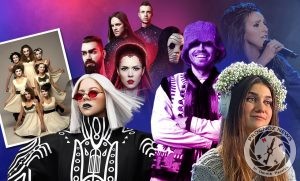
By Matthew Parish, Associate Editor
Tuesday 26 May 2026
The contemporary Ukrainian music scene is undergoing a transformation of extraordinary speed and intensity. War, migration, technology and cultural rediscovery have combined to produce a musical environment unlike any Ukraine has experienced since independence in 1991. What is emerging is not merely a collection of successful performers or fashionable genres, but an entire cultural ecosystem in which questions of national identity, trauma, memory and modernity are negotiated through sound.
The most striking feature of contemporary Ukrainian music is the collapse of the old distinction between “traditional” and “modern”. For decades Ukrainian folk music was often treated either as ethnographic preservation or as nostalgic entertainment for older audiences. Today it has become one of the principal engines of musical innovation. Artists increasingly combine ancient regional singing traditions with electronic production, hip-hop rhythms, ambient textures and dance music structures.
This process did not begin with the full-scale invasion of 2022, but the war accelerated it dramatically. Ukrainian audiences increasingly sought cultural forms that felt unmistakably their own. Musicians responded by drawing upon folk traditions from Hutsulshchyna, Polissya, Lemkivshchyna and the Donbas, then integrating them into global musical forms. The result is a sound simultaneously local and international.
Artists such as Khrystyna Soloviy helped pioneer this movement by modernising Lemko folk traditions within contemporary pop and rock frameworks. Yet the newer generation has pushed further still. Electronic and experimental artists increasingly use archival recordings, field recordings and reconstructed folk instrumentation within highly modern production environments. Zavoloka became emblematic of this approach through her combination of ancient Ukrainian sonic motifs with avant-garde electronic composition.
A particularly important development has been the rise of what might loosely be called “wartime intimacy”. Prior to 2022, much Ukrainian popular music often mirrored broader European commercial trends: polished dance-pop, Eurovision-oriented spectacle and Russian-language crossover entertainment. Wartime conditions have altered audience expectations. Listeners increasingly favour emotional directness, vulnerability and authenticity over glamour or commercial perfection.
This is one reason why quieter independent acts have become so culturally influential. The Lviv-based group Odyn v kanoe exemplifies this tendency. Their sparse instrumentation and poetic minimalism resonate strongly with wartime audiences living amidst uncertainty and displacement. The emotional economy of wartime Ukraine rewards sincerity over excess. Songs that would once have seemed too intimate or melancholic for mass popularity now speak directly to the collective condition of the country.
At the same time Ukrainian electronic music has undergone a remarkable flowering. Kyiv, Kharkiv and Lviv continue to produce influential techno, ambient and experimental scenes despite the pressures of war. In many respects electronic music has become one of the principal cultural languages through which Ukrainians process wartime experience. Sound design, repetition, distortion and atmosphere offer musicians ways to express conditions that conventional lyricism often cannot adequately describe.
Recent underground releases reveal a fascination with damaged soundscapes, interrupted rhythms and field recordings from wartime environments. Yet Ukrainian electronic music is not uniformly bleak. Much of it instead expresses resilience, irony and even playfulness amidst catastrophe. The persistence of nightlife in Kyiv and other cities during wartime has created a paradoxical cultural atmosphere in which music functions simultaneously as therapy, resistance and communal survival.
Another defining trend is linguistic consolidation. Before 2022 much commercially successful Ukrainian music was performed in Russian, particularly in the east and south of the country. That pattern has altered dramatically. Ukrainian-language music now dominates the domestic cultural space to an extent unimaginable a decade ago. This shift is not solely political. Younger musicians increasingly regard Ukrainian as aesthetically flexible, emotionally expressive and commercially viable.
Importantly, this linguistic transformation has not produced stylistic uniformity. Ukrainian-language rap, hyperpop, jazz, techno, indie rock and experimental ambient music now coexist comfortably within the same cultural sphere. The language itself has become detached from any narrow conception of “folk authenticity”. Instead it functions as the normal medium of a fully modern musical culture.
The rise of artists from formerly Russified regions is especially significant in this regard. Groups such as Molodi, originating from Mariupol, embody the cultural realignment of a generation shaped by both displacement and war. Their music combines alternative pop and electronica with an unmistakably Ukrainian linguistic and emotional framework.
Eurovision also continues to exert enormous influence upon Ukrainian music, although its role has evolved. Earlier Ukrainian Eurovision entries often aimed primarily at European commercial accessibility. Contemporary performers increasingly present distinctly Ukrainian aesthetics without attempting to dilute them for international audiences. The success of folk-inflected and experimentally styled acts has reinforced confidence that Ukrainian specificity itself possesses global appeal.
The emergence of performers such as Viktoria Leléka illustrates this tendency particularly clearly. Her combination of folk jazz, electronic music and wartime thematic material reflects broader trends within Ukrainian contemporary culture. Ukrainian artists increasingly move fluidly between domestic and international audiences, often shaped by exile, migration and transnational collaboration.
Artificial intelligence and digital production technologies are likewise beginning to influence Ukrainian music culture, although more cautiously than in some western markets. Ukrainian musicians often treat AI less as a replacement for artistic creativity than as a practical survival tool amidst constrained wartime conditions. Independent artists working with limited resources use machine-assisted mastering, multilingual translation and generative sound design to reach broader audiences.
Meanwhile social media platforms have radically altered the structure of musical discovery. TikTok, Telegram and YouTube increasingly determine which songs become nationally recognised. Short fragments of emotionally resonant songs often circulate independently of traditional album structures. This favours highly memorable vocal hooks, intimate acoustic performances and visually distinctive aesthetics.
Yet perhaps the deepest trend in Ukrainian music today is philosophical rather than stylistic. Ukrainian musicians increasingly understand themselves not merely as entertainers but as custodians of cultural continuity. The destruction of cities, displacement of populations and constant presence of death have transformed artistic production into a form of archival preservation. Songs become repositories of regional dialects, memories, emotional states and historical experiences that musicians fear may otherwise disappear.
This gives contemporary Ukrainian music an unusual seriousness even when the music itself is playful or commercially accessible. Beneath dance rhythms, indie minimalism or electronic experimentation lies a pervasive awareness that culture itself has become strategically important. Music is no longer simply accompaniment to national life; it has become one of the principal means through which Ukraine explains herself both to her own citizens and to the outside world.
The result is one of the most vibrant and intellectually interesting musical cultures presently emerging anywhere in Europe. Contemporary Ukrainian music is not derivative of western trends, nor merely reactive to war. Rather it is developing its own aesthetic vocabulary — one forged from folk memory, digital modernity, wartime experience and an increasingly confident national consciousness.
134 Views



Most Readings