Whatever Happened to the Gaza Peace Plan?
By Matthew Parish, Associate Editor
Monday 22 June 2026
When the Gaza peace plan was unveiled amid great fanfare in late 2025, it was presented as a historic breakthrough. After two years of devastating war, the prospect of a durable ceasefire, the release of hostages and prisoners, the reconstruction of Gaza, and the creation of a pathway towards a new political order appeared, at least briefly, within reach. International conferences were convened, donor states pledged support, technocratic governing structures were proposed, and a complex framework was established to move Gaza from warfare to reconstruction. Yet by the middle of 2026 the peace plan finds itself suspended in a state of uncertainty — neither dead nor alive, neither implemented nor abandoned.
The first phase of the agreement achieved more than many observers expected. Hostage exchanges took place. Large numbers of Palestinian prisoners were released. Humanitarian access improved compared with the conditions prevailing during the height of the conflict. Israel withdrew from some areas and accepted a ceasefire framework that brought a dramatic reduction in large-scale military operations. For a brief period, there appeared to be a genuine possibility that the war had entered its final chapter.
However the peace plan was always designed around a far more ambitious second phase. The real challenge was never the ceasefire itself. The challenge was determining who would govern Gaza, who would provide security, who would pay for reconstruction, and above all whether Hamas would relinquish its military role. Those questions proved vastly more difficult than arranging prisoner exchanges or temporary pauses in fighting.
The central obstacle has become the issue of Hamas disarmament. The architects of the peace plan regarded demilitarisation as indispensable. Israel has consistently maintained that no lasting settlement is possible while Hamas retains an independent armed capability. International mediators therefore proposed a phased disarmament process linked to reconstruction and political transition. Hamas, however, rejected these proposals, arguing that disarmament cannot precede guarantees regarding Palestinian sovereignty, Israeli withdrawals and long-term political arrangements. The result has been a deadlock from which neither side has been willing to retreat.
Israel has also become increasingly reluctant to proceed with later stages of the agreement. Israeli officials have argued that Hamas has failed to meet the conditions necessary for political transition. Consequently Israeli forces have remained in substantial portions of Gaza and have continued conducting military operations against what they describe as imminent security threats. Although the ceasefire technically remains in force, numerous incidents have resulted in casualties, creating a situation in which peace exists on paper but violence continues on the ground.
The governance component of the peace plan has suffered a similar fate. International mediators proposed a technocratic Palestinian administration supported by international institutions and backed by substantial donor funding. Yet such arrangements require a minimum degree of political consensus amongst Palestinian factions and acquiescence from Israel. Neither has been fully forthcoming. While discussions produced detailed proposals for interim governance and international stabilisation forces, implementation has stalled because the underlying security questions remain unresolved.
Reconstruction has likewise become hostage to politics. The international community understands that rebuilding Gaza will require tens of billions of dollars and many years of effort. Donors are understandably reluctant to invest enormous sums into a territory where governance remains disputed, military operations continue and future conflict cannot be excluded. Reconstruction funds have therefore remained largely contingent upon progress in the political and security dimensions of the peace process.
Perhaps most importantly, the strategic environment has shifted. Regional crises elsewhere in the Middle East have competed for diplomatic attention. The international focus that once centred upon Gaza has become diluted by wider regional tensions. Diplomats continue to work on the issue, but the sense of urgency that characterised the immediate aftermath of the ceasefire has faded. Peace processes often depend upon momentum. Once momentum is lost, they can enter prolonged periods of stagnation during which neither war nor peace fully prevails.
The tragedy is that the Gaza peace plan has not failed because its objectives were unreasonable. Most of its goals remain broadly accepted by all serious participants. Israel seeks security. Palestinians seek self-government and reconstruction. Donors seek stability. Neighbouring Arab states seek an end to chronic regional instability. The difficulty lies not in defining the destination but in agreeing upon the sequence of steps required to reach it.
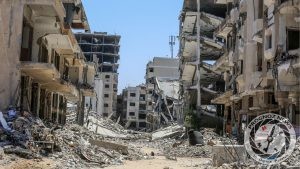
Consequently the Gaza peace plan today resembles many other peace initiatives that have emerged from seemingly intractable conflicts. It survives as a framework, a reference point and a diplomatic aspiration. Yet it has ceased to function as an active process driving events forward. The danger is that temporary arrangements harden into permanent realities: a partially occupied Gaza, a displaced population, stalled reconstruction and recurring cycles of violence. Indeed, international mediators have increasingly warned that the current territorial and political division of Gaza risks becoming permanent if meaningful progress is not restored.
History suggests that peace plans rarely die suddenly. More often they fade gradually into irrelevance while all parties insist publicly that they remain committed to them. The Gaza peace plan has not yet reached that point. The ceasefire framework still exists. Negotiations continue intermittently. International institutions remain engaged. Yet the longer the present impasse persists, the more difficult it becomes to transform an armistice into a genuine peace.
The question confronting the region is therefore no longer whether a peace plan exists. It does. The question is whether any of the principal actors still possess the political will, the strategic patience and the mutual confidence necessary to implement it. That remains uncertain. In the Middle East, as so often elsewhere, ending a war has proved easier than constructing a peace.
7 Views



Most Readings